Methylated Antibodies
TriMethyl-Histone H3-K27 Rabbit Monoclonal Antibody (Q16695/P68431) for WB, ChIP, and CUT&Tag Applications
Item Number : CM0000326
Price varies based on specs and customizations
- Application
- WB, DB, IHC-P, IF/ICC, IP, ELISA, ChIP, CUT&Tag
- Cross Reactivity
- Human, Mouse, Rat, Other (Wide Range Predicted)
- Protein Weight
- 15 kDa

Shipping:
Contact us to get shipping details Enjoy On-time Dispatch Guarantee.
Why Choose Us
Easy ordering process, quality products, and dedicated support for your business success.
Core Product Specifications and Parameters
| Parameter | Value |
|---|---|
| Product Name | TriMethyl-Histone H3-K27 Rabbit mAb |
| Remarks/Alias | H3t; H3.4; H3/g; H3FT; H3C16; HIST3H3; TriMethyl-Histone H3-K27 |
| Species | Human |
| GeneID (human) | 8290/8350 |
| GeneID | 8290/8350 |
| Immunogen | Synthetic peptide: A synthetic trimethylated peptide around K27 of human Histone H3 (NP_003520.1). |
| Source | Rabbit |
| Category | Methylated Antibodies |
| Application | WB, DB, IHC-P, IF/ICC, IP, ELISA, ChIP, CUT&Tag |
| Cross Reactivity | Human, Mouse, Rat, Other (Wide Range Predicted) |
| SWISS | Q16695/P68431 |
| Protein Weight | 15 kDa |
| Shipping | Ice bag |
Biological Background: Histone H3 Function and Localization
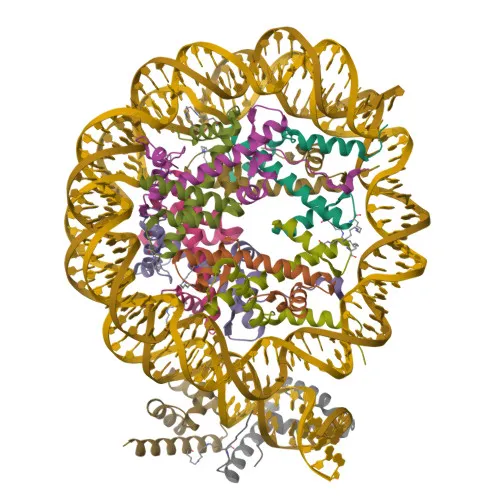
Histone H3 is a core histone protein that, together with H2A, H2B, and H4, forms the nucleosome—the fundamental repeating unit of chromatin. Nucleosomes wrap and compact DNA, thereby controlling the accessibility of genetic information to the cellular machineries responsible for transcription, replication, and repair. This central role makes histones key regulators of genomic stability and gene expression.
The functional versatility of histones is largely mediated by a diverse array of post-translational modifications (PTMs), collectively referred to as the "histone code." These modifications—including acetylation, methylation, phosphorylation, and others—occur at specific residues and govern chromatin dynamics. Among these, tri-methylation of histone H3 at lysine 27 (H3K27me3) is a well-established repressive mark associated with facultative heterochromatin formation and long-term gene silencing.
This rabbit monoclonal antibody was generated against a synthetic trimethylated peptide spanning K27 of human histone H3 (based on NP_003520.1). It specifically recognizes histone H3 only when trimethylated at K27, enabling precise detection of this epigenetic mark in various assays.
Related references: PMID:16267050, PMID:17194708
Experimental Guidance and Technical Tips
- The immunogen is a synthetic trimethylated peptide around K27; therefore, this antibody is expected to have high specificity for the trimethylated state. Consider verifying specificity by dot blot or peptide competition assays using unmodified, mono-, di-, and tri-methylated peptides.
- For Western blot (WB), histone-rich nuclear extracts or acid-extracted histones are recommended. The predicted band is ~15 kDa. Use appropriate loading controls (e.g., total H3 or histone H3 C-terminal antibody) to normalize for protein loading.
- In chromatin immunoprecipitation (ChIP), this antibody can be used to enrich chromatin regions marked by H3K27me3. Optimize chromatin shearing and antibody concentration for each cell type. Include positive (e.g., HOX gene loci) and negative (e.g., housekeeping gene promoters) control regions in qPCR analysis.
- For CUT&Tag (Cleavage Under Targets & Tagmentation), the antibody can serve as the primary antibody for targeting and in situ cleavage. Follow the manufacturer’s protocol for bead-based or direct binding approaches. Genome-wide analysis may reveal H3K27me3 distribution across the genome.
- In immunofluorescence (IF/ICC) and immunohistochemistry (IHC-P), nuclear staining is expected. Optimize fixation (e.g., 4% PFA for IF, formalin-fixed paraffin-embedded sections for IHC) and permeabilization conditions. Blocking with serum/BSA can minimize background.
- Always validate the antibody in the relevant sample system and application context. Titrate the antibody and include appropriate controls to ensure reproducible results.
CamelBio: Your One-Stop Sourcing Bridge
CamelBio serves as a comprehensive one-stop sourcing partner for IVD raw materials, bridging the gap between reagent discovery and clinical application. For epigenetics and chromatin biology research, we offer validated monoclonal and polyclonal antibodies like this TriMethyl-Histone H3-K27 Rabbit mAb, along with optimized antibody pairs, bulk ancillary reagents, and customized rare-target sourcing. Whether you need consistent batch-to-batch reproducibility or assistance with scaling up your diagnostic assay, CamelBio is dedicated to supporting your entire development pipeline from concept to clinic.
Product Datasheet
TriMethyl-Histone H3-K27 Rabbit Monoclonal Antibody (Q16695/P68431) for WB, ChIP, and CUT&Tag Applications
REQUEST A QUOTE
Our professional team will reply to you within one business day. Please feel free to contact us!