Methylated Antibodies
TriMethyl-Histone H3-K14 (Q16695 / P68431) Rabbit Polyclonal Antibody for WB, IF, ELISA
Item Number : CM0000343
Price varies based on specs and customizations
- Application
- WB, IF/ICC, ELISA
- Cross Reactivity
- Human, Mouse, Rat, Other (Wide Range Predicted)
- Protein Weight
- 15 kDa

Shipping:
Contact us to get shipping details Enjoy On-time Dispatch Guarantee.
Why Choose Us
Easy ordering process, quality products, and dedicated support for your business success.
Core Product Specifications and Parameters
| Parameter | Value |
|---|---|
| Product Name | TriMethyl-Histone H3-K14 Rabbit pAb |
| Remarks/Alias | H3t; H3.4; H3/g; H3FT; H3C16; HIST3H3; TriMethyl-Histone H3-K14 |
| Species | Human |
| GeneID (Human) | H3 |
| GeneID | 8290/8350 |
| Immunogen | A synthetic peptide corresponding to a sequence within amino acids 1-100 of human Histone H3 (NP_003520.1) |
| Source | Rabbit |
| Category | Methylated Antibodies |
| Application | WB, IF/ICC, ELISA |
| Cross Reactivity | Human, Mouse, Rat, Other (Wide Range Predicted) |
| SWISS | Q16695/P68431 |
| Protein Weight | 15 kDa |
| Shipping | Ice bag |
Biological Background: Histone H3 Function and Localization
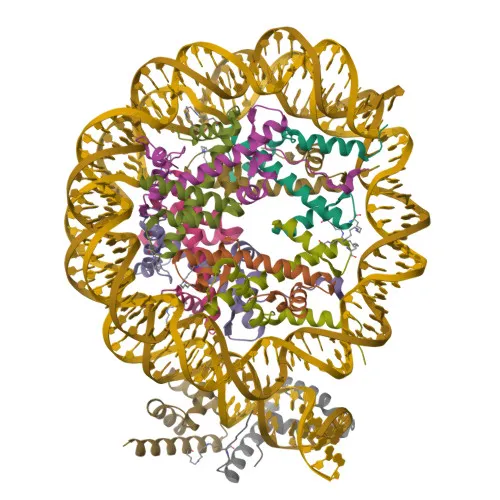
Histone H3 is a core component of the nucleosome, the fundamental unit of chromatin. Together with H2A, H2B, and H4, it forms the octameric histone core around which DNA is wrapped, compacting the genome and regulating DNA accessibility. This structural role is central to processes such as transcription regulation, DNA repair, DNA replication, and chromosomal stability. The function of histone H3 is dynamically controlled by a complex array of post-translational modifications (PTMs), including acetylation, methylation, phosphorylation, and others, collectively referred to as the "histone code." These modifications alter chromatin structure and serve as binding platforms for effector proteins.
Histone H3 localizes primarily to the nucleus and is distributed along chromosomes. Different H3 variants exist: the canonical H3.1 and H3.2, the replication-independent H3.3, and the testis-specific H3.1t (encoded by H3-4/HIST3H3). According to UniProt, the H3.1t variant (Q16695) is specifically expressed in testicular cells, while the major H3.1 (P68431) is ubiquitous. Both isoforms share a high degree of sequence identity and undergo similar PTMs.
The K14 residue of histone H3 is a well-known site of multiple PTMs, including acetylation (H3K14ac) and methylation. Tri-methylation of H3K14 (H3K14me3) is a recently recognized modification that may play roles in chromatin regulation and gene expression. This antibody was raised against a synthetic peptide spanning the N-terminal tail (aa1-100), the region that protrudes from the nucleosome and is most heavily modified. It is expected to specifically detect the tri-methylated form of K14.
Related references: UniProt Q16695 UniProt P68431
Experimental Guidance and Technical Tips
- The immunogen corresponds to the N-terminal tail (aa 1-100) of human histone H3. This region is highly conserved, explaining the wide predicted cross-reactivity. However, as this antibody is targeted to a specific PTM (tri-methyl K14), validation in the cell or tissue system of interest is recommended to confirm reactivity and specificity.
- For Western blotting, histones are strongly bound by nuclear DNA; thus, acid extraction or histone enrichment protocols may improve detection. Use appropriate loading controls (e.g., total H3 or H4) to normalize for loading differences.
- For immunofluorescence/ICC, fixation with paraformaldehyde followed by permeabilization with Triton X-100 is typically effective for nuclear targets. However, the epitope may be sensitive to over-fixation; optimize fixation time and detergent concentration.
- Because PTM-specific antibodies may exhibit some cross-reactivity with other modifications, consider using peptide competition assays (e.g., pre-incubating the antibody with tri-methyl K14 peptide versus unmodified or mono/di-methyl peptides) to verify specificity under your experimental conditions.
- ELISA is listed as an application; for coating, histone peptides or purified nucleosomes can be used. Ensure the coating covers the K14me3 epitope adequately.
CamelBio: Your One-Stop Sourcing Bridge
CamelBio serves as a comprehensive procurement partner for IVD raw materials, offering a one-stop sourcing solution that accelerates your diagnostic development from concept to clinic. In addition to this TriMethyl-Histone H3-K14 rabbit polyclonal antibody, CamelBio provides validated antibody pairs, optimized monoclonal/polyclonal antibodies for various histone modifications, bulk ancillary reagents, and custom sourcing for rare-target raw materials. Whether you are developing chromatin biology assays or epigenetic biomarker tests, CamelBio’s portfolio supports your research and manufacturing needs with reliable, audit-ready supply chains.
REQUEST A QUOTE
Our professional team will reply to you within one business day. Please feel free to contact us!