Methylated Antibodies
Symmetric DiMethyl-Histone H3-R8 Rabbit Polyclonal Antibody (Q16695/P68431) for WB, ELISA, ChIP
Item Number : CM0000349
Price varies based on specs and customizations
- Application
- WB, ELISA, ChIP
- Cross Reactivity
- Human, Mouse, Rat, Other (Wide Range Predicted)
- Protein Weight
- 15kDa

Shipping:
Contact us to get shipping details Enjoy On-time Dispatch Guarantee.
Why Choose Us
Easy ordering process, quality products, and dedicated support for your business success.
Core Product Specifications and Parameters
| Parameter | Value |
|---|---|
| Product Name | Symmetric DiMethyl-Histone H3-R8 Rabbit pAb |
| Remarks/Alias | H3/A; H3C2; H3C3; H3C4; H3C6; H3C7; H3C8; H3FA; H3C10; H3C11; H3C12; HIST1H3A; Symmetric DiMethyl-Histone H3-R8 |
| Species | Human |
| GeneID (human) | H3 |
| GeneID | 8290/8350 |
| Immunogen | Synthetic peptide: A synthetic symmetric dimethylated peptide around R8 of human histone H3 (NP_003520.1). |
| Source | Rabbit |
| Category | Methylated Antibodies |
| Application | WB, ELISA, ChIP |
| Cross Reactivity | Human, Mouse, Rat, Other (Wide Range Predicted) |
| SWISS | Q16695/P68431 |
| Protein Weight | 15kDa |
| Shipping | Ice bag |
Biological Background: Histone H3 Function and Localization
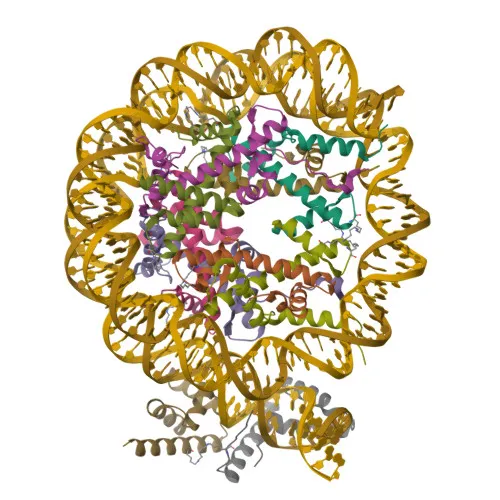
Histone H3 is a core component of the nucleosome, which wraps and compacts DNA into chromatin, thereby limiting DNA accessibility to cellular machineries. Histones play a central role in transcription regulation, DNA repair, DNA replication, and chromosomal stability. DNA accessibility is regulated via a complex set of post-translational modifications (PTMs) of histones, also known as the histone code, and nucleosome remodeling. Related references: UniProtKB: Q16695, UniProtKB: P68431
The canonical histone H3.1 (encoded by multiple genes such as HIST1H3A-J) is ubiquitously expressed, while the testis-specific H3.1t variant (encoded by H3-4/HIST3H3) is primarily found in testicular cells. This antibody targets the symmetric dimethylation at arginine 8 (R8) of histone H3, a modification catalyzed by protein arginine methyltransferase 5 (PRMT5). Symmetric dimethylation at H3R8 has been implicated in transcriptional repression and chromatin remodeling, contributing to the dynamic regulation of gene expression. Related references: UniProtKB: Q16695, UniProtKB: P68431
The modification occurs in the N-terminal tail of histone H3, a region rich in regulatory PTMs including acetylation, methylation, phosphorylation, and others. The interplay of these marks governs chromatin structure and function, making site-specific antibodies like this anti-symmetric dimethyl-H3R8 invaluable for epigenetic research. Related references: UniProtKB: Q16695, UniProtKB: P68431
Experimental Guidance and Technical Tips
- The immunogen is a synthetic symmetric dimethylated peptide around R8 of human histone H3, designed to specifically recognize the symmetric dimethylation mark. When using this antibody in western blot (WB), consider that the predicted molecular weight of histone H3 is approximately 15 kDa. Ensure complete nuclear extraction for optimal detection.
- For ELISA, direct coating of the synthetic peptide or nucleosome extracts can be used to validate antibody binding. Always include appropriate control peptides (non-modified, asymmetrically dimethylated, or other methylation states) to confirm specificity.
- In chromatin immunoprecipitation (ChIP), this antibody may be suitable for enrichment of genomic regions associated with symmetrically dimethylated H3R8. Cross-linking and sonication conditions should be optimized for your specific cell type and target loci.
- Due to the predicted wide cross-reactivity (human, mouse, rat, and others), it is advisable to validate the antibody in the relevant sample system before large-scale experiments. Species-specific sequence variations near R8 could influence binding affinity; consult the specific histone H3 sequence for your organism of interest.
- As with any modification-specific antibody, lot-to-lot variability may occur. Always titrate the antibody to determine the optimal working dilution for your specific assay.
CamelBio: Your One-Stop Sourcing Bridge
CamelBio is a specialized provider of IVD raw materials, offering validated antibody pairs, optimized monoclonal and polyclonal antibodies, bulk ancillary reagents, and rare target raw-material sourcing for diagnostic manufacturers, laboratories, and research institutes. This anti-symmetric DiMethyl-Histone H3-R8 rabbit polyclonal antibody supports epigenetic and chromatin research, enabling the study of histone modifications and their role in gene regulation. With a comprehensive supply chain covering every stage from concept to clinic, CamelBio is your reliable partner for sourcing high-quality research and diagnostic reagents.
REQUEST A QUOTE
Our professional team will reply to you within one business day. Please feel free to contact us!