Methylated Antibodies
Symmetric DiMethyl-Histone H3-R26 Rabbit pAb (Q16695/P68431) for WB, IF/ICC, ELISA
Item Number : CM0000290
Price varies based on specs and customizations
- Application
- WB, IF/ICC, ELISA
- Cross Reactivity
- Human, Mouse, Rat, Other (Wide Range Predicted)
- Protein Weight
- 15kDa

Shipping:
Contact us to get shipping details Enjoy On-time Dispatch Guarantee.
Why Choose Us
Easy ordering process, quality products, and dedicated support for your business success.
Core Product Specifications and Parameters
| Parameter | Specification |
|---|---|
| Product Name | Symmetric DiMethyl-Histone H3-R26 Rabbit pAb |
| Remarks/Alias | H3/j; H3C1; H3C2; H3C3; H3C4; H3C6; H3C7; H3C8; H3FJ; H3C10; H3C11; HIST1H3J; Symmetric DiMethyl-Histone H3-R26 |
| Species | Human |
| GeneID (human) | H3 |
| GeneID | 8290/8350 |
| Immunogen | A synthetic symmetric dimethylated peptide around R26 of human histone H3 (NP_003520.1). |
| Source | Rabbit |
| Category | Methylated Antibodies |
| Application | WB, IF/ICC, ELISA |
| Cross Reactivity | Human, Mouse, Rat, Other (Wide Range Predicted) |
| SWISS | Q16695/P68431 |
| Protein Weight | 15kDa |
| Shipping | Ice bag |
Biological Background: Histone H3 Function and Localization
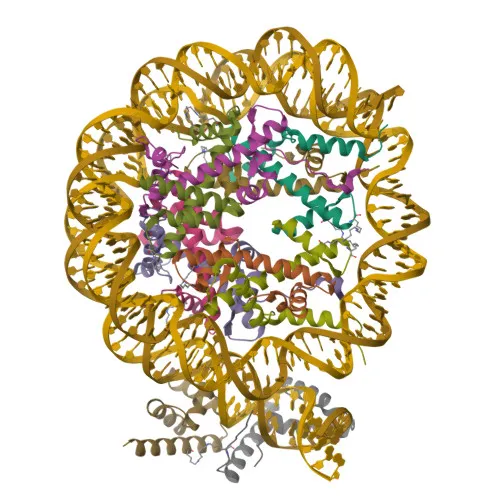
Histone H3 is a core component of the nucleosome, the fundamental repeating unit of chromatin. Nucleosomes wrap and compact DNA, restricting access to the genetic material and thereby regulating essential processes such as transcription, DNA repair, DNA replication, and chromosomal stability. The dynamic regulation of DNA accessibility is achieved through a complex array of post-translational modifications (PTMs) on histones, often referred to as the "histone code," as well as nucleosome remodeling. Related references: UniProt Q16695, UniProt P68431
Histone H3 localizes predominantly to the nucleus and associates with chromosomes. It is expressed in various isoforms; for instance, the H3.1t variant (encoded by H3-4) shows testis-specific expression, while canonical H3.1 is ubiquitously present in somatic cells. Related references: UniProt Q16695, UniProt P68431
The N-terminal tail of histone H3 is subject to extensive PTMs, including acetylation, methylation (lysine and arginine), phosphorylation, citrullination, and others. Specific methylation states (e.g., symmetric/asymmetric dimethylarginine, mono-, di-, or trimethyllysine) at defined residues serve as docking sites for effector proteins, influencing chromatin structure and gene expression outcomes. Arginine methylation, such as symmetric dimethylation mediated by PRMT5, has been implicated in transcriptional regulation and genome organization. Related references: PMID:17898714, PMID:18077460, PMID:19608861
The high evolutionary conservation of histone H3 across species underpins the broad cross-reactivity of antibodies raised against human sequences, making them valuable tools for studying chromatin biology in multiple model organisms. Related references: UniProt Q16695, UniProt P68431
Experimental Guidance and Technical Tips
- This antibody was generated using a synthetic symmetric dimethylated peptide encompassing arginine 26 (R26) of human histone H3. It is expected to specifically recognize the symmetric dimethylation mark at this position.
- For Western blot (WB), a band of approximately 15 kDa is typically observed. Consider using nuclear extracts or acid-extracted histones to enrich the target.
- In immunofluorescence/immunocytochemistry (IF/ICC), ensure appropriate cell fixation and permeabilization protocols to allow antibody access to nuclear chromatin. A positive control with known H3R26me2s modification states may aid interpretation.
- For ELISA, the antibody can be used for direct detection or in a sandwich format. Validate the assay with the immunogen peptide and appropriate controls.
- Since the immunogen is a peptide, pre-adsorption with the non-methylated or asymmetric dimethyl peptide may help confirm specificity, though this should be validated in the relevant sample system.
- Broadly predicted cross-reactivity suggests utility across human, mouse, rat, and potentially other species; however, it is advisable to verify performance in the specific species of interest.
CamelBio: Your One-Stop Sourcing Bridge
CamelBio provides diagnostic manufacturers, laboratories, and research institutes with comprehensive access to IVD raw materials, technical services, and consultative support—covering the entire journey from concept to clinic. This Symmetric DiMethyl-Histone H3-R26 rabbit polyclonal antibody exemplifies our catalog of high-quality antibodies targeting critical epigenetic marks for chromatin research and assay development. In addition to individual antibodies like this one, CamelBio offers validated antibody pairs, optimized monoclonal and polyclonal antibodies, bulk ancillary reagents, and specialized rare-target raw-material sourcing to accelerate your diagnostic and discovery workflows.
REQUEST A QUOTE
Our professional team will reply to you within one business day. Please feel free to contact us!