Methylated Antibodies
Symmetric DiMethyl-Histone H3-R17 Rabbit Monoclonal Antibody (Q16695/P68431) for WB, DB, IHC-P, ELISA
Item Number : CM0000332
Price varies based on specs and customizations
- Application
- WB, DB, IHC-P, ELISA
- Cross Reactivity
- Human, Mouse, Rat, Other (Wide Range Predicted)
- Protein Weight
- 15kDa

Shipping:
Contact us to get shipping details Enjoy On-time Dispatch Guarantee.
Why Choose Us
Easy ordering process, quality products, and dedicated support for your business success.
Core Product Specifications and Parameters
| Parameter | Value |
|---|---|
| Product Name | Symmetric DiMethyl-Histone H3-R17 Rabbit mAb |
| Remarks/Alias | H3/A; H3C2; H3C3; H3C4; H3C6; H3C7; H3C8; H3FA; H3C10; H3C11; H3C12; HIST1H3A; Symmetric DiMethyl-Histone H3-R17 |
| Species | Human |
| GeneID (Human) | 8290/ 8350 |
| GeneID | 8290/8350 |
| Immunogen | A synthetic symmetric dimethylated peptide around R17 of human Histone H3-R17 (NP_003520.1) |
| Source | Rabbit |
| Category | Methylated Antibodies |
| Application | WB, DB, IHC-P, ELISA |
| Cross Reactivity | Human, Mouse, Rat, Other (Wide Range Predicted) |
| SWISS | Q16695/P68431 |
| Protein Weight | 15kDa |
| Shipping | Ice bag |
Biological Background: Histone H3 Function and Localization
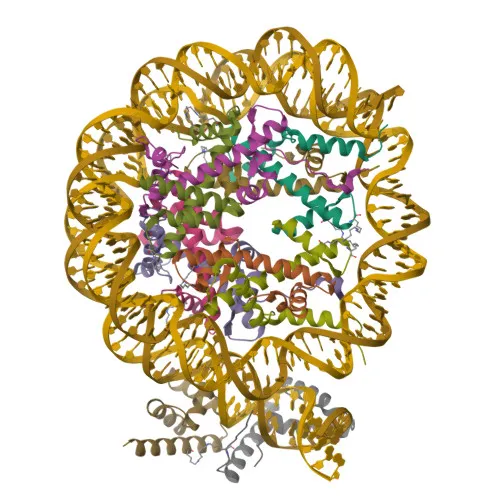
Histone H3 is a core component of the nucleosome, wrapping and compacting DNA into chromatin. This compaction limits DNA accessibility to the cellular machinery and plays a central role in transcription regulation, DNA repair, DNA replication, and chromosomal stability. DNA accessibility is dynamically regulated by post-translational modifications (PTMs) on histones, collectively referred to as the “histone code,” along with nucleosome remodeling. Related references: PMID:19608861, PMID:17194708
H3 localizes to the nucleus and is associated with chromosomes. Two major human isoforms are represented by the SWISS entries Q16695 (Histone H3.1t, testis-specific) and P68431 (Histone H3.1, widely expressed). While H3.1t is predominantly expressed in testicular cells, canonical H3.1 is present in most tissues, underscoring the isoform-specific regulation of chromatin functions. Related references: UniProt Q16695 tissue specificity
Arginine methylation of histones, including symmetric dimethylation, is a critical PTM. The enzyme PRMT5 catalyzes symmetric dimethylation of arginine residues, such as the well-characterized R9 site, influencing transcriptional regulation and chromatin organization. The symmetric dimethylation at R17 of histone H3, the target of this antibody, represents a related modification within the histone methylation landscape. Although the specific functions of symmetrically dimethylated R17 are less established, it likely participates in gene activation or silencing depending on genomic context. Related references: PMID:16267050, PMID:17194708
Numerous other modifications decorate H3, including acetylation, phosphorylation, citrullination, and ADP-ribosylation, each with dedicated enzymatic machineries and distinct functional outcomes. This antibody offers a tool to investigate the precise role of symmetric dimethyl-R17 in the complex histone code.
Experimental Guidance and Technical Tips
- Confirm antibody specificity using peptide competition assays; consider incubating the antibody with both the symmetric dimethyl-R17 peptide and the non-modified counterpart to validate modification-specific binding.
- For Western Blot, enrich nuclear protein fractions to enhance signal and verify the expected ~15 kDa band in relevant cell lysates (e.g., HeLa, testis tissue if using H3.1t isoform).
- In IHC-P applications, optimize antigen retrieval (e.g., citrate buffer pH 6.0 or EDTA pH 9.0) and include negative controls (rabbit IgG isotype) to ensure dimorphonuclear staining specificity.
- ELISA-based detection can be performed using modified and unmodified peptides as coating antigens; validate linearity and sensitivity in the appropriate concentration range.
- Cross-reactivity is predicted across a wide range of species; always validate in the specific sample system of interest to ensure expected recognition of endogenous symmetric dimethyl-H3-R17.
CamelBio: Your One-Stop Sourcing Bridge
CamelBio is a comprehensive IVD raw-material partner serving diagnostic manufacturers, laboratories, and research institutes from concept to clinic. This symmetric dimethyl-Histone H3-R17 rabbit monoclonal antibody supports advanced epigenetic and chromatin biology research. Our portfolio includes validated antibody pairs, optimized monoclonal/polyclonal antibodies, bulk ancillary reagents, and rare target sourcing, providing reliable access to the specialized reagents you need to accelerate your workflow.
REQUEST A QUOTE
Our professional team will reply to you within one business day. Please feel free to contact us!