Polyclonal Antibodies
SPTLC2 Rabbit pAb for WB, ELISA - O15270
Item Number : CM0014591
Price varies based on specs and customizations
- Application
- WB, ELISA
- Cross Reactivity
- Human, Mouse, Rat
- Protein Weight
- 63kDa

Shipping:
Contact us to get shipping details Enjoy On-time Dispatch Guarantee.
Why Choose Us
Easy ordering process, quality products, and dedicated support for your business success.
Core Product Specifications and Parameters
| Parameter | Value |
|---|---|
| Product Name | SPTLC2 Rabbit pAb |
| Remarks/Alias | LCB2; SPT2; HSN1C; LCB2A; NSAN1C; hLCB2a; SPTLC2 |
| Species | Human |
| Gene ID (Human) | 9517 |
| Gene ID | 9517 |
| Immunogen | Recombinant protein: Recombinant fusion protein containing a sequence corresponding to amino acids 423-562 of human SPTLC2 (NP_004854.1). |
| Source | Rabbit |
| Category | Polyclonal Antibodies |
| Application | WB, ELISA |
| Cross Reactivity | Human, Mouse, Rat |
| SWISS | O15270 |
| Protein Weight | 63kDa |
| Shipping | Ice bag |
Biological Background: SPTLC2 Function and Localization
-
SPTLC2 encodes serine palmitoyltransferase 2, a component of the serine palmitoyltransferase (SPT) multisubunit enzyme that catalyzes the initial and rate-limiting step in sphingolipid biosynthesis by condensing L-serine and activated acyl-CoA to form long-chain bases.
Related references:
PMID:19416851 PMID:19648650 PMID:20504773 -
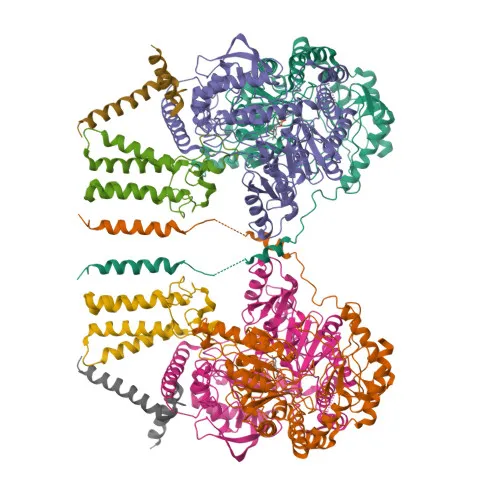
The SPT complex consists of a catalytic heterodimer formed by SPTLC1 and SPTLC2 (or SPTLC3), together with a regulatory subunit SPTSSA or SPTSSB. The composition of the complex determines substrate preference.
Related references:
PMID:19416851 -
The SPTLC1-SPTLC2-SPTSSA complex shows a strong preference for C16-CoA substrate, while the SPTLC1-SPTLC2-SPTSSB complex exhibits a strong preference for C18-CoA substrate.
Related references:
PMID:19416851 PMID:19648650 -
SPTLC2 is localized to the endoplasmic reticulum membrane.
-
The protein is widely expressed and is crucial for adipogenesis (By similarity).
-
Belongs to the class-II pyridoxal-phosphate-dependent aminotransferase family; mutations in SPTLC2 are associated with hereditary sensory and autonomic neuropathy type IC (HSN1C).
Experimental Guidance and Technical Tips
- The immunogen corresponds to amino acids 423–562 near the C-terminus of human SPTLC2, which may recognize endogenous SPTLC2 across human, mouse, and rat species as indicated by cross-reactivity data.
- For Western blot (WB), a band around 63 kDa is expected; consider using appropriate positive controls such as human, mouse, or rat tissue lysates expressing SPTLC2.
- For ELISA applications, optimize coating antigen and antibody dilutions to achieve the desired sensitivity and specificity.
- Perform validation in your target sample system to confirm reactivity and specificity before large-scale use.
CamelBio: Your One-Stop Sourcing Bridge
As a trusted partner for diagnostic manufacturers and research institutions, CamelBio offers a comprehensive portfolio of IVD raw materials, including validated polyclonal and monoclonal antibodies, bulk ancillary reagents, and rare target sourcing. SPTLC2 is a critical enzyme in sphingolipid metabolism with implications in neurological disorders, and our antibody portfolio is designed to support your assay development from concept to clinic. Contact us to explore custom sourcing, panel development, and technical support for your next-generation diagnostic solutions.
REQUEST A QUOTE
Our professional team will reply to you within one business day. Please feel free to contact us!