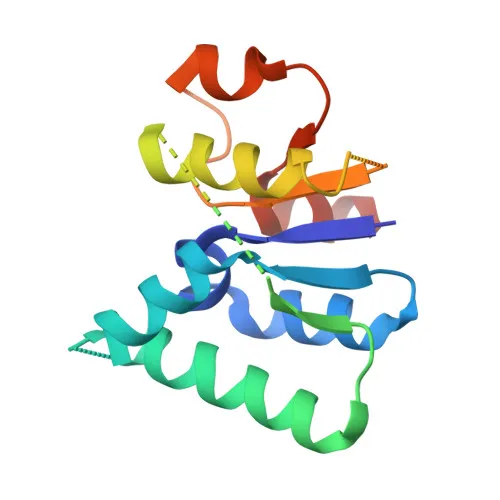
Polyclonal Antibodies
SMG5 Rabbit pAb - Q9UPR3
Item Number : CM0021875
Price varies based on specs and customizations
- Application
- WB, ELISA
- Cross Reactivity
- Mouse, Rat
- Protein Weight
- 114kDa

Shipping:
Contact us to get shipping details Enjoy On-time Dispatch Guarantee.
Why Choose Us
Easy ordering process, quality products, and dedicated support for your business success.
Core Product Specifications and Parameters
| Parameter | Value |
|---|---|
| Product Name | SMG5 Rabbit pAb |
| Remarks/Alias | EST1B; SMG-5; LPTSRP1; LPTS-RP1; SMG5 |
| Species | Human |
| GeneID (Human) | 23381 |
| GeneID | 23381 |
| Immunogen | Synthetic peptide (a synthetic peptide corresponding to a sequence within amino acids 950-1016 of human SMG5 (NP_056142.2)) |
| Source | Rabbit |
| Category | Polyclonal Antibodies |
| Application | WB, ELISA |
| Cross Reactivity | Mouse, Rat |
| SWISS | Q9UPR3 |
| Protein Weight | 114kDa |
| Shipping | Ice bag |
Biological Background: SMG5 Function and Localization
- SMG5, also known as EST1-like protein B or LPTS-RP1, is a key component of the nonsense-mediated mRNA decay (NMD) pathway, responsible for recognizing and degrading mRNAs containing premature termination codons.
- Although SMG5 itself lacks RNase activity, it facilitates the dephosphorylation of the central NMD factor UPF1 by acting as an adapter to recruit protein phosphatase 2A (PP2A), a critical step in the NMD cascade.
- Together with its partner SMG7, SMG5 is thought to bridge UPF1 to the exonucleolytic mRNA degradation machinery, thereby linking target recognition to transcript destruction.
- Subcellularly, SMG5 is found in both the cytoplasm and nucleus, consistent with its participation in translation-coupled surveillance and potential nuclear functions.
- The protein is subject to post-translational modifications including acetylation and phosphorylation, which may regulate its activity or interactions within the NMD complex.
- SMG5 is ubiquitously expressed across tissues, reflecting the fundamental housekeeping role of the NMD pathway in maintaining transcriptome integrity.
- Beyond NMD, SMG5 has been implicated in telomere biology as it is necessary for the activity of telomerase reverse transcriptase (TERT), suggesting crosstalk between RNA surveillance and telomere maintenance.
Experimental Guidance and Technical Tips
- The immunogen is a synthetic peptide spanning amino acids 950–1016 near the C-terminus of human SMG5 (NP_056142.2), a region predicted to be specific to this protein based on sequence analysis.
- For Western blot, a band at approximately 114 kDa is expected; consider using appropriate positive and negative control lysates (e.g., HeLa, HEK293) and validate the band’s identity with siRNA or CRISPR knockdown of SMG5 if needed.
- The antibody cross-reacts with mouse and rat SMG5, making it suitable for studies in rodent models; however, users should verify reactivity in their specific sample system and application.
- For ELISA, the antibody may be used as a capture or detection reagent; optimal working concentrations should be determined experimentally by the end user.
CamelBio: Your One-Stop Sourcing Bridge
CamelBio supports diagnostic manufacturers, laboratories, and research institutes with comprehensive access to IVD raw materials, technical services, and consulting from concept to clinic. For researchers investigating nonsense-mediated mRNA decay or mRNA surveillance pathways, CamelBio offers validated antibody pairs, optimized monoclonal and polyclonal antibodies, and bulk ancillary reagents to streamline assay development. Our supply network includes rare target raw-material sourcing, ensuring you receive consistent, high-quality reagents for your diagnostic and research programs.
REQUEST A QUOTE
Our professional team will reply to you within one business day. Please feel free to contact us!