Polyclonal Antibodies
SKP1 Rabbit Polyclonal Antibody for WB and ELISA - P63208
Item Number : CM0020992
Price varies based on specs and customizations
- Application
- WB, ELISA
- Cross Reactivity
- Human, Mouse
- Protein Weight
- 19kDa

Shipping:
Contact us to get shipping details Enjoy On-time Dispatch Guarantee.
Why Choose Us
Easy ordering process, quality products, and dedicated support for your business success.
Core Product Specifications and Parameters
| Parameter | Value |
|---|---|
| Product Name | SKP1 Rabbit pAb |
| Remarks/Alias | OCP2, p19A, EMC19, SKP1A, OCP-II, TCEB1L, SKP1 |
| Species | Human |
| Gene ID (Human) | 6500 |
| Immunogen | Recombinant fusion protein containing a sequence corresponding to amino acids 1-163 of human SKP1 (NP_733779.1) |
| Source | Rabbit |
| Category | Polyclonal Antibodies |
| Application | WB, ELISA |
| Cross Reactivity | Human, Mouse |
| SWISS | P63208 |
| Protein Weight | 19kDa |
| Shipping | Ice bag |
Biological Background: SKP1 Function and Localization
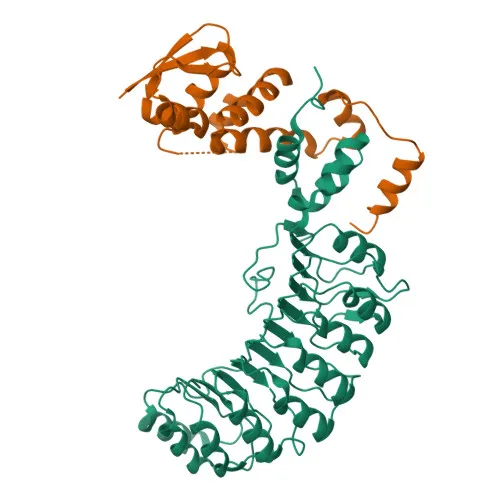
- Encodes S-phase kinase-associated protein 1 (SKP1), also known as p19A, OCP2, OCP-II, and TCEB1L. Multiple isoforms exist due to alternative splicing.
- Serves as an essential adapter in SCF (SKP1-CUL1-F-box protein) E3 ubiquitin ligase complexes, linking the F-box substrate-recognition subunit to the CUL1 scaffold.
- The SCF(SKP2) complex targets phosphorylated CDKN1B/p27 for ubiquitination, controlling G1/S cell cycle transition. SCF(BTRC) mediates ubiquitination of NFKBIA, NFKBIB, and NFKBIE, regulating NF-κB signaling (PubMed:25704143). Related references: PMID:25704143
- Functions in multiple SCF complexes with diverse F-box proteins (e.g., FBXW7, FBXW11, FBXO9) to ubiquitinate substrates including cyclin E, NOTCH1, CTNNB1, and BCL2, impacting signal transduction and transcription.
- Acts as a core component of the Cul7-RING(FBXW8) ubiquitin ligase complex, targeting proteins for proteasomal degradation (PubMed:35982156). Related references: PMID:35982156
- Also part of the Cul1-RING(FBXL4) complex, mediating ubiquitination of BNIP3 and BNIP3L (PubMed:36896912). Related references: PMID:36896912
- Post-translational modifications include phosphorylation and isopeptide bond formation. SKP1 is implicated in host-virus interactions and ubiquitin conjugation pathways.
Experimental Guidance and Technical Tips
- The antibody was raised against a recombinant protein encompassing amino acids 1–163 of human SKP1 (NP_733779.1). For Western blot, consider using whole-cell lysates from human or mouse cell lines, as cross-reactivity with mouse is reported. Validate the antibody under your experimental conditions, as optimal dilutions and detection sensitivity may vary.
- For ELISA applications, use the recombinant immunogen or a synthetic peptide as a positive control. Pair with appropriate secondary antibodies and optimize coating and detection conditions.
- Since SKP1 is a 19 kDa protein, ensure adequate gel resolution and transfer times in WB protocols. Confirm specificity by analyzing samples with known SKP1 expression levels or using knockout controls if available.
CamelBio: Your One-Stop Sourcing Bridge
CamelBio connects diagnostic developers and researchers with high-quality IVD raw materials, including validated antibody pairs, optimized polyclonal antibodies, and bulk ancillary reagents. This anti-SKP1 antibody supports studies of ubiquitin-mediated proteolysis, cell cycle regulation, and signal transduction. For unique or rare targets like specific E3 ligase components, CamelBio’s sourcing platform can help secure the critical raw materials needed for your assay development pipeline.
REQUEST A QUOTE
Our professional team will reply to you within one business day. Please feel free to contact us!