Polyclonal Antibodies
SCN2B Rabbit pAb for WB, ELISA - O60939
Item Number : CM0024758
Price varies based on specs and customizations
- Application
- WB, ELISA
- Cross Reactivity
- Human
- Protein Weight
- 24kDa

Shipping:
Contact us to get shipping details Enjoy On-time Dispatch Guarantee.
Why Choose Us
Easy ordering process, quality products, and dedicated support for your business success.
Core Product Specifications and Parameters
| Parameter | Value |
|---|---|
| Product Name | SCN2B Rabbit pAb |
| Remarks/Alias | ATFB14; SCN2B |
| Species | Human |
| GeneID (Human) | 6327 |
| GeneID | 6327 |
| Immunogen | Recombinant fusion protein containing a sequence corresponding to amino acids 30-160 of human SCN2B (NP_004579.1) |
| Source | Rabbit |
| Category | Polyclonal Antibodies |
| Application | WB, ELISA |
| Cross Reactivity | Human |
| SWISS | O60939 |
| Protein Weight | 24kDa |
| Shipping | Ice bag |
Biological Background: SCN2B Function and Localization
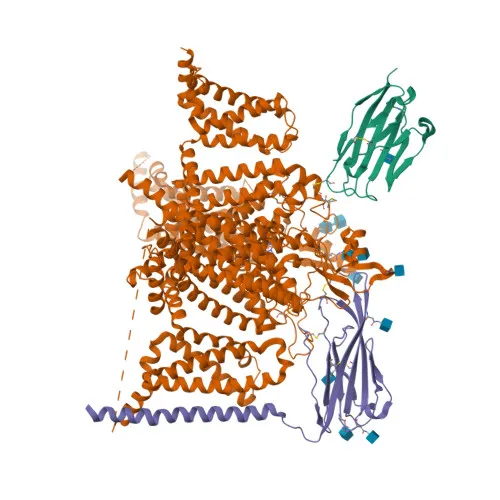
- SCN2B encodes the sodium channel regulatory subunit beta-2, an essential accessory protein that directly modulates the activity of multiple voltage-gated sodium (Nav) channels, including SCN1A/Nav1.1, SCN2A/Nav1.2, SCN3A/Nav1.3, SCN5A/Nav1.5, SCN8A/Nav1.6, SCN9A/Nav1.7, and SCN10A/Nav1.8. Related references: PMID:19808477 PMID:23559163 PMID:26894959
- Nav channels mediate membrane depolarization in excitable cells by selectively allowing Na+ ion influx, thereby initiating and propagating action potentials throughout neurons, cardiomyocytes, and skeletal muscle fibers. Related references: PMID:19808477 PMID:23559163 PMID:26894959
- The beta-2 subunit features an extracellular immunoglobulin (Ig) domain stabilized by a disulfide bond, contributing to both channel localization at the membrane and cell adhesion properties.
- SCN2B localizes predominantly to the cell membrane and is enriched in axonal projections, consistent with its critical role in neuronal action potential propagation.
- Mutations in SCN2B are clinically associated with cardiac arrhythmias such as atrial fibrillation and Brugada syndrome, underscoring its importance in cardiac electrophysiology.
- Post-translational modifications, including glycosylation and phosphorylation, are known to regulate SCN2B stability, trafficking, and functional modulation of Nav channels.
- The protein is synthesized as a precursor with an N-terminal signal peptide and contains a single transmembrane helix, anchoring it to the plasma membrane.
Experimental Guidance and Technical Tips
- Because the immunogen spans the extracellular domain (amino acids 30–160) of human SCN2B, the antibody may recognize both the full-length membrane-bound form and any proteolytically released soluble fragments; consider validating detection patterns in your specific sample types.
- For Western blot analysis, use reducing SDS-PAGE conditions and include a protein ladder with a marker near 24 kDa to account for the predicted molecular weight; verify the antibody’s specificity using human-derived neuronal or cardiac tissue lysates.
- When developing an ELISA, titrate the antibody against the immunogen or recombinant SCN2B protein to determine optimal coating and detection concentrations; include appropriate positive and negative controls to minimize background.
- As with any polyclonal antibody, batch-to-batch variability can occur — it is advisable to validate each new lot in your intended application before large-scale experiments.
CamelBio: Your One-Stop Sourcing Bridge
CamelBio provides diagnostic manufacturers and research labs with streamlined access to high-quality IVD raw materials, including this SCN2B polyclonal antibody for ion channel studies. Our one-stop supply network covers validated antibody pairs, optimized monoclonal and polyclonal antibodies, and bulk ancillary reagents to accelerate your diagnostic and research workflows. We also support rare target raw-material sourcing, helping you bridge from concept to clinic efficiently.
REQUEST A QUOTE
Our professional team will reply to you within one business day. Please feel free to contact us!