Polyclonal Antibodies
RRP9 Rabbit pAb for WB, ELISA - O43818
Item Number : CM0019146
Price varies based on specs and customizations
- Application
- WB, ELISA
- Cross Reactivity
- Mouse
- Protein Weight
- 52kDa

Shipping:
Contact us to get shipping details Enjoy On-time Dispatch Guarantee.
Why Choose Us
Easy ordering process, quality products, and dedicated support for your business success.
Core Product Specifications and Parameters
| Parameter | Value |
|---|---|
| Product Name | RRP9 Rabbit pAb |
| Remarks/Alias | U3-55K; RNU3IP2; RRP9 |
| Species | Human |
| GeneID (Human) | 9136 |
| GeneID | 9136 |
| Immunogen | Recombinant fusion protein containing a sequence corresponding to amino acids 156-475 of human RRP9 (NP_004695.1) |
| Source | Rabbit |
| Category | Polyclonal Antibodies |
| Application | WB, ELISA |
| Cross Reactivity | Mouse |
| SWISS | O43818 |
| Protein Weight | 52kDa |
| Shipping | Ice bag |
Biological Background: RRP9 Function and Localization
- RRP9, also known as U3-55K or RNU3IP2, is a 52 kDa U3 small nucleolar RNA-interacting protein 2 (UniProt O43818).
- It is a component of the nucleolar U3 snoRNP complex, which is thought to participate in the processing and modification of pre-ribosomal RNA (pre-rRNA). Related references: PMID:26867678
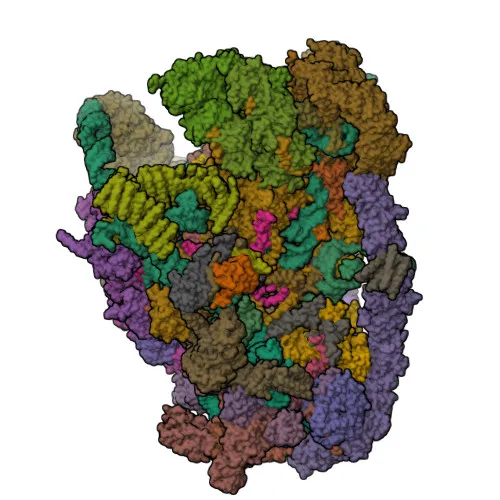
- RRP9 is part of the small subunit (SSU) processome, the first precursor of the small eukaryotic ribosomal subunit, where it contributes to ribosome biogenesis and RNA folding and cleavage. Related references: PMID:34516797
- The protein localizes to the nucleolus, consistent with its role in ribosomal RNA processing.
- RRP9 contains WD repeats and is subject to post-translational modifications including acetylation, methylation, and phosphorylation.
- It has been identified through direct protein sequencing and proteomics as a ribonucleoprotein with RNA-binding capacity.
Experimental Guidance and Technical Tips
- The immunogen corresponds to a region spanning amino acids 156-475 of human RRP9, which may contribute to the antibody's specificity.
- For Western blotting, consider using a positive control such as nucleolar extracts from human or mouse cells, and expect a band near 52 kDa.
- ELISA applications may require optimization of coating antigen and detection conditions; consider pairing with a matched secondary antibody for signal development.
- Cross-reactivity with mouse RRP9 has been reported; validate the antibody's performance in the relevant species and sample type before use.
CamelBio: Your One-Stop Sourcing Bridge
CamelBio provides diagnostic manufacturers, laboratories, and research institutes with one-stop access to IVD raw materials, technical services, and consulting. Our portfolio includes validated antibody pairs, optimized monoclonal and polyclonal antibodies, and bulk ancillary reagents for ribosome biogenesis and RNA processing research. We also offer rare target raw-material sourcing to support your diagnostic development needs.
REQUEST A QUOTE
Our professional team will reply to you within one business day. Please feel free to contact us!