Monoclonal Antibodies
Rat anti-Mouse MHC Class II (I-A/I-E) Monoclonal Antibody for FC - P18468 / P06342 / Q3U060 / P14435
Item Number : CM0011300
Price varies based on specs and customizations
- Application
- FC
- Cross Reactivity
- Mouse
- Protein Weight
- 30kDa/32kDa/26kDa

Shipping:
Contact us to get shipping details Enjoy On-time Dispatch Guarantee.
Why Choose Us
Easy ordering process, quality products, and dedicated support for your business success.
Core Product Specifications and Parameters
| Parameter | Value |
|---|---|
| Product Name | Rat anti-Mouse MHC Class II (I-A/I-E) Monoclonal Antibody |
| Remarks/Alias | Eb; Ia4; H2Eb; Ia-4; H-2Eb |
| Species | Mouse |
| GeneID (Mouse) | 14969, 14961, 381091, 14960 |
| Immunogen | Recombinant protein of mouse MHC Class II (I-A/I-E) |
| Source | Rat |
| Category | Monoclonal Antibodies |
| Application | FC |
| Cross Reactivity | Mouse |
| SWISS | P18468, P06342, Q3U060, P14435 |
| Protein Weight | ~30kDa / ~32kDa / ~26kDa |
| Shipping | Ice bag |
Biological Background: MHC Class II (I-A/I-E) Function and Localization
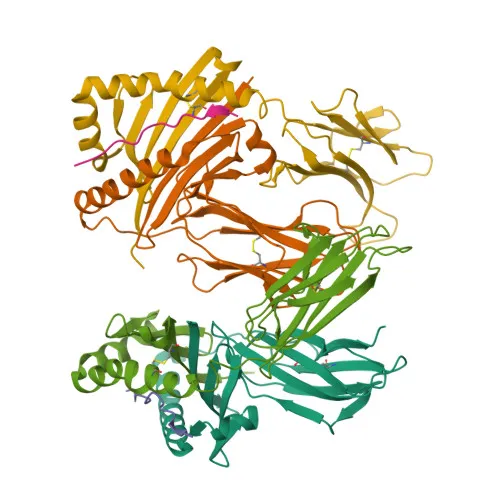
- The target protein is encoded by the H2-Eb1 gene in mouse and is also known as H-2Eb, Ia4, or H2Eb. It represents the beta chain of the mouse MHC class II I-A molecule.
- MHC class II molecules are heterodimers composed of an alpha and a beta chain; the beta chain contains the peptide-binding groove and plays a critical role in presenting processed exogenous antigens to CD4+ helper T cells.
- The protein is a member of the immunoglobulin superfamily and is expressed on the surface of professional antigen-presenting cells, including dendritic cells, B cells, and macrophages.
- According to UniProt record P18468, the H2-Eb1 protein is localized to the plasma membrane and contains both a signal peptide and a transmembrane domain, as well as an extracellular immunoglobulin-like domain.
- Key structural features include intrachain disulfide bonds, N-linked glycosylation sites, and potential ubiquitination modifications, which may influence MHC class II antigen presentation and stability.
- Based on associated keywords, the protein is involved in adaptive immune responses, serving as a critical component in the recognition of foreign antigens and the initiation of specific immune reactions.
Experimental Guidance and Technical Tips
- The immunogen used is a recombinant protein encompassing the extracellular domain of mouse MHC class II (I-A/I-E), which likely presents native conformational epitopes. For flow cytometry, consider titrating the antibody to determine optimal staining concentrations on relevant antigen-presenting cells such as murine splenocytes or lymph node cells.
- Due to its rat origin, include appropriate isotype controls and Fc receptor blocking steps to minimize non-specific binding. Assess cross-reactivity with other mouse strains or species as needed; the antibody is reported to react with mouse, but individual allelic variants may exhibit different binding efficiencies.
- The conjugated fluorophore () may be sensitive to light and temperature; protect from light and store at recommended conditions. Validate antibody performance in multicolor flow cytometry panels with appropriate compensation controls.
CamelBio: Your One-Stop Sourcing Bridge
CamelBio provides diagnostic manufacturers, laboratories, and research institutes with one-stop access to IVD raw materials, technical services, and consulting—covering every stage from concept to clinic. This MHC Class II (I-A/I-E) monoclonal antibody supports immunology-focused applications, enabling robust detection of antigen-presenting cells in mouse models. Explore our comprehensive portfolio of validated antibody pairs, optimized monoclonal/polyclonal antibodies, bulk ancillary reagents, and custom rare-target sourcing solutions tailored to your development pipeline.
Product Datasheet
Rat anti-Mouse MHC Class II (I-A/I-E) Monoclonal Antibody for FC - P18468 / P06342 / Q3U060 / P14435
REQUEST A QUOTE
Our professional team will reply to you within one business day. Please feel free to contact us!