Monoclonal Antibodies
Rat anti-Mouse CD122 Monoclonal Antibody for Flow Cytometry - P16297
Item Number : CM0011489
Price varies based on specs and customizations
- Application
- FC
- Cross Reactivity
- Mouse
- Protein Weight
- 60kDa

Shipping:
Contact us to get shipping details Enjoy On-time Dispatch Guarantee.
Why Choose Us
Easy ordering process, quality products, and dedicated support for your business success.
Core Product Specifications and Parameters
| Parameter | Value |
|---|---|
| Product Name | Rat anti-Mouse CD122 mAb |
| Remarks/Alias | p70; CD122; IL15Rbeta; Il-2Rbeta; IL-15Rbeta; Il-2/15Rbeta |
| Species | Mouse |
| Gene ID (Human) | 3560 |
| Gene ID (Mouse) | 16185 |
| Immunogen | Synthetic peptide derived from mouse CD122 |
| Source | Rat |
| Category | Monoclonal Antibodies |
| Application | FC |
| Cross Reactivity | Mouse |
| SWISS | P16297 |
| Protein Weight | 60kDa |
| Shipping | Ice bag |
Biological Background: CD122 Function and Localization
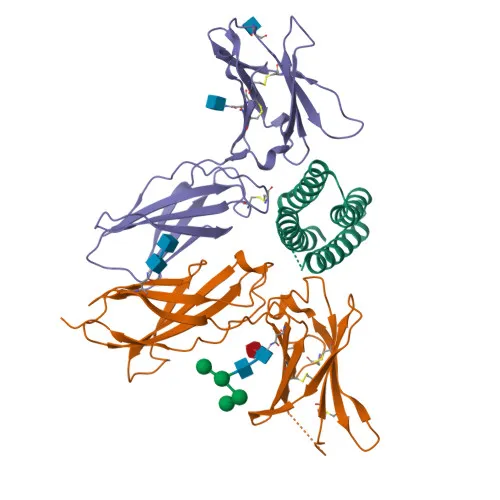
- Interleukin-2 receptor subunit beta (CD122, also known as IL-2Rβ, p70, or high affinity IL-2 receptor subunit beta) is a transmembrane receptor that forms part of the high-affinity IL-2 receptor complex.
- CD122 is essential for IL-2-mediated signal transduction, including receptor-mediated endocytosis and the activation of mitogenic pathways that drive T-cell proliferation and immune responses.
- In association with IL-15 receptor alpha (IL-15RA), CD122 participates in IL-15 signaling, which contributes to the stimulation of neutrophil phagocytosis, highlighting its role in innate immunity (by similarity).
- The receptor is a single-pass type I membrane protein, localized to the cell membrane and cell surface, consistent with its function in receiving extracellular cytokine signals and initiating intracellular cascades.
- CD122 contains several structural features typical of cytokine receptor family members, including a signal peptide, extracellular domain with disulfide bonds, a single transmembrane helix, and an intracellular domain that interacts with downstream signaling molecules.
- Post-translational modifications include glycosylation, as indicated by its annotation as a glycoprotein, which may influence receptor stability and ligand binding affinity.
- The protein has a calculated molecular weight of approximately 60.5 kDa, consistent with the 60 kDa reported in the product specifications, and serves as a key marker for immune cell subsets in flow cytometry.
Experimental Guidance and Technical Tips
- The fluorophore conjugation provides a bright and photostable signal, allowing direct detection without secondary reagents. Consider performing an antibody titration to determine the optimal concentration for your specific cell type and staining protocol.
- For accurate gating and data interpretation, include appropriate isotype controls and fluorescence-minus-one (FMO) controls in your flow cytometry experiments.
- Since the immunogen is a synthetic peptide, the antibody may recognize a linear epitope; validate specificity by including positive and negative cell populations (e.g., CD122-high and CD122-low expression cells) in your panel.
- This antibody is validated for flow cytometry on mouse samples. For other applications, further optimization may be required.
CamelBio: Your One-Stop Sourcing Bridge
CamelBio offers a comprehensive range of IVD raw materials, including validated monoclonal antibodies like this anti-CD122 clone, to support diagnostic and research needs in immunology. Whether you need bulk antibody supplies, custom conjugation, or ancillary reagents, our platform streamlines sourcing from concept to clinic. Partner with CamelBio to access a reliable, one-stop solution for your IVD development pipeline.
REQUEST A QUOTE
Our professional team will reply to you within one business day. Please feel free to contact us!