Polyclonal Antibodies
Raptor Rabbit Polyclonal Antibody for WB, ELISA - Q8N122
Item Number : CM0019609
Price varies based on specs and customizations
- Application
- WB, ELISA
- Cross Reactivity
- Human, Mouse, Rat
- Protein Weight
- 149kDa

Shipping:
Contact us to get shipping details Enjoy On-time Dispatch Guarantee.
Why Choose Us
Easy ordering process, quality products, and dedicated support for your business success.
Core Product Specifications and Parameters
| Parameter | Specification |
|---|---|
| Product Name | Raptor Rabbit pAb |
| Remarks/Alias | KOG1; Mip1; Raptor |
| Species | Human |
| GeneID | 57521 |
| Immunogen | Recombinant fusion protein containing a sequence corresponding to amino acids 888-1013 of human Raptor (NP_065812.1) |
| Source | Rabbit |
| Category | Polyclonal Antibodies |
| Application | WB, ELISA |
| Cross Reactivity | Human, Mouse, Rat |
| SWISS | Q8N122 |
| Protein Weight | 149kDa |
| Shipping | Ice bag |
Biological Background: Raptor Function and Localization
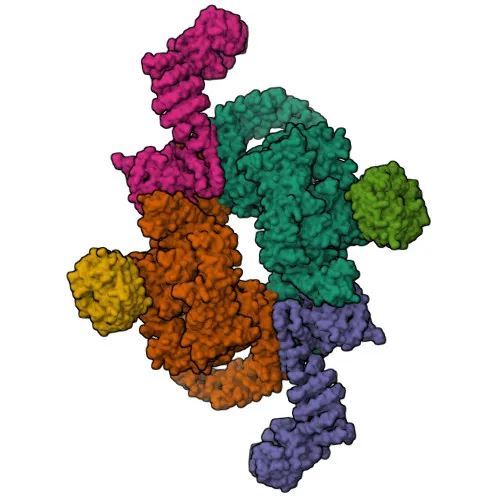
- Raptor (RPTOR), also known as p150 target of rapamycin (TOR)-scaffold protein, is a core component of the mechanistic target of rapamycin complex 1 (mTORC1), an evolutionarily conserved central nutrient sensor that stimulates anabolic reactions and macromolecule biosynthesis to promote cellular biomass generation and growth (PubMed:12150925, PubMed:12150926, PubMed:12747827).
Related references: PMID:12150925, PMID:12150926, PMID:12747827 - Within mTORC1, Raptor acts as a molecular adapter that mediates recruitment of the complex to lysosomal membranes via interaction with small GTPases (RagA/B/C/D) and promotes substrate specificity by binding to TOS motif-containing proteins, directing them toward the MTOR kinase domain for phosphorylation (PubMed:12747827, PubMed:24403073, PubMed:26588989).
Related references: PMID:12747827, PMID:24403073, PMID:26588989 - In response to nutrients, growth factors, or amino acids, mTORC1 phosphorylates downstream substrates such as ribosomal protein S6 kinases (RPS6KB1, RPS6KB2) and EIF4EBP1 (4E-BP1) to promote protein, lipid, and nucleotide synthesis, while inhibiting catabolic pathways by phosphorylating autophagy initiation components ULK1 and ATG13, as well as transcription factor TFEB (PubMed:12150925, PubMed:12150926, PubMed:12747827).
Related references: PMID:12150925, PMID:12150926, PMID:12747827 - Raptor is primarily localized to the lysosome membrane, cytoplasm, and cytoplasmic granules, consistent with its role in nutrient sensing and signaling.
- The protein is highly expressed in skeletal muscle, with moderate levels in brain, lung, small intestine, kidney, and placenta.
- Raptor undergoes multiple post-translational modifications, including phosphorylation, acetylation, glycation, ISGylation (Ubl conjugation), and isopeptide bond formation, regulating its activity and interactions (Keywords: Acetylation, Glycoprotein, Isopeptide bond, Phosphoprotein, Ubl conjugation).
- It is also associated with host-virus interactions and exists in alternatively spliced isoforms, expanding its functional diversity.
Experimental Guidance and Technical Tips
- The immunogen corresponds to amino acids 888-1013 of human Raptor, a region that may be conserved across species; validate cross-reactivity in your models.
- For Western blot (WB), a band near 149 kDa is expected; optimize transfer conditions for large proteins.
- For ELISA, consider using the antibody in a capture or detection format; optimal dilutions should be determined experimentally.
- As a polyclonal antibody, it may offer robust signal amplification; however, validate specificity in knockout or knockdown controls.
- The antibody reacts with human, mouse, and rat Raptor; if using other species, check sequence homology of the immunogen region.
CamelBio: Your One-Stop Sourcing Bridge
CamelBio provides diagnostic manufacturers and research laboratories with one-stop access to premium IVD raw materials, including validated antibodies for mTOR signaling and autophagy pathways. Our portfolio includes optimized monoclonal and polyclonal antibodies, bulk ancillary reagents, and rare-target sourcing capabilities, streamlining your development from concept to clinic. Contact us to secure reliable supply chains for your Raptor-related research and assay needs.
REQUEST A QUOTE
Our professional team will reply to you within one business day. Please feel free to contact us!