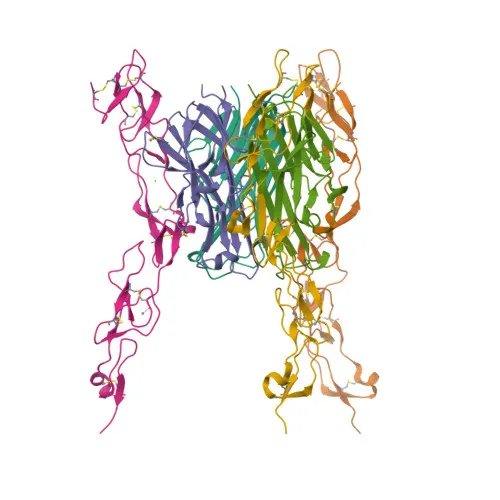
Monoclonal Antibodies
Rabbit anti-Mouse RANK/CD265 mAb for FC - O35305
Item Number : CM0004187
Price varies based on specs and customizations
- Application
- FC
- Cross Reactivity
- Mouse
- Protein Weight
- 67kDa

Shipping:
Contact us to get shipping details Enjoy On-time Dispatch Guarantee.
Why Choose Us
Easy ordering process, quality products, and dedicated support for your business success.
Core Product Specifications and Parameters
| Parameter | Value |
|---|---|
| Product Name | Rabbit anti-Mouse RANK/CD265 mAb |
| Remarks/Alias | OFE; ODFR; Rank; Ly109; mRANK; TRANCE-R |
| Species | Mouse |
| GeneID (Human) | 8792 |
| GeneID | 21934 |
| Immunogen | Recombinant fusion protein containing a sequence corresponding to amino acids 31-213 of mouse RANK/CD265 (NP_033425.3) |
| Source | Rabbit |
| Category | Monoclonal Antibodies |
| Application | FC |
| Cross Reactivity | Mouse |
| SWISS | O35305 |
| Protein Weight | 67kDa |
| Shipping | Ice bag |
Biological Background: RANK/CD265 Function and Localization
- RANK (receptor activator of nuclear factor-κB), also designated CD265, is a member of the tumor necrosis factor receptor superfamily (TNFRSF11A) and is known as the osteoclast differentiation factor receptor (ODFR).
- It serves as the primary receptor for the cytokine RANKL (TNFSF11/TRANCE/OPGL) and is indispensable for RANKL-driven osteoclastogenesis. Related references: PMID:20483727 PMID:23478294 PMID:9878548
- Interaction with the adaptor EEIG1 enhances RANK signaling, promoting osteoclast differentiation via NFATC1 transcriptional activation and PLCG2 stimulation. Related references: PMID:23478294
- Beyond bone remodeling, RANK participates in the regulation of T-cell–dendritic cell crosstalk. Related references: PMID:9367155
- RANK localizes predominantly to the cell membrane and membrane rafts, consistent with its function as a surface signaling receptor.
- The protein is ubiquitously expressed, with elevated levels in trabecular bone, thymus, small intestine, lung, brain, and kidney; lower expression is observed in spleen and bone marrow.
- Post-translational modifications include glycosylation and phosphorylation; structural features comprise disulfide bonds, a signal peptide, a transmembrane helix, and a metal-binding domain.
Experimental Guidance and Technical Tips
- The immunogen encompasses the extracellular region (aa 31–213), making the antibody suitable for detecting surface RANK/CD265 by flow cytometry without membrane permeabilization.
- As a directly conjugated ABflo® 488 monoclonal antibody, it is ready-to-use for FC; titrate the reagent (e.g., 0.5–5 µg/mL) on a positive control such as mouse osteoclast precursors or dendritic cells to establish the optimal working concentration.
- Include an appropriate isotype control to discriminate specific staining from background.
- Cross-reactivity has been confirmed for mouse; validate performance in your specific mouse tissue or primary cell system.
- For functional or signaling studies, consider using a carrier-free (unlabeled) format to avoid potential interference from the fluorescent tag.
CamelBio: Your One-Stop Sourcing Bridge
CamelBio provides a comprehensive IVD raw-material portfolio, including this ABflo® 488 monoclonal antibody targeting mouse RANK/CD265 for flow cytometry. From validated antibody pairs and optimized monoclonal/polyclonal antibodies to bulk ancillary reagents and rare-target sourcing, we support your diagnostic development pipeline end-to-end. Partner with us for one-stop access to materials and expertise that accelerate your osteoclast biology and immunology research from concept to clinic.
REQUEST A QUOTE
Our professional team will reply to you within one business day. Please feel free to contact us!