Monoclonal Antibodies
Rabbit anti-Mouse IgE Monoclonal Antibody for FC - P06336
Item Number : CM0005253
Price varies based on specs and customizations
- Application
- FC (intra)
- Cross Reactivity
- Mouse
- Protein Weight
- 47kDa

Shipping:
Contact us to get shipping details Enjoy On-time Dispatch Guarantee.
Why Choose Us
Easy ordering process, quality products, and dedicated support for your business success.
Core Product Specifications and Parameters
| Parameter | Specification |
|---|---|
| Product Name | Rabbit anti-Mouse IgE mAb |
| Remarks/Alias | IGHE, Ig epsilon chain C region |
| Species | Mouse |
| Immunogen | Recombinant fusion protein containing a sequence corresponding to amino acids 83-421 of mouse IgE (P06336) |
| Source | Rabbit |
| Category | Monoclonal Antibodies |
| Application | FC (intra) |
| Cross Reactivity | Mouse |
| SWISS | P06336 |
| Protein Weight | 47kDa |
| Shipping | Ice bag |
Biological Background: Mouse IgE Constant Region Function and Localization
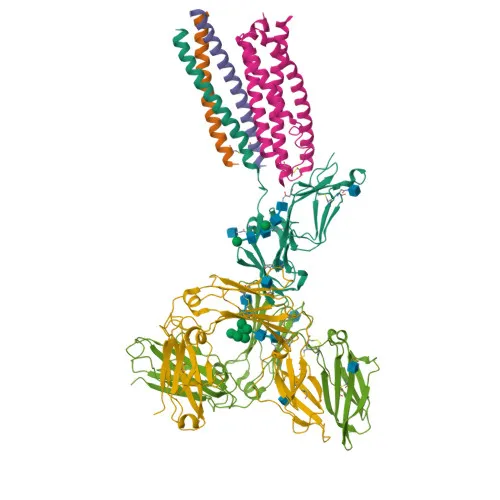
- The immunoglobulin heavy constant epsilon chain (IgE) is the constant region of the immunoglobulin heavy chain, forming part of the IgE antibody. This antibody isotype plays a central role in allergic responses and parasitic infections.
- IgE functions as both membrane-bound receptor on B cells and secreted antibody. Membrane-bound IgE acts as a B cell receptor, triggering clonal expansion and differentiation into plasma cells upon antigen binding. Secreted IgE binds to high-affinity Fcε receptors on mast cells and basophils, mediating degranulation and inflammation.
- The processing of immunoglobulin heavy chains involves V(D)J recombination and somatic hypermutation, which generate diversity and allow affinity maturation of the antigen-binding site.
- IgE is expressed in two forms: a membrane-bound form on the surface of B lymphocytes and a secreted form released by plasma cells. The secreted form is found in extracellular spaces and mucosal tissues.
- Subcellular localization includes the cell membrane for the membrane-bound form and the extracellular space for the secreted form. The protein undergoes post-translational modifications such as glycosylation and disulfide bond formation essential for its structure and function.
- As a member of the immunoglobulin superfamily, the constant region contains immunoglobulin domains that contribute to effector functions and receptor interactions.
Experimental Guidance and Technical Tips
- The immunogen corresponds to amino acids 83-421 of mouse IgE, covering a large portion of the constant region. This design likely ensures recognition of native IgE, but users should validate specificity in their target sample.
- For intracellular flow cytometry, a fixation and permeabilization protocol suitable for intracellular proteins must be optimized. Consider testing different permeabilization buffers and times.
- Since IgE is expressed at low levels in resting B cells but upregulated upon activation, activation of B cells (e.g., with IL-4 and anti-CD40) may enhance detection.
- Use appropriate isotype controls and compensation when analyzing fluorescence. The antibody is reactive with mouse IgE; cross-reactivity with other species is not expected based on the immunogen.
- Validate the staining pattern in known IgE-expressing cell lines or primary mouse B cells.
CamelBio: Your One-Stop Sourcing Bridge
CamelBio provides diagnostic manufacturers and research labs with reliable access to IVD raw materials, including this anti-mouse IgE antibody conjugate. We supply validated antibody pairs, optimized clones, and bulk ancillary reagents to support your immunoassay development and production. Let us be your single partner for sourcing rare-target antibodies and building your diagnostic pipeline from concept to clinic.
REQUEST A QUOTE
Our professional team will reply to you within one business day. Please feel free to contact us!