Monoclonal Antibodies
Rabbit anti-Mouse CD274/PD-L1 Monoclonal Antibody () for Flow Cytometry - Q9EP73
Item Number : CM0008928
Price varies based on specs and customizations
- Application
- FC
- Cross Reactivity
- Mouse
- Protein Weight
- 32kDa

Shipping:
Contact us to get shipping details Enjoy On-time Dispatch Guarantee.
Why Choose Us
Easy ordering process, quality products, and dedicated support for your business success.
Core Product Specifications and Parameters
| Parameter | Value |
|---|---|
| Product Name | Rabbit anti-Mouse CD274/PD-L1 mAb |
| Remarks/Alias | B7h1; Pdl1; Pdcd1l1; Pdcd1lg1; A530045L16Rik |
| Species | Mouse |
| GeneID (human) | 29126 |
| GeneID | 60533 |
| Immunogen | Recombinant protein |
| Source | Rabbit |
| Category | Monoclonal Antibodies |
| Application | FC |
| Cross Reactivity | Mouse |
| SWISS | Q9EP73 |
| Protein Weight | 32kDa |
| Shipping | Ice bag |
Biological Background: CD274/PD-L1 Function and Localization
- Programmed cell death 1 ligand 1 (CD274), also known as B7 homolog 1 (B7-H1), is a member of the immunoglobulin superfamily and serves as a ligand for the inhibitory receptor PDCD1/PD-1.
- Plays a critical role in induction and maintenance of immune tolerance to self, and modulates the activation threshold of T-cells, limiting T-cell effector response. Related references: PMID:11238124
- Through a yet unknown activating receptor, CD274 may costimulate T-cell subsets that predominantly produce interleukin-10 (IL10). Related references: PMID:11015443, PMID:12719480
- The PDCD1/PD-1 inhibitory pathway is exploited by tumors to attenuate anti-tumor immunity, facilitating tumor survival. The interaction inhibits cytotoxic T lymphocytes (CTLs) effector function, and blocking the pathway reverses T-cell exhaustion, providing a rationale for cancer immunotherapy. Related references: PMID:12218188, PMID:27281199
- Highly expressed in the heart, thymus, skeletal muscle, and lung; weakly expressed in kidney, spleen, thyroid, and liver. Also found on activated dendritic cells, B-cells, macrophages, and many tumor cell lines of lymphoid origin.
- Localizes to the cell membrane, early endosome membrane, and recycling endosome membrane, consistent with its role in immune synapse modulation.
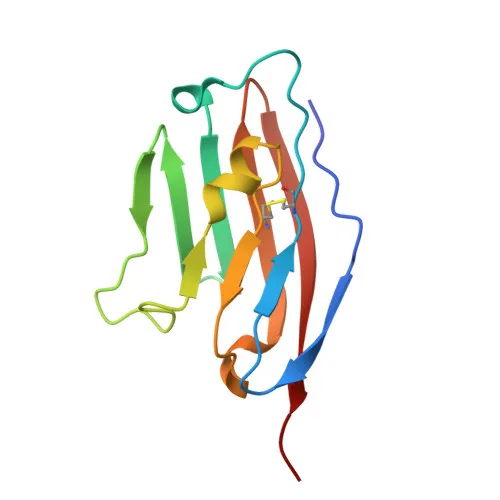
- Contains key structural features including a signal peptide, immunoglobulin V-type and C2-type domains, a transmembrane helix, disulfide bonds, N-linked glycosylation, and ubiquitination sites, as reflected in UniProt keywords.
Experimental Guidance and Technical Tips
- The immunogen used for this antibody is a recombinant protein corresponding to amino acids 19-235 of mouse CD274 (NP_068693.1), encompassing the extracellular domain; the antibody is expected to recognize the native protein on the cell surface.
- This antibody is conjugated to , a bright fluorophore, and is recommended for flow cytometry (FC) applications. Titrate the antibody to determine the optimal working concentration for your specific experimental system.
- Validate the antibody in relevant mouse samples or cell lines known to express CD274, such as activated immune cells or tumor cell lines, and include appropriate isotype controls to ensure specificity.
- Note that CD274 expression can be upregulated by inflammatory cytokines; consider stimulating cells (e.g., with IFN-γ) to enhance detection if baseline expression is low.
CamelBio: Your One-Stop Sourcing Bridge
CamelBio offers a comprehensive range of IVD raw materials and technical support, streamlining your diagnostic development from concept to clinic. For researchers targeting the PD-1/PD-L1 immune checkpoint, we provide validated antibody pairs, optimized monoclonal antibodies, and bulk ancillary reagents to meet your assay needs. Contact us for rapid sourcing of rare targets like CD274 across multiple species and conjugates.
Product Datasheet
Rabbit anti-Mouse CD274/PD-L1 Monoclonal Antibody () for Flow Cytometry - Q9EP73
REQUEST A QUOTE
Our professional team will reply to you within one business day. Please feel free to contact us!