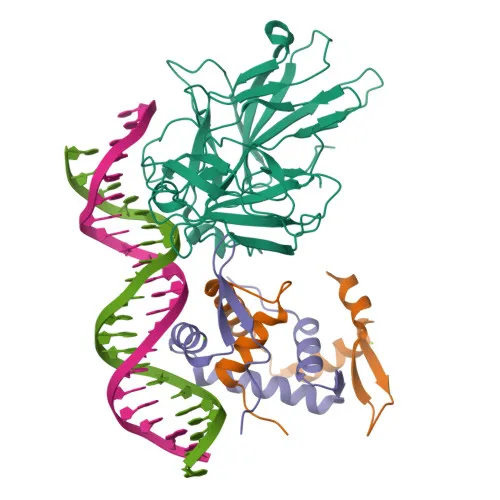
Monoclonal Antibodies
Rabbit anti-Human/Mouse/Monkey FOXP3 Monoclonal Antibody for Flow Cytometry - Q9BZS1
Item Number : CM0009820
Price varies based on specs and customizations
- Application
- FC (intra)
- Cross Reactivity
- Human, Mouse, Cynomolgus
- Protein Weight
- 47kDa

Shipping:
Contact us to get shipping details Enjoy On-time Dispatch Guarantee.
Why Choose Us
Easy ordering process, quality products, and dedicated support for your business success.
Core Product Specifications and Parameters
| Parameter | Value |
|---|---|
| Product Name | Rabbit anti-Human/Mouse/Monkey FOXP3 mAb |
| Remarks/Alias | JM2; AIID; IPEX; PIDX; XPID; DIETER |
| Species | Human |
| GeneID | 50943 |
| Immunogen | Synthetic peptide | A synthetic peptide corresponding to a sequence within amino acids 1-100 of human FOXP3 (NP_054728.2). |
| Source | Rabbit |
| Category | Monoclonal Antibodies |
| Application | FC (intra) |
| Cross Reactivity | Human, Mouse, Cynomolgus |
| SWISS | Q9BZS1 |
| Protein Weight | 47kDa |
| Shipping | Ice bag |
Biological Background: FOXP3 Function and Localization
- FOXP3 is a forkhead box transcription factor that serves as a master regulator of regulatory T cell (Treg) development and suppressive function, crucial for immune homeostasis. Related references: PMID:17377532, PMID:21458306, PMID:23947341, PMID:23169781
- It functions as a context-dependent transcriptional activator or repressor, modulating key immune genes such as upregulating CTLA4 and TNFRSF18 while repressing IL2 and IFNG. Related references: PMID:17377532, PMID:21458306, PMID:23947341, PMID:17360565
- FOXP3 inhibits effector T-cell cytokine production by repressing transcription factors NFATC2 and RELA. Related references: PMID:15790681
- It suppresses Th17 cell differentiation by antagonizing the transcription factor RORC, thereby promoting Treg lineage stability. Related references: PMID:18368049, PMID:18354202
- The protein localizes to both the nucleus and cytoplasm, consistent with its transcriptional and regulatory roles.
- Post-translational modifications include acetylation, phosphorylation, and ubiquitination, which may regulate its stability and activity.
- Associated with immune dysregulation diseases such as IPEX syndrome (Immune dysregulation, Polyendocrinopathy, Enteropathy, X-linked syndrome), as indicated by its alias and disease variant keyword.
Experimental Guidance and Technical Tips
- For intracellular flow cytometry, optimize fixation and permeabilization protocols; since FOXP3 is a nuclear protein, use buffers designed for nuclear antigens to ensure epitope accessibility.
- The immunogen covers the N-terminal region (aa 1–100); validate the antibody in relevant sample systems and consider potential reactivity with isoforms or cleavage products.
- Titrate the antibody to determine the optimal concentration for your specific cell type and staining conditions, using appropriate Fc blocking and isotype controls to minimize non-specific binding.
- provides bright and photostable fluorescence; avoid prolonged light exposure and include fluorescence minus one (FMO) controls to accurately set gates.
CamelBio: Your One-Stop Sourcing Bridge
CamelBio provides IVD manufacturers and researchers with comprehensive sourcing solutions for critical raw materials. This FOXP3 antibody exemplifies our capability to supply validated monoclonal antibodies for immune-oncology and autoimmune disease research. From optimized antibody pairs to bulk ancillary reagents, CamelBio supports your workflow from concept to clinic.
Product Datasheet
Rabbit anti-Human/Mouse/Monkey FOXP3 Monoclonal Antibody for Flow Cytometry - Q9BZS1
REQUEST A QUOTE
Our professional team will reply to you within one business day. Please feel free to contact us!