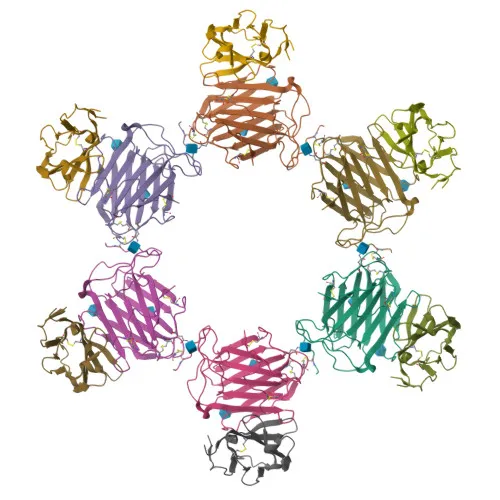
Monoclonal Antibodies
Rabbit anti-Human/Monkey CD86 Monoclonal Antibody for FC - P42081
Item Number : CM0012794
Price varies based on specs and customizations
- Application
- FC
- Cross Reactivity
- Human, Cynomolgus
- Protein Weight
- 38kDa

Shipping:
Contact us to get shipping details Enjoy On-time Dispatch Guarantee.
Why Choose Us
Easy ordering process, quality products, and dedicated support for your business success.
Core Product Specifications and Parameters
| Parameter | Value |
|---|---|
| Product Name | Rabbit anti-Human/Monkey CD86 mAb |
| Remarks/Alias | B70; B7-2; B7.2; LAB72; CD28LG2 |
| Species | Human |
| Gene ID (Human) | 942 |
| Gene ID | 942 |
| Immunogen | Recombinant fusion protein containing a sequence corresponding to amino acids 20-241 of human CD86 (NP_787058.5) |
| Source | Rabbit |
| Category | Monoclonal Antibodies |
| Application | FC |
| Cross Reactivity | Human, Cynomolgus |
| SWISS | P42081 |
| Protein Weight | 38kDa |
| Shipping | Ice bag |
Biological Background: CD86 Function and Localization
- CD86, also known as B7-2, is a type I transmembrane protein and a member of the immunoglobulin superfamily, playing a pivotal role in adaptive immunity.
- It acts as the primary costimulatory ligand for the CD28 receptor on naive T-cells, providing a critical second signal that augments TCR/MHC engagement and determines T-cell fate decisions between immunity and anergy. Related references: PMID:12196291 PMID:7694363 PMID:7527824 PMID:11279501
- CD86 also binds CTLA4 (CD152), acting as a decoy receptor that inhibits T-cell activation and helps maintain immune homeostasis. Related references: PMID:12196291 PMID:7694363 PMID:7527824 PMID:11279501
- In B cells, CD86 regulates IgG1 production and activates NF-kappa-B signaling upon CD40 engagement.
- Localized to the cell membrane, CD86 is predominantly expressed on the surface of antigen-presenting cells such as dendritic cells, macrophages, and B cells.
- The extracellular region contains two Ig-like domains and multiple N-glycosylation sites; alternative splicing generates several isoforms.
- CD86 can serve as a host cell receptor for adenovirus subgroup B, facilitating viral entry.
Experimental Guidance and Technical Tips
- The immunogen corresponds to the extracellular domain (aa 20-241) of human CD86, suggesting the antibody likely recognizes an epitope within the Ig-like domains, which is optimal for detecting native surface CD86 by flow cytometry.
- For flow cytometry, consider titrating the antibody to determine the optimal concentration for your specific cell type and experimental conditions.
- Due to its cross-reactivity with cynomolgus monkey CD86, this antibody can be validated for non-human primate studies.
- Always include appropriate isotype controls and Fc receptor blocking reagents to ensure specificity of staining.
CamelBio: Your One-Stop Sourcing Bridge
CamelBio is your one-stop partner for IVD raw-material sourcing, offering a streamlined pipeline from concept to clinic. For researchers studying T-cell costimulation and immune checkpoint pathways like CD86/B7-2, CamelBio provides access to validated monoclonal antibodies, optimized antibody pairs, and ancillary reagents in bulk, along with custom sourcing for rare targets. Let us support your diagnostic development with reliable, high-quality materials and technical expertise.
REQUEST A QUOTE
Our professional team will reply to you within one business day. Please feel free to contact us!