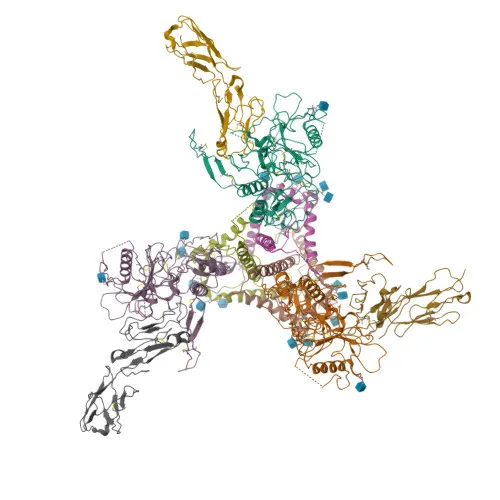
Monoclonal Antibodies
Rabbit Anti-Human/Monkey CD4 Monoclonal Antibody for Flow Cytometry - P01730
Item Number : CM0005368
Price varies based on specs and customizations
- Application
- FC
- Cross Reactivity
- Human, Cynomolgus, Rhesus
- Protein Weight
- 51kDa

Shipping:
Contact us to get shipping details Enjoy On-time Dispatch Guarantee.
Why Choose Us
Easy ordering process, quality products, and dedicated support for your business success.
Core Product Specifications and Parameters
| Parameter | Value |
|---|---|
| Product Name | Rabbit anti-Human/Monkey CD4 mAb |
| Remarks/Alias | T4; IMD79; Leu-3; OKT4D; CD4mut |
| Species | Human |
| Gene ID (Human) | 920 |
| Gene ID | 920 |
| Immunogen | Recombinant protein of human CD4 |
| Source | Rabbit |
| Category | Monoclonal Antibodies |
| Application | FC |
| Cross Reactivity | Human, Cynomolgus, Rhesus |
| SWISS | P01730 |
| Protein Weight | 51kDa |
| Shipping | Ice bag |
Biological Background: CD4 Function and Localization
- CD4 is a 51 kDa type I transmembrane glycoprotein and member of the immunoglobulin superfamily, containing four extracellular Ig-like domains, a single transmembrane helix, and a cytoplasmic tail that mediates signal transduction.
- As a co-receptor for MHC class II molecules, CD4 binds simultaneously with the T-cell receptor (TCR) to peptide–MHC class II complexes on antigen-presenting cells, recruiting the tyrosine kinase LCK to the TCR–CD3 complex and initiating downstream signaling required for T-helper cell activation, proliferation, and differentiation.
- Highly expressed on T-helper cells, CD4 is also present on other immune cells including macrophages, dendritic cells, and natural killer cells, where it contributes to differentiation, cytokine expression, and cell migration.
- CD4 serves as the primary receptor for HIV-1, enabling viral entry into host cells (PubMed:12089508, PubMed:16331979, PubMed:2214026). Related references: PMID:12089508 PMID:16331979 PMID:2214026
- HIV-1 Vpu protein targets CD4 for degradation, down-regulating its surface expression to promote viral pathogenesis (PubMed:17346169). Related references: PMID:17346169
- Additionally, CD4 functions as a receptor for Human Herpesvirus 7 (HHV-7) (PubMed:7909607). Related references: PMID:7909607
- Post-translational modifications of CD4 include N-linked glycosylation, interchain disulfide bonds, palmitoylation of the cytoplasmic tail, and phosphorylation, which modulate its stability, membrane association, and signaling capacity.
Experimental Guidance and Technical Tips
- Titrate the antibody to determine the optimal concentration for your flow cytometry experiment; a typical starting point is 0.1–1 µg per 1×10^6 cells.
- Include appropriate isotype controls to assess non-specific binding and establish gating thresholds.
- Avoid over-fixation of cells with paraformaldehyde, as it may alter the epitope; use freshly prepared 2% PFA for 15 min at room temperature if fixation is required.
- Ensure a single-cell suspension and filter samples through a 70 µm cell strainer before acquisition to prevent clogs.
- Validate staining in relevant biological samples (e.g., human PBMCs, cynomolgus or rhesus monkey lymphocytes) to confirm expected expression patterns.
CamelBio: Your One-Stop Sourcing Bridge
CamelBio offers comprehensive sourcing of IVD raw materials, including validated antibodies, recombinant proteins, and ancillary reagents for diagnostic development. This anti-CD4 monoclonal antibody is part of our immunology and infectious disease portfolio, supporting T-cell monitoring and HIV research. Our one-stop platform streamlines procurement from lead identification to commercial scale-up.
Product Datasheet
Rabbit Anti-Human/Monkey CD4 Monoclonal Antibody for Flow Cytometry - P01730
REQUEST A QUOTE
Our professional team will reply to you within one business day. Please feel free to contact us!