Monoclonal Antibodies
Rabbit Anti-Human VCAM-1/CD106 Monoclonal Antibody () for Flow Cytometry - P19320
Item Number : CM0012458
Price varies based on specs and customizations
- Application
- FC
- Cross Reactivity
- Human
- Protein Weight
- 71kDa/74kDa/81kDa

Shipping:
Contact us to get shipping details Enjoy On-time Dispatch Guarantee.
Why Choose Us
Easy ordering process, quality products, and dedicated support for your business success.
Core Product Specifications and Parameters
| Parameter | Value |
|---|---|
| Product Name | Rabbit anti-Human VCAM-1/CD106 mAb |
| Remarks/Alias | CD106; INCAM-100 |
| Species | Human |
| Gene ID (Human) | 7412 |
| Gene ID | 7412 |
| Immunogen | Recombinant protein|Recombinant fusion protein containing a sequence corresponding to amino acids 25-698 of human VCAM-1/CD106 (NP_001069.1). |
| Source | Rabbit |
| Category | Monoclonal Antibodies |
| Application | FC |
| Cross Reactivity | Human |
| SWISS | P19320 |
| Protein Weight | 71kDa/74kDa/81kDa |
| Shipping | Ice bag |
Biological Background: VCAM-1/CD106 Function and Localization
- VCAM-1 (vascular cell adhesion protein 1), also designated INCAM-100, is a cell adhesion glycoprotein predominantly expressed on the surface of endothelial cells, playing a central role in immune surveillance and inflammation (PMID:31310649). Related references: PMID:31310649
- It functions as a major regulator of leukocyte adhesion to the endothelium through interaction with integrins, initiating calcium channel activation and RAC1 signaling to facilitate transendothelial migration (PMID:10209034; PMID:22970700). Related references: PMID:10209034 PMID:22970700
- Serves as a bone marrow quality-control checkpoint by providing a 'don't-eat-me' signal in the context of MHC class-I presentation (PMID:35210567). Related references: PMID:35210567
- Subcellularly localized to the cell membrane; a secreted isoform is also produced through alternative splicing.
- Expressed on inflamed vascular endothelium, as well as on macrophage-like and dendritic cell types.
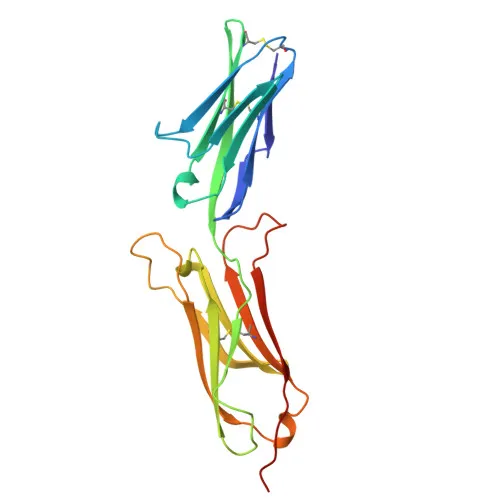
- Post-translational modifications include glycosylation, disulfide bond formation, and ubiquitin conjugation; the protein contains immunoglobulin-like domains and belongs to the Ig superfamily.
Experimental Guidance and Technical Tips
- As the immunogen corresponds to the entire extracellular domain (aa 25-698), the antibody is expected to recognize native cell surface VCAM-1, making it suitable for flow cytometry applications.
- For flow cytometry, titrate the antibody to determine the optimal working concentration for your specific cell type and treatment conditions.
- As a positive control, consider using human endothelial cells (e.g., HUVEC) stimulated with TNF-α or IL-1β to upregulate VCAM-1 expression.
- Ensure proper isotype controls and viability staining are included to accurately gate VCAM-1-positive populations.
CamelBio: Your One-Stop Sourcing Bridge
CamelBio offers a comprehensive portfolio of IVD raw materials, technical services, and consulting to support diagnostic manufacturers and research laboratories from concept to clinic. For researchers investigating leukocyte adhesion and inflammatory pathways, we provide validated antibody pairs, optimized monoclonal/polyclonal antibodies, and ancillary reagents in bulk. Our sourcing expertise includes rare targets, enabling seamless procurement of reliable raw materials for your assay development needs.
Product Datasheet
Rabbit Anti-Human VCAM-1/CD106 Monoclonal Antibody () for Flow Cytometry - P19320
REQUEST A QUOTE
Our professional team will reply to you within one business day. Please feel free to contact us!