Monoclonal Antibodies
Rabbit anti-Human RANKL/CD254 mAb - O14788
Item Number : CM0010352
Price varies based on specs and customizations
- Application
- FC (intra)
- Cross Reactivity
- Human
- Protein Weight
- 27kDa/30kDa/35kDa

Shipping:
Contact us to get shipping details Enjoy On-time Dispatch Guarantee.
Why Choose Us
Easy ordering process, quality products, and dedicated support for your business success.
Core Product Specifications and Parameters
| Parameter | Value |
|---|---|
| Product Name | Rabbit anti-Human RANKL/CD254 mAb |
| Remarks/Alias | ODF; OPGL; sOdf; CD254; OPTB2; RANKL; TNLG6B; TRANCE; hRANKL2 |
| Species | Human |
| Gene ID (Human) | 8600 |
| Gene ID | 8600 |
| Immunogen | Recombinant fusion protein containing a sequence corresponding to amino acids 136-317 of human RANKL/CD254 (NP_003692.1) |
| Source | Rabbit |
| Category | Monoclonal Antibodies |
| Application | FC (intra) |
| Cross Reactivity | Human |
| SWISS | O14788 |
| Protein Weight | 27kDa/30kDa/35kDa |
| Shipping | Ice bag |
Biological Background: RANKL/CD254 Function and Localization
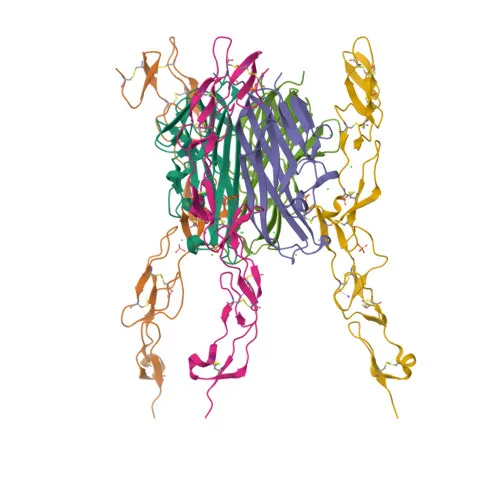
- Tumor necrosis factor ligand superfamily member 11 (TNFSF11), also known as RANKL, OPGL, ODF, TRANCE, and CD254, is a type II transmembrane protein belonging to the TNF ligand family.
- As a key regulator of bone metabolism, RANKL binds to TNFRSF11A/RANK to promote osteoclast differentiation and activation, while interaction with the decoy receptor TNFRSF11B/OPG inhibits this process. It induces osteoclastogenesis through Ca²⁺ oscillations and NFATC1-mediated gene transcription.
- RANKL may play a role in enhanced bone resorption in humoral hypercalcemia of malignancy, highlighting its involvement in pathological bone loss. Related references: PMID:22664871
- Beyond bone, RANKL functions in the immune system by augmenting dendritic cell-driven naïve T-cell proliferation, suggesting a role in T-cell/dendritic cell interactions and T-cell-dependent immune responses.
- Subcellularly, RANKL is found at the cell membrane with transmembrane topology, in the cytoplasm, and is also secreted as a soluble form (sRANKL) generated by alternative splicing or proteolytic shedding.
- Expression is highest in peripheral lymph nodes, with lower levels in spleen, peripheral blood leukocytes, bone marrow, heart, placenta, skeletal muscle, stomach, and thyroid.
- Post-translational modifications include glycosylation, and the protein is associated with developmental processes, cell differentiation, and disease variants linked to osteopetrosis.
Experimental Guidance and Technical Tips
- For intracellular flow cytometry (FC intra), optimize permeabilization and fixation protocols to ensure antibody access to cytoplasmic RANKL while preserving epitope integrity.
- Include appropriate negative controls, such as isotype-matched antibody or cells with knocked-down TNFSF11 expression, to confirm staining specificity.
- As RANKL can be membrane-bound or secreted, assess expression in cell lines or primary cells known to express RANKL, such as activated T cells or osteoblasts.
- Validate antibody performance in your specific sample system, as epitope accessibility may vary with fixation and permeabilization conditions.
CamelBio: Your One-Stop Sourcing Bridge
CamelBio is your trusted one-stop partner for IVD raw material sourcing, offering a comprehensive portfolio including validated antibody pairs, optimized monoclonal and polyclonal antibodies, and bulk ancillary reagents. This -conjugated anti-RANKL/CD254 antibody supports investigations into osteoimmunology and bone metabolism. For unique or rare target requirements, CamelBio provides expert sourcing and supply solutions to accelerate your diagnostic development from concept to clinic.
REQUEST A QUOTE
Our professional team will reply to you within one business day. Please feel free to contact us!