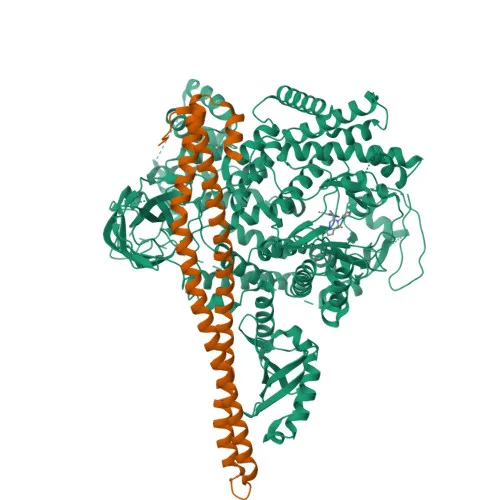
Phosphorylated Antibodies
Rabbit anti-Human Phospho-PI3KP85α-Y467+P85β-Y464+P55γ-Y199 mAb - P27986 / O00459 / Q92569
Item Number : CM0001913
Price varies based on specs and customizations
- Application
- FC (intra)
- Cross Reactivity
- Human
- Protein Weight
- 42-54kDa/81-84kDa

Shipping:
Contact us to get shipping details Enjoy On-time Dispatch Guarantee.
Why Choose Us
Easy ordering process, quality products, and dedicated support for your business success.
Core Product Specifications and Parameters
| Parameter | Value |
|---|---|
| Product Name | Rabbit anti-Human Phospho-PI3KP85α-Y467+P85β-Y464+P55γ-Y199 mAb |
| Remarks/Alias | PIK3R1/PIK3R2/PIK3R3 |
| Species | Human |
| GeneID (Human) | 5295/5296/8503 |
| GeneID | 5295/5296/8503 |
| Immunogen | Synthetic peptide / A synthetic phosphorylated peptide around Y467 of human PI3KP85α (NP_852664.1) |
| Source | Rabbit |
| Category | Phosphorylated Antibodies |
| Application | FC (intra) |
| Cross Reactivity | Human |
| SWISS | P27986/O00459/Q92569 |
| Protein Weight | 42-54kDa/81-84kDa |
| Shipping | Ice bag |
Biological Background: PI3K Regulatory Subunits (p85α/p85β/p55γ) Function and Localization
- PIK3R1 encodes the p85α regulatory subunit of PI3K, which exists as multiple isoforms (p85α, p55α, p50α) through alternative splicing. The p85α isoform is the full-length protein, while shorter isoforms lack the N-terminal SH3 domain and BH homology region. This antibody recognizes phosphorylated forms across the three gene products PIK3R1 (p85α), PIK3R2 (p85β), and PIK3R3 (p55γ).
- The regulatory subunits bind to activated (phosphorylated) protein-tyrosine kinases via their SH2 domains, functioning as adapter molecules that recruit the p110 catalytic subunit to the plasma membrane, thus activating PI3K signaling. Related references: PMID:17626883 PMID:19805105 PMID:7518429
- PI3K regulatory subunits are essential for insulin-stimulated glucose uptake and glycogen synthesis in insulin-sensitive tissues like skeletal muscle and liver. They also mediate signaling downstream of growth factor receptors (FGFR1-4, PDGFR, KIT) and integrin ITGB2. Related references: PMID:17626883 PMID:7518429
- p85α modulates the cellular response to endoplasmic reticulum (ER) stress by promoting nuclear translocation of the XBP1 isoform 2 in an ER stress- and/or insulin-dependent manner, particularly during metabolic overload in the liver, thereby improving glucose tolerance. Related references: PMID:20348923
- The p85α/p85β/p55γ subunits are primarily cytoplasmic, where they associate with the p110 catalytic subunit. Upon activation, they are recruited to the plasma membrane to localize the PI3K holoenzyme near its lipid substrates.
- Post-translational modifications include phosphorylation at multiple tyrosine residues (e.g., Y467 of p85α, Y464 of p85β, Y199 of p55γ) by receptor and non-receptor tyrosine kinases, which is critical for regulating PI3K activity and protein-protein interactions. Additional modifications include acetylation and ubiquitination.
- Isoform 2 of PIK3R1 (p55α) is highly expressed in skeletal muscle and brain, with lower levels in kidney and cardiac muscle. At the protein level, both isoform 2 and isoform 4 (p50α) are detected in skeletal muscle, suggesting tissue-specific roles in insulin signaling and metabolism.
- Mutations in PIK3R1 are associated with SHORT syndrome (short stature, hyperextensibility, ocular depression, Rieger anomaly, and teething delay) and other growth-related disorders, highlighting its role in development and insulin-like growth factor signaling.
Experimental Guidance and Technical Tips
- The immunogen is a synthetic phosphopeptide encompassing Y467 of human p85α. Ensure that your experimental system preserves phosphorylation—use phosphatase inhibitors during sample preparation and consider stimulation conditions (e.g., insulin, growth factors) to enhance detection of the phospho-epitope.
- This antibody is validated for intracellular flow cytometry (FC). For optimal staining, fix and permeabilize cells using protocols compatible with phospho-specific detection (e.g., formaldehyde fixation followed by methanol permeabilization). Titrate the antibody to determine the optimal dilution for your cell type and treatment conditions.
- Because the antibody recognizes phospho-Y467 of p85α, phospho-Y464 of p85β, and phospho-Y199 of p55γ, the observed molecular weight range may vary. In western blotting (if attempted), bands may appear between 42-54 kDa (for shorter isoforms) and 81-84 kDa (for full-length p85α/p85β). Run appropriate positive controls (e.g., insulin-stimulated HepG2 or HeLa cells) and verify specificity using phosphatase treatment.
- Consider using this antibody in combination with total PI3K regulatory subunit antibodies to assess phosphorylation ratios in signaling studies. For quantitative FC, ensure that the fluorophore is compatible with your cytometer configuration and that compensation controls are included if multiplexing.
- Cross-reactivity is reported for human. If working with other species, validate the conservation of the target phospho-sites using sequence alignment before use.
CamelBio: Your One-Stop Sourcing Bridge
CamelBio specializes in providing diagnostic manufacturers, laboratories, and research institutes with one-stop access to IVD raw materials, technical services, and consulting—from concept to clinic. This anti-phospho-PI3K regulatory subunit antibody supports research into PI3K/AKT signaling pathways commonly implicated in cancer, metabolic disorders, and immunology. Through our integrated supply network, we can source validated antibody pairs, optimized monoclonal/polyclonal antibodies, bulk ancillary reagents, and even rare-target raw materials to accelerate your assay development and production needs.
Product Datasheet
Rabbit anti-Human Phospho-PI3KP85α-Y467+P85β-Y464+P55γ-Y199 mAb - P27986 / O00459 / Q92569
REQUEST A QUOTE
Our professional team will reply to you within one business day. Please feel free to contact us!