Monoclonal Antibodies
Rabbit anti-Human Nectin-4 Monoclonal Antibody for Flow Cytometry - Q96NY8
Item Number : CM0010567
Price varies based on specs and customizations
- Application
- FC
- Cross Reactivity
- Human
- Protein Weight
- 24kDa/55kDa

Shipping:
Contact us to get shipping details Enjoy On-time Dispatch Guarantee.
Why Choose Us
Easy ordering process, quality products, and dedicated support for your business success.
Core Product Specifications and Parameters
| Parameter | Value |
|---|---|
| Product Name | Rabbit anti-Human Nectin-4 mAb |
| Remarks/Alias | LNIR; PRR4; EDSS1; PVRL4; nectin-4 |
| Species | Human |
| GeneID | 81607 |
| Immunogen | Recombinant fusion protein containing a sequence corresponding to amino acids 32-146 of human Nectin-4 (NP_112178.2) |
| Source | Rabbit |
| Category | Monoclonal Antibodies |
| Application | FC |
| Cross Reactivity | Human |
| SWISS | Q96NY8 |
| Protein Weight | 24kDa/55kDa |
| Shipping | Ice bag |
Biological Background: Nectin-4 Function and Localization
- Nectin-4, also known as PVRL4, LNIR, and PRR4, is an immunoglobulin superfamily receptor encoded by the NECTIN4 gene in humans (Gene ID 81607).
- It functions as a cell adhesion molecule through trans-homophilic and -heterophilic interactions, specifically interacting with NECTIN1, and does not serve as a receptor for alpha-herpesvirus entry.
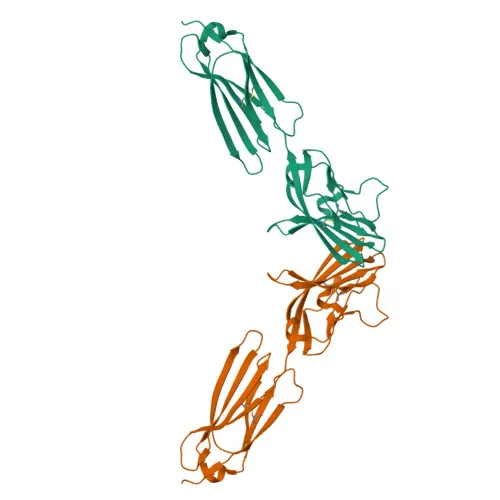
- Nectin-4 is a member of the nectin family, which includes four members (nectin-1 to -4), all containing three extracellular immunoglobulin domains, a single transmembrane domain, and a cytoplasmic tail.
- Subcellularly, Nectin-4 localizes to the cell membrane, cell junctions such as adherens junctions, and a soluble secreted form has been detected.
- Post-translational modifications include glycosylation and the formation of disulfide bonds, contributing to its structural stability and function.
- Nectin-4 is predominantly expressed in the placenta, and although not detected in normal breast epithelium, it is expressed in breast carcinoma, indicating a role in tumor biology.
- Importantly, Nectin-4 acts as a cellular receptor for measles virus, facilitating viral entry into host cells.
- The protein has a calculated molecular weight of approximately 55 kDa, with potential isoforms (e.g., 24 kDa) due to alternative splicing.
Experimental Guidance and Technical Tips
- The immunogen corresponds to the N-terminal extracellular region (amino acids 32–146), which includes the first Ig-like domain critical for receptor interactions; this design likely targets surface-exposed epitopes, making it suitable for flow cytometry detection of native Nectin-4 on live cells.
- Since the antibody is directly conjugated to , no secondary antibody is required, minimizing non-specific binding and simplifying the staining protocol for flow cytometry.
- For optimal performance, titrate the antibody concentration for your specific cell line and experiment; consider testing dilutions starting at 1:20–1:100 for 1×10⁶ cells, but actual optimal dilutions should be determined experimentally.
- Given the reported tissue specificity (placenta, breast carcinoma) and subcellular localization (membrane and secretory), include appropriate positive controls such as placental tissue, breast carcinoma cell lines (e.g., MCF-7, T47D), and negative controls (normal breast epithelium or knockout/knockdown models) to validate staining specificity.
- Because Nectin-4 can be shed as a secreted form, in certain experimental contexts (e.g., supernatant or serum), the antibody may detect soluble Nectin-4; consider this when analyzing flow cytometry data from cell culture supernatant-derived samples.
- For measles virus research, this antibody can be used to assess Nectin-4 expression in virus-host interaction studies; however, ensure that the epitope is not masked upon viral binding or cell entry.
- The reported molecular weight bands (24 kDa and 55 kDa) correspond to alternative isoforms; when performing orthogonal validation (e.g., Western blot), these sizes may be observed in reducing conditions.
CamelBio: Your One-Stop Sourcing Bridge
CamelBio provides diagnostic manufacturers, labs, and research institutes with one-stop access to IVD raw materials, including validated antibody pairs, optimized monoclonal/polyclonal antibodies, bulk ancillary reagents, and rare target raw-material sourcing. For Nectin-4 research in cancer and infectious disease applications, CamelBio can source complementary reagents and custom development services to accelerate your assay development from concept to clinic.
Product Datasheet
Rabbit anti-Human Nectin-4 Monoclonal Antibody for Flow Cytometry - Q96NY8
REQUEST A QUOTE
Our professional team will reply to you within one business day. Please feel free to contact us!