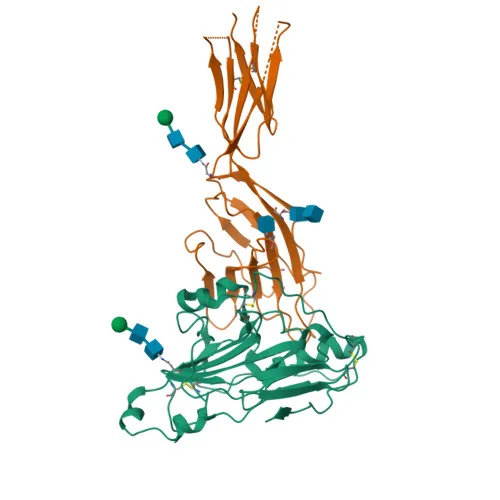
Monoclonal Antibodies
Rabbit anti-Human Nectin-1/CD111 Monoclonal Antibody for FC - Q15223
Item Number : CM0005282
Price varies based on specs and customizations
- Application
- FC
- Cross Reactivity
- Human
- Protein Weight
- 57kDa/51kDa/39kDa

Shipping:
Contact us to get shipping details Enjoy On-time Dispatch Guarantee.
Why Choose Us
Easy ordering process, quality products, and dedicated support for your business success.
Core Product Specifications and Parameters
| Parameter | Value |
|---|---|
| Product Name | Rabbit anti-Human Nectin-1/CD111 mAb |
| Remarks/Alias | ED4; PRR; HIgR; HV1S; HVEC; OFC7; PRR1; PVRR; CD111; PVRL1; PVRR1; SK-12; CLPED1; nectin-1 |
| Species | Human |
| GeneID (Human) | 5818 |
| GeneID | 5818 |
| Immunogen | Recombinant protein / Recombinant fusion protein containing a sequence corresponding to amino acids 1-334 of human Nectin-1/CD111 (NP_002846.3). |
| Source | Rabbit |
| Category | Monoclonal Antibodies |
| Application | FC |
| Cross Reactivity | Human |
| SWISS | Q15223 |
| Protein Weight | 57kDa/51kDa/39kDa |
| Shipping | Ice bag |
Biological Background: Nectin-1/CD111 Function and Localization
- Nectin-1 (also known as PVRL1, CD111, HveC) is a cell adhesion molecule of the nectin family that mediates calcium-independent cell-cell adhesion through homophilic and heterophilic trans-interactions.
- It functions in nervous system development, including axon guidance, synaptogenesis, and neurite outgrowth (PubMed:21325282).
Related references: PMID:21325282 - Heterophilic binding partners include NECTIN3 and NECTIN4, which contribute to diverse developmental processes.
- In the auditory epithelium, NECTIN1 on hair cells interacts heterophilically with NECTIN3 on supporting cells to establish a checkerboard-like cell pattern.
- Nectin-1 is required for enamel mineralization.
- Subcellularly, it localizes to the cell membrane, adherens junctions, and presynaptic membrane, with a secreted isoform also produced.
- It serves as a major host cell receptor for herpes simplex virus 1 (HSV-1) and also mediates entry of HSV-2 and pseudorabies virus (PubMed:21980294, PubMed:25231300, PubMed:28381567, PubMed:34587223).
Related references: PMID:21980294, PMID:25231300, PMID:28381567, PMID:34587223 - Post-translational modifications include glycosylation, phosphorylation, and ubiquitination, which may regulate its stability and interactions.
Experimental Guidance and Technical Tips
- This antibody is conjugated to , a bright far-red fluorophore optimized for flow cytometry; ensure compatible laser (e.g., 633–647 nm) and detector settings.
- For FC, titrate the antibody to determine the optimal staining concentration for your specific cell type and experimental conditions.
- Nectin-1 is expressed on the cell surface; gentle live-cell staining protocols are recommended to preserve epitope integrity.
- Validate staining in Nectin-1-positive human cell lines (e.g., epithelial, neuronal, or keratinocyte lines) and include appropriate isotype controls.
- Avoid harsh fixation methods that may alter the recombinant immunogen's epitope conformation (amino acids 1–334).
CamelBio: Your One-Stop Sourcing Bridge
CamelBio is your dedicated partner for IVD raw-material procurement, providing a comprehensive portfolio of validated antibodies, bulk ancillary reagents, and customized sourcing for rare targets. The anti-Nectin-1 antibody supports research in cell adhesion, neurodevelopment, and viral entry mechanisms—areas critical for assay development. We assist diagnostic manufacturers and laboratories in securing high-quality monoclonal antibodies, recombinant proteins, and technical support to accelerate your project from concept to clinic.
REQUEST A QUOTE
Our professional team will reply to you within one business day. Please feel free to contact us!