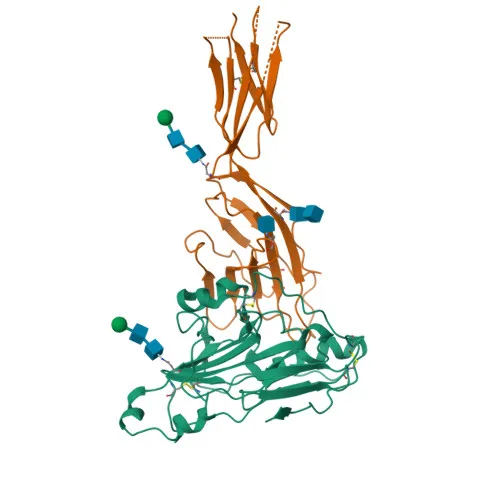
Monoclonal Antibodies
Rabbit anti-Human Nectin-1/CD111 mAb for FC - Q15223
Item Number : CM0009579
Price varies based on specs and customizations
- Application
- FC
- Cross Reactivity
- Human
- Protein Weight
- 57kDa/51kDa/39kDa

Shipping:
Contact us to get shipping details Enjoy On-time Dispatch Guarantee.
Why Choose Us
Easy ordering process, quality products, and dedicated support for your business success.
Core Product Specifications and Parameters
| Parameter | Value |
|---|---|
| Product Name | Rabbit anti-Human Nectin-1/CD111 mAb |
| Remarks/Alias | ED4; PRR; HIgR; HV1S; HVEC; OFC7; PRR1; PVRR; CD111; PVRL1; PVRR1; SK-12; CLPED1; nectin-1 |
| Species | Human |
| Gene ID (Human) | 5818 |
| Gene ID | 5818 |
| Immunogen | Recombinant protein|Recombinant fusion protein containing a sequence corresponding to amino acids 1-334 of human Nectin-1/CD111 (NP_002846.3) |
| Source | Rabbit |
| Category | Monoclonal Antibodies |
| Application | FC |
| Cross Reactivity | Human |
| SWISS | Q15223 |
| Protein Weight | 57kDa/51kDa/39kDa |
| Shipping | Ice bag |
Biological Background: Nectin-1 Function and Localization
- Nectin-1 (CD111) is a cell adhesion molecule belonging to the nectin family, which mediates homophilic and heterophilic interactions essential for cell-cell junctions and nervous system development.
Related references:
PMID:21325282 - It functions as a key organizer of adherens junctions and promotes axon guidance, synaptogenesis, and neurite outgrowth, playing a critical role in the formation of neural circuits.
- Nectin-1 heterophilically interacts with NECTIN3 and NECTIN4, facilitating specialized cell adhesion such as between hair cells and supporting cells in the auditory epithelium, and is required for enamel mineralization.
- As a viral entry receptor, Nectin-1 serves as the primary mediator for herpes simplex virus-1 (HSV-1) and HSV-2 entry, and also permits pseudorabies virus infection.
Related references:
PMID:21980294, PMID:25231300, PMID:28381567, PMID:34587223 - The protein is localized to the cell membrane, including adherens junctions and presynaptic membranes, and a secreted isoform also exists.
- Post-translational modifications include phosphorylation, ubiquitination, and disulfide bond formation, which regulate its stability and function.
- Alternative splicing produces isoforms with predicted molecular weights of 57 kDa (canonical), 51 kDa, and 39 kDa, as noted by the supplier.
Experimental Guidance and Technical Tips
- The immunogen corresponds to the extracellular domain (amino acids 1-334) of human Nectin-1, suggesting that the antibody recognizes an epitope exposed on the cell surface, making it suitable for flow cytometry.
- For flow cytometry, use cells that express Nectin-1 on the plasma membrane; fixation and permeabilization may alter epitope accessibility, so optimization is advised.
- Titrate the conjugate to achieve optimal staining index; include appropriate isotype controls and viability dyes to ensure specific detection.
- The fluorophore is compatible with standard 594 nm laser lines; avoid exposure to light to prevent photobleaching.
CamelBio: Your One-Stop Sourcing Bridge
CamelBio is a one-stop supplier of IVD raw materials, providing validated antibody pairs, optimized monoclonal and polyclonal antibodies, and ancillary reagents for diagnostic development. This anti-Nectin-1/CD111 monoclonal antibody supports research in cell adhesion, neurodevelopment, and viral entry, and is part of CamelBio's comprehensive portfolio for infectious disease and neuroscience applications.
REQUEST A QUOTE
Our professional team will reply to you within one business day. Please feel free to contact us!