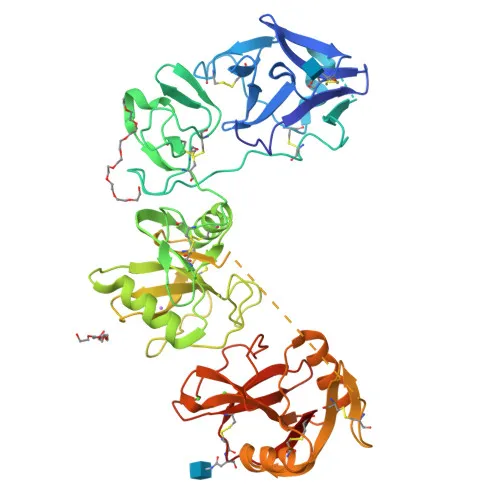
Monoclonal Antibodies
Rabbit anti-Human MRC2 Monoclonal Antibody for Flow Cytometry - Q9UBG0
Item Number : CM0005736
Price varies based on specs and customizations
- Application
- FC
- Cross Reactivity
- Human
- Protein Weight
- 167kDa

Shipping:
Contact us to get shipping details Enjoy On-time Dispatch Guarantee.
Why Choose Us
Easy ordering process, quality products, and dedicated support for your business success.
Core Product Specifications and Parameters
| Parameter | Value |
|---|---|
| Product Name | Rabbit anti-Human MRC2 mAb |
| Remarks/Alias | CD280; UPARAP; CLEC13E; ENDO180 |
| Species | Human |
| GeneID (Human) | 9902 |
| GeneID | 9902 |
| Immunogen | Recombinant fusion protein containing a sequence corresponding to amino acids 35-513 of human MRC2 (NP_006030.2) |
| Source | Rabbit |
| Category | Monoclonal Antibodies |
| Application | FC |
| Cross Reactivity | Human |
| SWISS | Q9UBG0 |
| Protein Weight | 167kDa |
| Shipping | Ice bag |
Biological Background: MRC2 Function and Localization
- MRC2 (C-type mannose receptor 2), also known as ENDO180, CD280, UPARAP, or CLEC13E, is a transmembrane glycoprotein belonging to the C-type lectin receptor family.
- It functions as a calcium-dependent endocytic receptor, internalizing glycosylated ligands via clathrin-mediated endocytosis and releasing them in endosomal compartments.
- MRC2 plays a key role in collagen turnover: it binds and mediates cellular uptake of extracellular collagen for lysosomal degradation, contributing to extracellular matrix (ECM) remodeling.
- The receptor modulates plasminogen activation by regulating cell surface levels of urokinase-type plasminogen activator receptor (PLAUR) and its ligand PLAU, thereby controlling pericellular proteolysis.
- MRC2 is implicated in cancer progression and chronic tissue-destructive diseases through its effects on collagen matrix turnover, often cooperating with matrix metalloproteinases (MMPs).
- It is ubiquitously expressed at low levels in most tissues, with higher expression in fetal lung and kidney, and is present on endothelial cells, fibroblasts, and macrophages.
- According to UniProt, MRC2 is a single-pass membrane protein with a signal peptide, multiple C-type lectin domains, fibronectin type-II domain, and a short cytoplasmic tail; it is subject to disulfide bond formation, N-linked glycosylation, phosphorylation, and ubiquitination.
Experimental Guidance and Technical Tips
- This antibody is conjugated to and optimized for flow cytometry; consider titrating the antibody and validating in your cell system for optimal staining.
- The immunogen corresponds to the extracellular domain (aa 35-513), suggesting recognition of the MRC2 ectodomain; confirm accessibility in live-cell staining assays.
- Use positive control cells known to express MRC2, such as fibroblasts, macrophages (especially M2-polarized), or cancer cell lines; collagen stimulation may upregulate surface MRC2.
- For intracellular staining, validate permeabilization conditions as MRC2 cycles between the membrane and endosomal compartments.
CamelBio: Your One-Stop Sourcing Bridge
CamelBio serves as a comprehensive sourcing partner for IVD raw materials, offering this anti-MRC2 antibody alongside validated antibody pairs, recombinant proteins, and bulk ancillary reagents. Our integrated supply network supports MRC2-related ECM and cancer research with custom monoclonal and polyclonal antibody production, as well as rare target sourcing. Contact us to streamline your workflow from early-stage development to clinical application.
REQUEST A QUOTE
Our professional team will reply to you within one business day. Please feel free to contact us!