Monoclonal Antibodies
Rabbit anti-Human MICA/MICB mAb - Q29983 / Q29980
Item Number : CM0004819
Price varies based on specs and customizations
- Application
- FC
- Cross Reactivity
- Human
- Source
- Rabbit

Shipping:
Contact us to get shipping details Enjoy On-time Dispatch Guarantee.
Why Choose Us
Easy ordering process, quality products, and dedicated support for your business success.
Core Product Specifications and Parameters
| Parameter | Value |
|---|---|
| Product Name | Rabbit anti-Human MICA/MICB mAb |
| Remarks/Alias | MIC-A; PERB11.1; PERB11.2; MICB |
| Species | Human |
| Gene ID | 100507436/4277 |
| Immunogen | Recombinant fusion protein containing a sequence corresponding to amino acids 23-298 of human MICB (NP_005922.2). |
| Source | Rabbit |
| Category | Monoclonal Antibodies |
| Application | FC |
| Cross Reactivity | Human |
| SWISS | Q29983/Q29980 |
| Protein Weight | 4kDa/31kDa/37kDa/43kDa |
| Shipping | Ice bag |
Biological Background: MICA/MICB Function and Localization
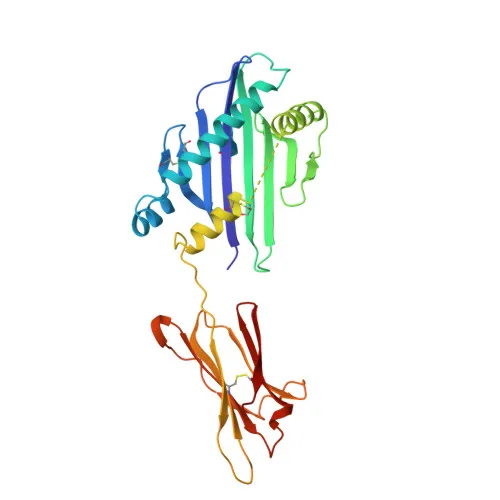
- MICA is a highly glycosylated, transmembrane MHC class I-related molecule that functions as a ligand for the activating immunoreceptor KLRK1/NKG2D, expressed on NK cells, γδ T cells, and CD8αβ T cells. Related references: PMID:11491531 PMID:11777960
- Under cellular stress (e.g., viral/bacterial infection, DNA damage), MICA expression is upregulated, serving as a stress signal that triggers NK cell-mediated cytotoxicity and cytokine production upon NKG2D engagement. Related references: PMID:10426993
- MICA localizes primarily to the cell membrane, with a fraction detected in the cytoplasm, and contains a single transmembrane domain.
- Tissue expression is broad, excluding the central nervous system; it is abundant in gastric epithelium, keratinocytes, endothelial cells, and many epithelial tumors (lung, breast, kidney, ovary, prostate, colon).
- The protein undergoes alternative splicing, yielding multiple isoforms, and features post-translational modifications including N-glycosylation, disulfide bond formation, and palmitoylation (S-palmitoylation).
- MICA is categorized under keywords such as adaptive immunity, cytolysis, host-virus interaction, and Ubl conjugation, reflecting its roles in immune surveillance and pathogen response.
Experimental Guidance and Technical Tips
- The immunogen is based on the extracellular domain of MICB (aa 23-298); due to sequence homology, the antibody may recognize both MICA and MICB. Verify specificity using recombinant proteins or knockout cell lines.
- For flow cytometry, titrate the antibody to determine the optimal staining concentration and include an appropriate isotype control.
- MICA/MICB expression is induced by cellular stress; consider pre-treating cells with stimuli (e.g., DNA damaging agents) to upregulate target expression.
- Shedding of soluble MICA/MICB can occur; use live cell gating and minimize prolonged incubations to reduce background from shed protein.
CamelBio: Your One-Stop Sourcing Bridge
CamelBio provides diagnostic manufacturers and research laboratories with comprehensive access to high-quality IVD raw materials, including validated antibody pairs and optimized monoclonal/polyclonal antibodies. This -conjugated antibody targeting MICA/MICB supports immune surveillance research and tumor immunology applications. For bulk or custom requests, our one-stop sourcing platform can also supply ancillary reagents and rare-target raw materials to accelerate your diagnostic development.
REQUEST A QUOTE
Our professional team will reply to you within one business day. Please feel free to contact us!