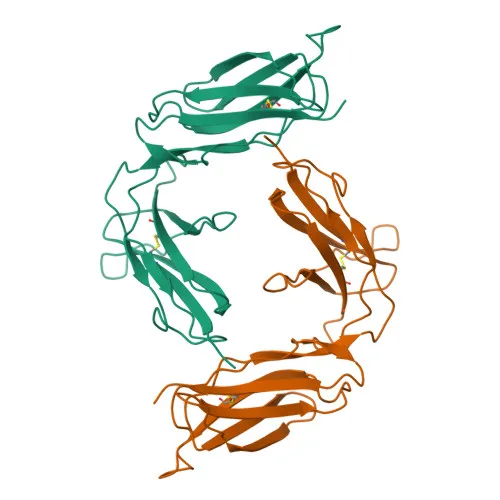
Monoclonal Antibodies
Rabbit anti-Human KIR2DL2/KIR2DL3 Monoclonal Antibody for IF/ICC, FC - P43628
Item Number : CM0004673
Price varies based on specs and customizations
- Application
- IF/ICC, FC
- Cross Reactivity
- Human
- Protein Weight
- 27kDa/37kDa/38kDa

Shipping:
Contact us to get shipping details Enjoy On-time Dispatch Guarantee.
Why Choose Us
Easy ordering process, quality products, and dedicated support for your business success.
Core Product Specifications and Parameters
| Parameter | Value |
|---|---|
| Product Name | Rabbit anti-Human KIR2DL2/KIR2DL3 mAb |
| Remarks/Alias | KIR2DL3; CD158B2; CD158b; GL183; KIR-023GB; KIR-K7b; KIR-K7c; KIR2DS5; KIRCL23; NKAT; NKAT2; NKAT2A; NKAT2B; p58; killer cell immunoglobulin-like receptor 2DL3 |
| Species | Human |
| GeneID (Human) | 3803/3804 |
| GeneID | 3803/3804 |
| Immunogen | Recombinant fusion protein containing a sequence corresponding to amino acids 22-245 of human KIR2DL3 (NP_056952.2) |
| Source | Rabbit |
| Category | Monoclonal Antibodies |
| Application | IF/ICC, FC |
| Cross Reactivity | Human |
| SWISS | P43628 |
| Protein Weight | 27kDa/37kDa/38kDa |
| Shipping | Ice bag |
Biological Background: KIR2DL2/KIR2DL3 Function and Localization
- KIR2DL3 is a killer cell immunoglobulin-like receptor that belongs to a large family of highly homologous receptors predominantly expressed on natural killer (NK) cells.
- It functions as an inhibitory receptor that specifically recognizes HLA-C alleles (HLA-Cw1, HLA-Cw3, and HLA-Cw7), delivering inhibitory signals that prevent NK cell-mediated lysis of target cells.
- The protein is a transmembrane glycoprotein featuring extracellular immunoglobulin-like domains responsible for ligand binding, and a cytoplasmic immunoreceptor tyrosine-based inhibitory motif (ITIM) domain for signal transduction.
- KIR2DL3 is located on the cell membrane where it interacts with its MHC class I ligands to modulate immune responses.
- Alternative splicing generates multiple isoforms that may exhibit different functional properties.
- Post-translational modifications include disulfide bond formation and glycosylation, contributing to protein stability and function.
- The closely related gene KIR2DL2 shares high sequence homology, and the antibody cross-reacts with both due to the conserved immunogen region.
Experimental Guidance and Technical Tips
- The immunogen corresponds to the extracellular region (aa 22-245), which is likely to be accessible for immunofluorescence (IF/ICC) and flow cytometry (FC) applications.
- For flow cytometry, titrate the antibody to determine the optimal concentration for your specific cell system, as conjugate brightness () can influence staining index.
- In IF/ICC, consider permeabilization protocols if intracellular epitopes are to be detected, although the target is a cell surface receptor; fixation may affect antibody binding.
- Include appropriate isotype and fluorescence-minus-one controls to ensure specificity, especially given the high homology among KIR family members.
- Validate the antibody in your sample system using positive (e.g., NK cell lines) and negative (e.g., KIR-negative cells) controls.
CamelBio: Your One-Stop Sourcing Bridge
CamelBio serves as a comprehensive IVD raw-material supplier, connecting diagnostic manufacturers and laboratories with rigorously validated reagents. For NK cell immunophenotyping and immune-oncology research, we offer ready-to-use -conjugated KIR2DL2/KIR2DL3 monoclonal antibodies, alongside a full portfolio of quality-assured ancillary reagents and custom bulk sourcing services. Our one-stop platform streamlines procurement from early-stage development to clinical validation, ensuring consistent supply for your assay workflows.
Product Datasheet
Rabbit anti-Human KIR2DL2/KIR2DL3 Monoclonal Antibody for IF/ICC, FC - P43628
REQUEST A QUOTE
Our professional team will reply to you within one business day. Please feel free to contact us!