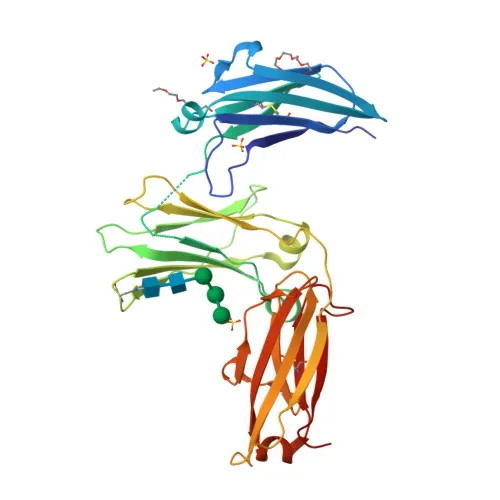
Monoclonal Antibodies
Rabbit anti-Human IgE Monoclonal Antibody for FC - P01854
Item Number : CM0010896
Price varies based on specs and customizations
- Application
- FC
- Cross Reactivity
- Human
- Protein Weight
- 47kDa/54kDa/59kDa

Shipping:
Contact us to get shipping details Enjoy On-time Dispatch Guarantee.
Why Choose Us
Easy ordering process, quality products, and dedicated support for your business success.
Core Product Specifications and Parameters
| Parameter | Value |
|---|---|
| Product Name | Rabbit anti-Human IgE mAb |
| Remarks/Alias | IgE |
| Species | Human |
| GeneID (Human) | 3497 |
| GeneID | 3497 |
| Immunogen | Recombinant fusion protein containing a sequence corresponding to amino acids 104-428 of human IgE (P01854) |
| Source | Rabbit |
| Category | Monoclonal Antibodies |
| Application | FC |
| Cross Reactivity | Human |
| SWISS | P01854 |
| Protein Weight | 47kDa/54kDa/59kDa |
| Shipping | Ice bag |
Biological Background: IgE Function and Localization
-
Immunoglobulin heavy constant epsilon (IgE) plays a critical role in humoral immunity. Membrane-bound IgE serves as the B cell receptor (BCR), initiating clonal expansion and differentiation upon antigen binding. The variable domains, formed via V(D)J rearrangement and somatic hypermutation, confer high-affinity antigen recognition (PubMed:20176268, PubMed:22158414, PubMed:17576170). Related references: PMID:20176268 PMID:22158414 PMID:17576170
-
Secreted IgE acts through two main Fc receptors: the high-affinity FCER1 complex and low-affinity FCER2. Antigen cross-linking of receptor-bound IgE on mast cells, basophils, and eosinophils triggers immediate hypersensitivity responses, releasing vasoactive amines, lipid mediators, and cytokines. Additionally, IgE mediates antibody-dependent cytotoxicity (ADCC) against parasites and tumor cells, and promotes macrophage reprogramming toward a proinflammatory, antitumor state (PubMed:2167225, PubMed:25629393, PubMed:33840121, PubMed:7544003, PubMed:8114916, PubMed:8551243, PubMed:30956175). Related references: PMID:2167225 PMID:25629393 PMID:33840121 PMID:7544003 PMID:8114916 PMID:8551243 PMID:30956175
-
Two membrane-bound isoforms exist: long mIgE and short mIgE, both part of the BCR complex. Long mIgE triggers rapid signaling for B cell survival and differentiation into plasma cells, whereas short mIgE mediates slower signaling that negatively regulates proliferation.
-
IgE is expressed in B lymphocytes, particularly following stimulation with IL-4 and CD40, and is localized both as a secreted antibody and as a membrane-bound receptor on the cell surface.
-
Structurally, IgE contains multiple immunoglobulin-like domains and is characterized by disulfide bonds and N-linked glycosylation, which are essential for its stability and receptor interactions.
-
IgE is central to allergic inflammation and host defense against helminth parasites, pathogenic bacteria, and venom toxicity. Its dysregulation can lead to severe allergic and anaphylactic reactions.
Experimental Guidance and Technical Tips
- This antibody targets an epitope within amino acids 104–428 of the human IgE constant region (Fc portion), which may recognize both secreted and membrane-bound IgE. It is conjugated to , a green fluorescent dye with spectral properties similar to FITC (Ex/Em max ≈ 491/516 nm).
- For flow cytometry (FC), titrate the antibody to determine the optimal concentration for your specific cell type and experimental setup. Use appropriate isotype controls and consider Fc receptor blocking to reduce nonspecific binding.
- Samples such as peripheral blood mononuclear cells (PBMCs) or transfected cell lines expressing human IgE can be stained directly after surface or intracellular preparation. Protect the antibody from prolonged light exposure during handling.
- Store the antibody at 2–8°C and avoid repeated freeze-thaw cycles to maintain conjugate stability and binding activity.
CamelBio: Your One-Stop Sourcing Bridge
CamelBio is your one-stop sourcing partner for IVD raw materials, supplying research-grade and diagnostic-ready antibodies like this anti-human IgE monoclonal antibody. We also provide bulk ancillary reagents, validated antibody pairs, and custom rare target sourcing to meet the demands of allergy and immunology assay development. From concept to clinic, CamelBio supports your workflow with reliable materials and expert consultation.
REQUEST A QUOTE
Our professional team will reply to you within one business day. Please feel free to contact us!