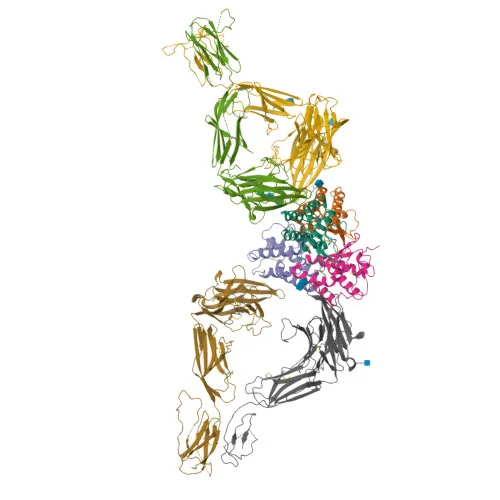
Monoclonal Antibodies
Rabbit anti-Human Flt3/CD135 Monoclonal Antibody for Flow Cytometry - P36888
Item Number : CM0009648
Price varies based on specs and customizations
- Application
- FC
- Cross Reactivity
- Human
- Protein Weight
- 108kDa/112kDa

Shipping:
Contact us to get shipping details Enjoy On-time Dispatch Guarantee.
Why Choose Us
Easy ordering process, quality products, and dedicated support for your business success.
Core Product Specifications and Parameters
| Parameter | Value |
|---|---|
| Product Name | Rabbit anti-Human Flt3/CD135 mAb |
| Remarks/Alias | FLT3; CD135; FLK-2; FLK2; STK1; fms related tyrosine kinase 3 |
| Species | Human |
| Gene ID (Human) | 2322 |
| Gene ID | 2322 |
| Immunogen | Recombinant protein / Recombinant fusion protein containing a sequence corresponding to amino acids 27-163 of human Flt3/CD135 (NP_004110.2). |
| Source | Rabbit |
| Category | Monoclonal Antibodies |
| Application | FC |
| Cross Reactivity | Human |
| SWISS | P36888 |
| Protein Weight | 108kDa/112kDa |
| Shipping | Ice bag |
Biological Background: Flt3/CD135 Function and Localization
- Receptor-type tyrosine-protein kinase FLT3, also known as Flt3/CD135, FLK-2, FLT-3, or STK-1, is encoded by the FLT3 gene (Gene ID: 2322) in humans.
- Functions as a cell-surface receptor for the cytokine FLT3LG, playing a critical role in regulating differentiation, proliferation, and survival of hematopoietic progenitor cells and dendritic cells.
- Upon ligand binding, activates multiple downstream signaling pathways, including RAS/MAPK, PI3K/AKT/mTOR, and STAT5, promoting cellular responses. Constitutively active mutations are common in acute myeloid leukemia (AML).
- Subcellularly localized to the plasma membrane and endoplasmic reticulum lumen.
- Detected in bone marrow, hematopoietic stem cells, myeloid and granulocyte/macrophage progenitor cells; highly expressed in T-cell leukemia cells, with lower levels in kidney and pancreas (at protein level).
- Post-translational modifications include glycosylation, phosphorylation, and ubiquitination, and the protein features immunoglobulin-like domains typical of the receptor tyrosine kinase family.
- Keywords: Alternative splicing, ATP-binding, Disease variant, Glycoprotein, Proto-oncogene, Receptor, Tyrosine-protein kinase, Transmembrane helix.
Experimental Guidance and Technical Tips
- The immunogen corresponds to the extracellular domain (amino acids 27-163), which is ideal for binding to the native receptor in non-permeabilized cells, supporting flow cytometry applications.
- As an conjugate, ensure appropriate laser excitation (typically 561 nm or 594 nm) and bandpass filter selection; perform compensation if multiplexing with other fluorophores.
- For flow cytometry, verify target expression in hematopoietic lineages such as bone marrow, peripheral blood mononuclear cells, or leukemia cell lines; include an isotype control to assess non-specific binding.
CamelBio: Your One-Stop Sourcing Bridge
CamelBio serves as a comprehensive one-stop sourcing partner for IVD raw materials, offering validated monoclonal and polyclonal antibodies, antigen-grade proteins, and ancillary reagents to accelerate diagnostic development. This anti-Flt3/CD135 conjugate supports hematology and oncology research applications, and CamelBio can facilitate scalable procurement of antibody pairs, recombinant proteins, and custom formulations to meet your specific assay requirements.
Product Datasheet
Rabbit anti-Human Flt3/CD135 Monoclonal Antibody for Flow Cytometry - P36888
REQUEST A QUOTE
Our professional team will reply to you within one business day. Please feel free to contact us!