Monoclonal Antibodies
Rabbit anti-Human CR2/CD21 Monoclonal Antibody for Flow Cytometry - P20023
Item Number : CM0011984
Price varies based on specs and customizations
- Application
- FC
- Cross Reactivity
- Human
- Protein Weight
- 110kDa/113kDa/118kDa/119kDa

Shipping:
Contact us to get shipping details Enjoy On-time Dispatch Guarantee.
Why Choose Us
Easy ordering process, quality products, and dedicated support for your business success.
Core Product Specifications and Parameters
| Parameter | Value |
|---|---|
| Product Name | Rabbit anti-Human CR2/CD21 mAb |
| Remarks/Alias | CR; C3DR; CD21; CVID7; SLEB9 |
| Species | Human |
| GeneID | 1380 |
| Immunogen | Recombinant fusion protein containing a sequence corresponding to amino acids 21-971 of human CD21 (NP_001868.2) |
| Source | Rabbit |
| Category | Monoclonal Antibodies |
| Application | FC |
| Cross Reactivity | Human |
| SWISS | P20023 |
| Protein Weight | 110kDa/113kDa/118kDa/119kDa |
| Shipping | Ice bag |
Biological Background: CR2/CD21 Function and Localization
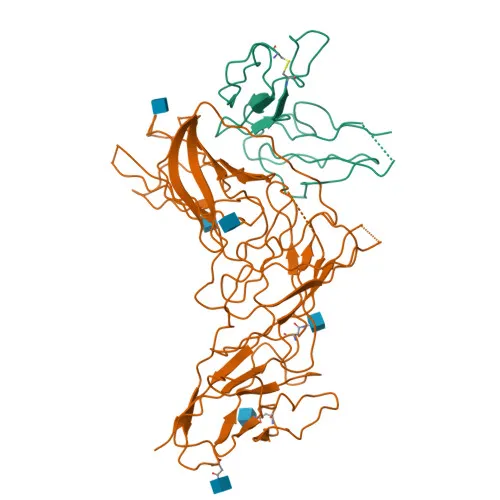
- CR2 (complement receptor type 2), also known as CD21, serves as a receptor for complement component C3d. It binds to C3d-opsonized antigens on B-cell surfaces, facilitating antigen recognition and uptake, thereby enhancing B-cell activation and immune responses. Related references: PMID:1849076, PMID:21527715, PMID:7753047
- It forms the B-cell coreceptor complex with CD19, CD81, and FCRL5, playing a crucial role in B-cell activation and signaling. Related references: PMID:1383329, PMID:30107486
- CR2 induces intracellular signaling independently of the BCR and CD19 by activating the tyrosine kinase SRC, which phosphorylates nucleolin/NCL, triggering AKT and GSK3 kinase activities in a SYK/CD19-independent manner. Related references: PMID:12938232
- Acts as a ligand for CD23 (FcεRII), a low-affinity IgE receptor, thereby participating in the regulation of IgE production. Related references: PMID:1386409
- (Microbial infection) Functions as the primary receptor for Epstein-Barr virus (EBV) on B cells, mediating viral entry and infection.
- Localizes to the cell membrane and is expressed primarily on mature B-lymphocytes, with additional expression on T-lymphocytes, pharyngeal epithelial cells, astrocytes, and follicular dendritic cells of the spleen.
- The protein undergoes alternative splicing, is N-glycosylated, and contains multiple disulfide bonds. It is a member of the Sushi domain-containing protein family and is associated with systemic lupus erythematosus (SLE) susceptibility.
Experimental Guidance and Technical Tips
- The immunogen comprises the extracellular domain (amino acids 21‑971), suggesting that the antibody likely recognizes native epitopes; for flow cytometry, consider titrating the antibody to determine the optimal staining concentration for your cell system.
- As a directly conjugated antibody, it eliminates the need for secondary staining; include appropriate isotype controls and Fc receptor blocking to minimize nonspecific binding.
- Validate the antibody in the relevant cell types (e.g., human peripheral blood B cells or lymphoma lines) and consider using activation markers or co‑staining with CD19 to confirm specificity.
CamelBio: Your One-Stop Sourcing Bridge
CamelBio provides diagnostic manufacturers and research laboratories with one‑stop access to IVD raw materials, technical services, and consulting—from concept to clinic. For anti‑CR2/CD21 applications, we offer validated antibody pairs, optimized monoclonal/polyclonal antibodies, bulk ancillary reagents, and specialized sourcing for rare‑target raw materials, helping you streamline your complement system or B‑cell research workflows with procurement efficiency.
Product Datasheet
Rabbit anti-Human CR2/CD21 Monoclonal Antibody for Flow Cytometry - P20023
REQUEST A QUOTE
Our professional team will reply to you within one business day. Please feel free to contact us!