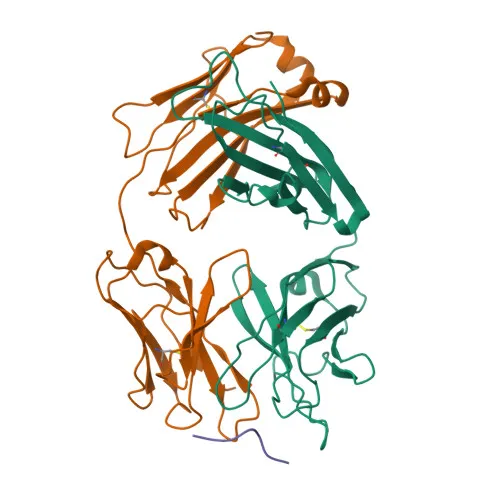
Monoclonal Antibodies
Rabbit anti-Human CD99 Monoclonal Antibody for IF/ICC and FC - P14209
Item Number : CM0010239
Price varies based on specs and customizations
- Application
- IF/ICC, FC
- Cross Reactivity
- Human
- Protein Weight
- 19kDa

Shipping:
Contact us to get shipping details Enjoy On-time Dispatch Guarantee.
Why Choose Us
Easy ordering process, quality products, and dedicated support for your business success.
Core Product Specifications and Parameters
| Parameter | Value |
|---|---|
| Product Name | Rabbit anti-Human CD99 mAb |
| Remarks/Alias | MIC2; HBA71; MIC2X; MIC2Y; MSK5X |
| Species | Human |
| Gene ID (Human) | 4267 |
| Gene ID | 4267 |
| Immunogen | Synthetic peptide: A synthetic peptide corresponding to a sequence within amino acids 24-123 of human CD99 (NP_002405.1). |
| Source | Rabbit |
| Category | Monoclonal Antibodies |
| Application | IF/ICC, FC |
| Cross Reactivity | Human |
| SWISS | P14209 |
| Protein Weight | 19kDa |
| Shipping | Ice bag |
Biological Background: CD99 Antigen Function and Localization
- CD99 antigen (also known as MIC2, E2 antigen, 12E7, or T-cell surface glycoprotein E2) is a transmembrane protein encoded by the CD99 gene in humans.
- It functions in T-cell adhesion processes, including spontaneous rosette formation with erythrocytes, a characteristic of T-cells.
- CD99 plays a critical role in leukocyte extravasation, facilitating the passage of leukocytes through the endothelial basement membrane at a late step, acting independently of PECAM1.
- The protein is located at the plasma membrane (single-pass type I membrane protein) with its N-terminus exposed extracellularly.
- Post-translational modifications include glycosylation and phosphorylation (keywords: Glycoprotein, Phosphoprotein).
- Alternative splicing generates multiple isoforms, and the protein is part of the reference proteome with direct protein sequencing evidence.
Experimental Guidance and Technical Tips
- The immunogen is a synthetic peptide spanning amino acids 24-123 of human CD99, corresponding to the N-terminal extracellular region. This design likely targets an exposed epitope, suitable for live-cell staining applications.
- For immunofluorescence (IF/ICC), fixation with paraformaldehyde is recommended, but permeabilization may be omitted if the epitope is accessible on the cell surface. Test staining with and without detergent to confirm.
- In flow cytometry (FC), this conjugate enables direct detection; consider using appropriate isotype controls and titrating the antibody for optimal signal-to-noise ratio.
- Validate the antibody's specificity in your experimental system using CD99-positive cell lines (e.g., T-cell lines) and CD99-negative controls to confirm minimal cross-reactivity.
- As CD99 is involved in adhesion, ensure that cell harvesting methods do not damage surface antigens; gentle detachment techniques are advised.
CamelBio: Your One-Stop Sourcing Bridge
CamelBio is a comprehensive IVD raw-material partner, supplying validated antibodies, bulk ancillary reagents, and customized sourcing solutions. From early-stage research to diagnostic development, we support projects in immunology, including CD99-mediated adhesion and leukocyte trafficking. Contact us to explore tailored antibody panels, large-scale production, and rare target material procurement.
Product Datasheet
Rabbit anti-Human CD99 Monoclonal Antibody for IF/ICC and FC - P14209
REQUEST A QUOTE
Our professional team will reply to you within one business day. Please feel free to contact us!