Monoclonal Antibodies
Rabbit anti-Human CD97 Monoclonal Antibody () for Flow Cytometry - P48960
Item Number : CM0012783
Price varies based on specs and customizations
- Application
- FC
- Cross Reactivity
- Human
- Protein Weight
- 81kDa/86kDa/91kDa

Shipping:
Contact us to get shipping details Enjoy On-time Dispatch Guarantee.
Why Choose Us
Easy ordering process, quality products, and dedicated support for your business success.
Core Product Specifications and Parameters
| Parameter | Value |
|---|---|
| Product Name | Rabbit anti-Human CD97 mAb |
| Remarks/Alias | ADGRE5; CD97; TM7LN1; CD97 antigen |
| Species | Human |
| Gene ID (Human) | 976 |
| Gene ID | 976 |
| Immunogen | Recombinant fusion protein containing a sequence corresponding to amino acids 21-398 of human CD97 (NP_510966.1). |
| Source | Rabbit |
| Category | Monoclonal Antibodies |
| Application | FC |
| Cross Reactivity | Human |
| SWISS | P48960 |
| Protein Weight | 81kDa/86kDa/91kDa |
| Shipping | Ice bag |
Biological Background: CD97 Function and Localization
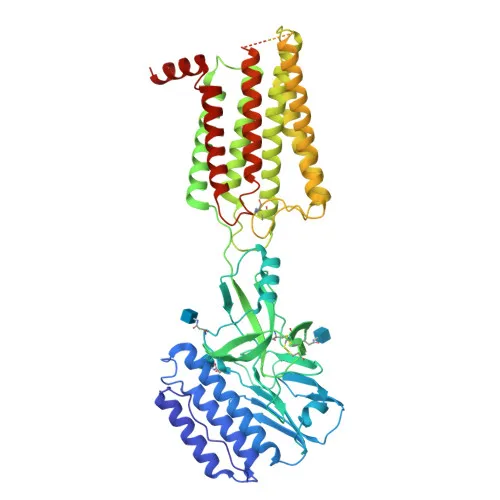
- CD97, also designated ADGRE5 or TM7LN1, belongs to the adhesion G protein-coupled receptor subfamily and features multiple extracellular EGF-like calcium-binding domains.
- It mediates both cell adhesion and intracellular signaling, with a well-established role in promoting leukocyte migration.
- Alternative splicing generates at least three isoforms that differ in the number of EGF-like repeats, giving rise to protein bands migrating at approximately 81 kDa, 86 kDa, and 91 kDa on SDS-PAGE.
- The receptor is predominantly localized to the cell membrane; soluble forms can be released into the extracellular space following proteolytic cleavage.
- CD97 is widely expressed across hematopoietic lineages—including activated T cells, B cells, monocytes, macrophages, dendritic cells, and granulocytes—and is also abundant on smooth muscle cells.
- Its expression is markedly upregulated in inflammatory microenvironments (e.g., rheumatoid arthritis synovium, multiple sclerosis lesions) and in several carcinomas (thyroid, colorectal, gastric, esophageal, pancreatic).
- The protein contains numerous disulfide bonds and undergoes phosphorylation and glycosylation; these modifications influence its stability and ligand interactions.
Experimental Guidance and Technical Tips
- The immunogen spans amino acids 21–398 of human CD97, corresponding to the extracellular region, making this conjugate well suited for detecting surface CD97 on live cells without permeabilization.
- Optimize the antibody dilution by titration on your target cell population, as CD97 expression levels can vary widely among cell types and activation states.
- Since CD97 can be shed from the plasma membrane, minimize cell manipulation and avoid prolonged incubation at 37°C to retain surface antigen integrity.
- For multicolor flow cytometry panels, confirm that the fluorophore does not exhibit unacceptable overlap with other channels used in your experiment.
CamelBio: Your One-Stop Sourcing Bridge
CamelBio serves as a comprehensive partner for IVD raw material sourcing, offering everything from optimized antibodies to bulk ancillary reagents—supporting your workflow from concept to clinic. Our catalog includes directly conjugated monoclonal antibodies like this anti-CD97 (), designed to simplify flow cytometry assays for leukocyte biology and carcinoma research. For hard-to-find targets or custom reagent needs, our sourcing service helps you obtain the materials needed to keep your projects on track.
REQUEST A QUOTE
Our professional team will reply to you within one business day. Please feel free to contact us!