Monoclonal Antibodies
Rabbit anti-Human CD93 Monoclonal Antibody for FC - Q9NPY3
Item Number : CM0009729
Price varies based on specs and customizations
- Application
- FC
- Cross Reactivity
- Human
- Protein Weight
- 69kDa

Shipping:
Contact us to get shipping details Enjoy On-time Dispatch Guarantee.
Why Choose Us
Easy ordering process, quality products, and dedicated support for your business success.
Core Product Specifications and Parameters
| Parameter | Description |
|---|---|
| Product Name | Rabbit anti-Human CD93 mAb |
| Remarks/Alias | C1QR1; C1qRP; CDw93; ECSM3; MXRA4; C1qR(P); dJ737E23.1 |
| Species | Human |
| Gene ID | 22918 |
| Immunogen | Recombinant fusion protein containing a sequence corresponding to amino acids 24-580 of human CD93 (NP_036204.2) |
| Source | Rabbit |
| Category | Monoclonal Antibodies |
| Application | FC |
| Cross Reactivity | Human |
| SWISS | Q9NPY3 |
| Protein Weight | 69kDa |
| Shipping | Ice bag |
Biological Background: CD93 Function and Localization
- CD93, also known as C1qR, C1qRp, CDw93, MXRA4, and ECSM3, is a type I transmembrane glycoprotein encoded by the CD93 gene. It has a predicted molecular weight of 69 kDa and belongs to the C-type lectin domain family.
- Acts as a receptor for defense collagens including C1q, surfactant protein A (SFTPA1), and mannose-binding lectin (MBL2), mediating phagocytosis of apoptotic cells and immune complexes. Related references: PMID:7977768
- Plays a critical role in angiogenesis by interacting with multimerin-2 (MMRN2) and IGFBP7, which activate non-redundant endothelial signaling pathways. Related references: PMID:28671670; PMID:36265539; PMID:38218180
- Enhances endothelial cell migration via association with beta-dystroglycan, leading to SRC-dependent phosphorylation and CBL-mediated recruitment of downstream effectors like CRKL. Related references: PMID:26848865
- Regulates endothelial barrier function by modulating VEGFR2 activity; this function has been observed by similarity and may be conserved in humans.
- Localizes to the cell membrane, consistent with its role as a surface receptor.
- Highly expressed in endothelial cells, platelets, and myeloid cells (monocytes, neutrophils) but absent in lymphocytes, indicating tissue-specific roles in innate immunity and vascular biology.
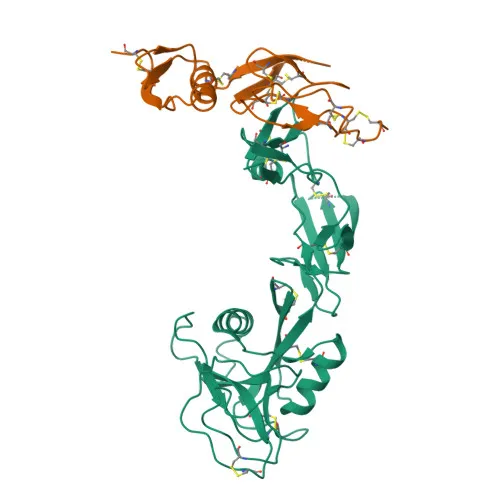
- Contains structural domains including EGF-like domains, a C-type lectin domain, and multiple N-glycosylation sites, as suggested by keywords Glycoprotein and EGF-like domain.
Experimental Guidance and Technical Tips
- The immunogen corresponds to the extracellular region (aa 24–580), making this antibody suitable for detecting cell surface CD93 in flow cytometry without permeabilization.
- Since CD93 is highly expressed on endothelial and myeloid cells, consider using appropriate cell lines (e.g., HUVECs, monocytes) or primary cells as positive controls.
- For flow cytometry, titrate the antibody to determine optimal concentration and include appropriate isotype controls.
- Ensure that the fluorophore is compatible with the flow cytometer’s laser and filter configuration.
- If performing multiplex flow cytometry, verify minimal spectral overlap with other fluorophores used.
CamelBio: Your One-Stop Sourcing Bridge
As a one-stop IVD raw-material sourcing partner, CamelBio provides diagnostic manufacturers and laboratories with comprehensive access to validated monoclonal antibodies, including anti-CD93 reagents for flow cytometry applications. We specialize in supplying optimized antibody pairs, bulk ancillary reagents, and rare target raw materials to accelerate assay development from concept to clinic. For CD93-related cardiovascular or immunological research, our team can facilitate sourcing of complementary reagents such as recombinant proteins and matched detection tools.
REQUEST A QUOTE
Our professional team will reply to you within one business day. Please feel free to contact us!