Monoclonal Antibodies
Rabbit anti-Human CD62E/E-Selectin Monoclonal Antibody for FC - P16581
Item Number : CM0008360
Price varies based on specs and customizations
- Application
- FC
- Cross Reactivity
- Human

Shipping:
Contact us to get shipping details Enjoy On-time Dispatch Guarantee.
Why Choose Us
Easy ordering process, quality products, and dedicated support for your business success.
Core Product Specifications and Parameters
| Parameter | Specification |
|---|---|
| Product Name | Rabbit anti-Human CD62E/E-Selectin mAb |
| Remarks/Alias | SELE; CD62E; ELAM; ELAM1; ESEL; LECAM2; E-selectin |
| Species | Human |
| Gene ID | 6401 (human) |
| Immunogen | Recombinant fusion protein containing a sequence corresponding to amino acids 22-230 of human CD62E/E-Selectin (NP_000441.2) |
| Source | Rabbit |
| Category | Monoclonal Antibodies |
| Application | FC |
| Cross Reactivity | Human |
| SWISS | P16581 |
| Protein Weight | 66kDa |
| Shipping | Ice bag |
Biological Background: E-selectin Function and Localization
- E-selectin (CD62E) is a cell-surface glycoprotein belonging to the selectin family of adhesion molecules, encoded by the SELE gene in humans. It is also known as endothelial leukocyte adhesion molecule 1 (ELAM-1) and leukocyte-endothelial cell adhesion molecule 2 (LECAM2).
- Its primary function is to mediate the adhesion of blood neutrophils to cytokine-activated endothelium, an essential step in the inflammatory response. This interaction occurs through binding to SELPLG/PSGL1 (P-selectin glycoprotein ligand 1).
- Additionally, E-selectin may contribute to capillary morphogenesis, suggesting a role beyond immune adhesion in angiogenesis or vascular development.
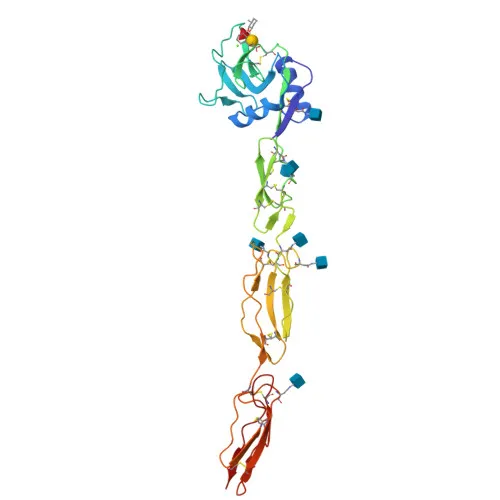
- The protein is localized to the cell membrane as a type I transmembrane protein, with an extracellular region containing an N-terminal C-type lectin domain, an EGF-like domain, and multiple sushi (CCP/SCR) repeats.
- E-selectin is characterized by several key structural motifs, including calcium-binding sites, disulfide bonds, and N-linked glycosylation. It requires metal ions (particularly calcium) for ligand recognition.
- Expression of E-selectin is typically induced on endothelial cells by inflammatory cytokines such as TNF-alpha and IL-1, with no constitutive expression in most tissues, highlighting its role in acute inflammation.
Experimental Guidance and Technical Tips
- The immunogen corresponds to the extracellular domain (aa 22–230) of human E-selectin, encompassing the lectin and EGF-like domains. This suggests the antibody likely targets the N-terminal ligand-binding region, making it suitable for blocking or detection of surface-expressed E-selectin.
- As a fluorophore-conjugated monoclonal antibody, this reagent is ready-to-use for direct flow cytometry without secondary staining. It is advisable to titrate the antibody to determine the optimal working concentration for your specific cell system.
- E-selectin expression is inducible; consider stimulating endothelial cells (e.g., HUVECs) with TNF-α or IL-1 for 4–6 hours before staining to achieve detectable surface levels.
- Include appropriate isotype controls and viability dyes to discriminate specific binding and exclude dead cells from analysis.
- Store the antibody at 2–8°C protected from light; avoid repeated freeze-thaw cycles.
CamelBio: Your One-Stop Sourcing Bridge
CamelBio provides diagnostic manufacturers and laboratories with streamlined access to a comprehensive portfolio of IVD raw materials, including validated monoclonal antibodies such as this anti-E-selectin clone. With expertise in immunology and cell-adhesion targets, CamelBio offers flexible sourcing of antibody pairs, bulk ancillary reagents, and rare-target raw materials to support your assay development from concept to clinic.
Product Datasheet
Rabbit anti-Human CD62E/E-Selectin Monoclonal Antibody for FC - P16581
REQUEST A QUOTE
Our professional team will reply to you within one business day. Please feel free to contact us!