Monoclonal Antibodies
Rabbit anti-Human CD61 Monoclonal Antibody for Flow Cytometry - P05106
Item Number : CM0008331
Price varies based on specs and customizations
- Application
- FC
- Cross Reactivity
- Human
- Source
- Rabbit

Shipping:
Contact us to get shipping details Enjoy On-time Dispatch Guarantee.
Why Choose Us
Easy ordering process, quality products, and dedicated support for your business success.
Core Product Specifications and Parameters
| Parameter | Value |
|---|---|
| Product Name | Rabbit anti-Human CD61 mAb |
| Remarks/Alias | GT; GT2; CD61; GP3A; BDPLT2; GPIIIa; BDPLT16; BDPLT24 |
| Species | Human |
| GeneID (Human) | 3690 |
| GeneID | 3690 |
| Immunogen | Recombinant protein | Recombinant fusion protein containing a sequence corresponding to amino acids 21-718 of human CD61 (NP_000203.2). |
| Source | Rabbit |
| Category | Monoclonal Antibodies |
| Application | FC |
| Cross Reactivity | Human |
| SWISS | P05106 |
| Shipping | Ice bag |
Biological Background: Integrin beta-3 (CD61) Function and Localization
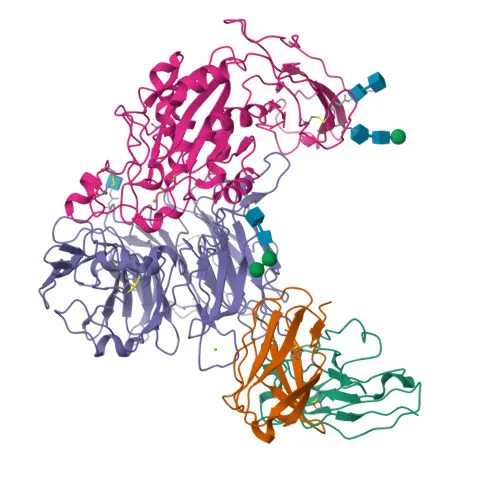
- Integrin beta-3 (CD61, GPIIIa) is encoded by the ITGB3 gene and expressed as a type I transmembrane glycoprotein. Alternative splicing produces isoform beta-3A (widely expressed, including platelets and osteoblasts) and isoform beta-3C (specific to prostate and testis).
- It forms two major heterodimers: the platelet-specific αIIbβ3 (ITGA2B:ITGB3), which mediates platelet aggregation by binding fibrinogen upon activation, and the widely expressed αVβ3 (ITGAV:ITGB3), which acts as a receptor for vitronectin, fibronectin, osteopontin, and other extracellular matrix proteins.
Related references: PMID:9111081 - αVβ3 integrin transmits signals from growth factors (FGF1, FGF2, IGF1, IGF2, IL1B) and matrix proteins, regulating angiogenesis, cell migration, and survival.
Related references: PMID:18441324, PMID:28302677, PMID:19578119, PMID:28873464, PMID:29030430 - In the central nervous system, integrin beta-3 modulates synaptic strength by regulating serotonin transporter localization and AMPA receptor endocytosis (By similarity).
- ITGAV:ITGB3 functions as an entry receptor for several viruses, including human herpesvirus 8, coxsackievirus A9, hantaan virus, cytomegalovirus, human metapneumovirus, human parechovirus 1, and West Nile virus; HIV-1 Tat protein also interacts with αVβ3 to promote angiogenesis in Kaposi's sarcoma.
- Subcellularly, integrin beta-3 localizes to the cell membrane, lamellipodium membrane, focal adhesions, and postsynaptic membranes, reflecting its roles in adhesion, migration, and synaptic organization.
- Post-translational modifications include disulfide bonds, multiple N-glycosylation sites, and phosphorylation; it binds calcium and magnesium ions essential for ligand-binding activity.
Experimental Guidance and Technical Tips
- This antibody was raised against a recombinant protein spanning amino acids 21–718 of human CD61, which encompasses the entire extracellular domain. It is expected to recognize the native integrin beta-3 on the cell surface.
- Direct conjugation allows for one-step staining without secondary antibodies; therefore, include appropriate isotype controls and Fc receptor blocking steps to minimize nonspecific binding.
- For flow cytometry, titrate the antibody to determine the optimal concentration for your specific cell type and experimental conditions; typical starting dilutions range from 1:25 to 1:200, but actual performance must be validated empirically.
- Fixation and permeabilization protocols should be tested, as they may alter epitope accessibility. Surface staining of live unfixed cells is recommended for maximum sensitivity.
- Integrin beta-3 expression may be upregulated upon platelet activation; consider resting vs. activated conditions in your experimental design.
CamelBio: Your One-Stop Sourcing Bridge
CamelBio supports IVD manufacturers and research teams with comprehensive access to validated antibodies, recombinant antigens, and ancillary raw materials—from early-stage development to clinical application. This CD61 antibody addresses needs in thrombosis, hemostasis, and immune cell adhesion research, offering a ready-to-use flow cytometry tool. Beyond individual reagents, we provide customized sourcing for antibody pairs, bulk conjugates, and rare-target probes to accelerate your diagnostic development projects.
Product Datasheet
Rabbit anti-Human CD61 Monoclonal Antibody for Flow Cytometry - P05106
REQUEST A QUOTE
Our professional team will reply to you within one business day. Please feel free to contact us!