Monoclonal Antibodies
Rabbit anti-Human CD298/ATP1B3 mAb for FC - P54709
Item Number : CM0009067
Price varies based on specs and customizations
- Application
- FC
- Cross Reactivity
- Human
- Protein Weight
- 32kDa

Shipping:
Contact us to get shipping details Enjoy On-time Dispatch Guarantee.
Why Choose Us
Easy ordering process, quality products, and dedicated support for your business success.
Core Product Specifications and Parameters
| Parameter | Value |
|---|---|
| Product Name | Rabbit anti-Human CD298/ATP1B3 mAb |
| Remarks/Alias | CD298; ATPB-3 |
| Species | Human |
| GeneID (human) | 483 |
| GeneID | 483 |
| Immunogen | Recombinant fusion protein containing a sequence corresponding to amino acids 66-279 of human CD298/ATP1B3 (NP_001670.1) |
| Source | Rabbit |
| Category | Monoclonal Antibodies |
| Application | FC |
| Cross Reactivity | Human |
| SWISS | P54709 |
| Protein Weight | 32kDa |
| Shipping | Ice bag |
Biological Background: Sodium/potassium-transporting ATPase subunit beta-3 (CD298/ATP1B3) Function and Localization
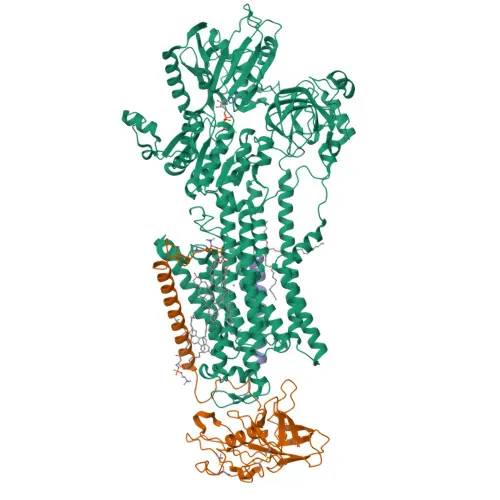
- The protein encoded by the ATP1B3 gene is the beta-3 subunit of the Na+/K+-ATPase, a heterodimeric enzyme consisting of catalytic alpha subunits and regulatory beta subunits.
- This subunit acts as the non-catalytic component of the active enzyme, which hydrolyzes ATP to drive the coupled exchange of Na+ and K+ ions across the plasma membrane; however, the precise function of the beta-3 subunit remains unclear.
- ATP1B3 is also known as CD298, a cell surface antigen, and ATPB-3.
- It localizes primarily to the apical and basolateral plasma membrane, and has additionally been detected in melanosomes, reflecting its role in ion homeostasis at the cell periphery.
- The protein is a type II membrane glycoprotein featuring a signal-anchor, a single transmembrane helix, and conserved disulfide bonds.
- Alternative splicing gives rise to multiple isoforms, and post-translational modifications include N-linked glycosylation.
Experimental Guidance and Technical Tips
- The immunogen corresponds to a recombinant fusion protein spanning extracellular amino acids 66–279, which is predicted to encompass the large extracellular domain; this design may favor detection of surface-expressed CD298/ATP1B3.
- For flow cytometry, consider titrating the antibody to determine the optimal staining concentration for your cell type, and include an appropriate -conjugated isotype control.
- The direct conjugate eliminates the need for a secondary detection step, reducing non-specific binding and simplifying the staining protocol.
- Because CD298/ATP1B3 is a transmembrane protein with an extracellular domain, standard surface staining protocols without permeabilization should suffice; validate expression in your cell system of interest using relevant positive and negative controls.
CamelBio: Your One-Stop Sourcing Bridge
CamelBio connects diagnostic manufacturers and research laboratories with a comprehensive portfolio of IVD raw materials, including validated antibody pairs and optimized monoclonal/polyclonal antibodies. For ion transport and membrane protein targets such as ATP1B3, we offer one-stop access to bulk ancillary reagents and rare-target sourcing to support your assay development pipeline. Explore our catalog to streamline procurement from concept to clinic.
REQUEST A QUOTE
Our professional team will reply to you within one business day. Please feel free to contact us!