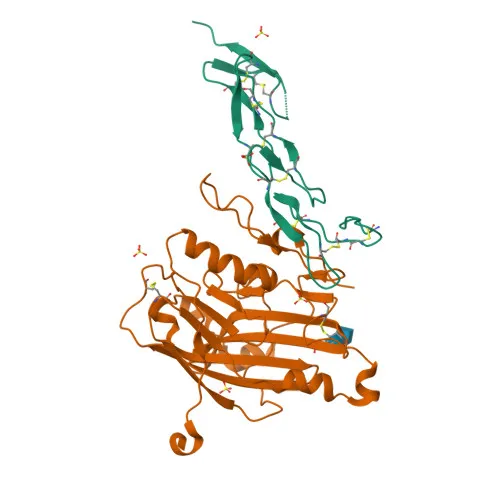
Monoclonal Antibodies
Rabbit anti-Human CD270/HVEM Monoclonal Antibody for Flow Cytometry - Q92956
Item Number : CM0005704
Price varies based on specs and customizations
- Application
- FC
- Cross Reactivity
- Human
- Protein Weight
- 21kDa/30kDa

Shipping:
Contact us to get shipping details Enjoy On-time Dispatch Guarantee.
Why Choose Us
Easy ordering process, quality products, and dedicated support for your business success.
Core Product Specifications and Parameters
| Parameter | Value |
|---|---|
| Product Name | Rabbit anti-Human CD270/HVEM mAb |
| Remarks/Alias | TNFRSF14; ATAR; CD270; HVEA; HVEM; LIGHTR; TR2; TNF receptor superfamily member 14 |
| Species | Human |
| GeneID (Human) | 8764 |
| GeneID | 8764 |
| Immunogen | Recombinant fusion protein containing a sequence corresponding to amino acids 39-162 of human CD270/HVEM (NP_003811.2) |
| Source | Rabbit |
| Category | Monoclonal Antibodies |
| Application | FC |
| Cross Reactivity | Human |
| SWISS | Q92956 |
| Protein Weight | 21kDa/30kDa |
| Shipping | Ice bag |
Biological Background: CD270/HVEM Function and Localization
- CD270/HVEM, also known as TNFRSF14, HVEA, or TR2, is a type I transmembrane receptor of the TNF receptor superfamily. Multiple isoforms produced by alternative splicing are reported (UniProt Q92956).
- It functions as a receptor for four distinct ligands: the TNF superfamily members TNFSF14/LIGHT and homotrimeric LTA, and the immunoglobulin superfamily members BTLA and CD160, forming a complex stimulatory and inhibitory signaling network (PubMed:10754304, PubMed:18193050, PubMed:23761635). Related references: PMID:10754304, PMID:18193050, PMID:23761635
- Upon engagement of TNFSF14/LIGHT, it delivers costimulatory signals to T cells, promoting cell proliferation and effector functions through TRAF2-TRAF3 E3 ligase-dependent pathways (PubMed:19915044, PubMed:9153189, PubMed:9162022). Related references: PMID:19915044, PMID:9153189, PMID:9162022
- Interaction with CD160 on NK cells enhances interferon-gamma production and supports anti-tumor immune responses (PubMed:23761635). In epithelial cells, CD160 binding triggers antimicrobial protein and pro-inflammatory cytokine production. Related references: PMID:23761635
- Binding to CD160 on activated CD4+ T cells down-regulates CD28 costimulatory signaling, thereby restricting memory and alloantigen-specific immune responses (PubMed:18193050). Related references: PMID:18193050
- HVEM also serves as a receptor for herpes simplex virus types 1 and 2 (HSV-1/HHV-1 and HSV-2/HHV-2) glycoprotein D, mediating viral entry into host cells.
- Subcellular localization: predominantly at the cell membrane. It is widely expressed, with highest levels in lung, spleen, and thymus, and is present on B cells, monocytes, and naive T cells.
- Key structural features include a signal peptide, extracellular cysteine-rich repeats, a transmembrane helix, and intracellular signaling motifs. Post-translational modifications include glycosylation and phosphorylation.
Experimental Guidance and Technical Tips
- The immunogen used is a recombinant fusion protein spanning amino acids 39–162 of human CD270/HVEM, covering part of the extracellular domain. This region is important for ligand binding and is likely to generate antibodies targeting the native conformation.
- This antibody is directly conjugated to , a far-red fluorescent dye suitable for flow cytometry. Consider titrating the antibody to determine the optimal working concentration for your specific cell samples.
- For flow cytometry, use appropriate controls including isotype controls and viable cell gating. Validate the antibody’s reactivity with relevant human cell lines or primary immune cells known to express CD270/HVEM, such as T cells, B cells, or monocytes.
- Since CD270/HVEM is shed or can be internalized upon ligand binding, pay attention to cell handling and stimulation conditions when setting up your assay.
CamelBio: Your One-Stop Sourcing Bridge
CamelBio offers diagnostic manufacturers, labs, and research institutes a streamlined pathway to IVD raw materials, technical services, and consulting—from concept to clinic. With expertise in immune checkpoint and cell signaling targets like CD270/HVEM, we supply validated antibody pairs, optimized monoclonal and polyclonal antibodies, bulk ancillary reagents, and rare target sourcing to support your assay development and production needs. Partner with us to accelerate your next immunoassay, flow cytometry, or immune function project.
REQUEST A QUOTE
Our professional team will reply to you within one business day. Please feel free to contact us!