Monoclonal Antibodies
Rabbit anti-Human CD171/L1CAM Monoclonal Antibody for Flow Cytometry - P32004
Item Number : CM0008419
Price varies based on specs and customizations
- Application
- FC
- Cross Reactivity
- Human
- Protein Weight
- 140kDa

Shipping:
Contact us to get shipping details Enjoy On-time Dispatch Guarantee.
Why Choose Us
Easy ordering process, quality products, and dedicated support for your business success.
Core Product Specifications and Parameters
| Parameter | Value |
|---|---|
| Product Name | Rabbit anti-Human CD171/L1CAM mAb |
| Remarks/Alias | S10; HSAS; HYCX; MASA; MIC5; SPG1; CAML1; CD171; HSAS1; N-CAML1; NCAM-L1; N-CAM-L1 |
| Species | Human |
| GeneID (Human) | 3897 |
| GeneID | 3897 |
| Immunogen | Recombinant fusion protein containing a sequence corresponding to amino acids 20-1120 of human CD171/L1CAM (NP_000416.1) |
| Source | Rabbit |
| Category | Monoclonal Antibodies |
| Application | FC |
| Cross Reactivity | Human |
| SWISS | P32004 |
| Protein Weight | 140kDa |
| Shipping | Ice bag |
Biological Background: Neural Cell Adhesion Molecule L1 Function and Localization
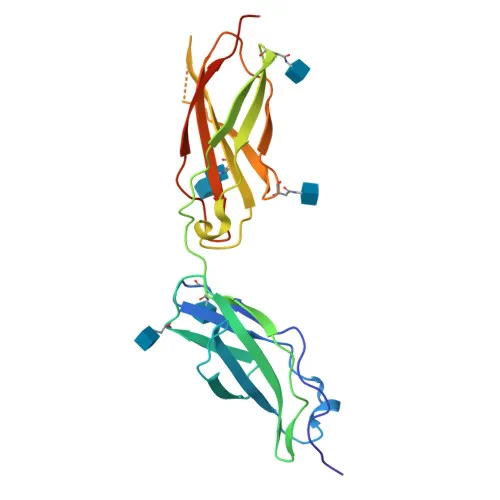
- Neural cell adhesion molecule L1 (L1CAM) is a transmembrane glycoprotein of the immunoglobulin superfamily, involved in cell adhesion and transmembrane signaling at tyrosine kinase receptors.
- During brain development, L1CAM is critical for neuronal migration, axonal growth and fasciculation, and synaptogenesis.
- In the mature brain, it contributes to synaptic plasticity and the maintenance of neuronal structure and function.
- The protein localizes to the cell membrane and is enriched in specialized compartments such as growth cones, axons, and dendrites.
- L1CAM is implicated in several neurological disease variants, including hereditary spastic paraplegia, Hirschsprung disease, intellectual disability, and neurodegeneration.
- Post-translational modifications include N-linked glycosylation, phosphorylation, and disulfide bond formation, contributing to its adhesive and signaling functions.
- The calculated molecular weight of the canonical isoform is 140,003 Da.
Experimental Guidance and Technical Tips
- The immunogen consists of a recombinant fragment spanning amino acids 20–1120 (full-length ectodomain), potentially eliciting antibodies against multiple epitopes; confirm specificity in relevant human cell models.
- This conjugate is suitable for direct flow cytometry; perform titration experiments to determine the optimal antibody concentration and include appropriate isotype and fluorescence-minus-one controls.
- Consider antigen density and receptor internalization dynamics on your target cells; fixation and permeabilization protocols should be optimized if intracellular staining is required.
- Validate performance in relevant sample systems, particularly those expressing L1CAM endogenously (e.g., neuronal cell lines or primary cells), to ensure biologically accurate results.
CamelBio: Your One-Stop Sourcing Bridge
CamelBio supports diagnostic manufacturers, laboratories, and research institutions with one-stop access to a comprehensive portfolio of IVD raw materials, including validated antibody pairs, optimized monoclonal and polyclonal antibodies, and bulk ancillary reagents. For your neural adhesion and cell surface biomarker projects targeting L1CAM/CD171, we offer consistent, high-quality sourcing of monoclonal antibodies, customized conjugates, and complementary reagents. Whether you need rare-target protein reagents or scalable supply for in vitro diagnostics, CamelBio bridges the gap from concept to clinic.
Product Datasheet
Rabbit anti-Human CD171/L1CAM Monoclonal Antibody for Flow Cytometry - P32004
REQUEST A QUOTE
Our professional team will reply to you within one business day. Please feel free to contact us!