Monoclonal Antibodies
Rabbit anti-Human CD161 Monoclonal Antibody for Flow Cytometry - Q12918
Item Number : CM0005577
Price varies based on specs and customizations
- Application
- FC
- Cross Reactivity
- Human
- Protein Weight
- 25kDa

Shipping:
Contact us to get shipping details Enjoy On-time Dispatch Guarantee.
Why Choose Us
Easy ordering process, quality products, and dedicated support for your business success.
Core Product Specifications and Parameters
| Parameter | Value |
|---|---|
| Product Name | Rabbit anti-Human CD161 mAb |
| Remarks/Alias | NKR; CD161; CLEC5B; NKR-P1; NKRP1A; NKR-P1A; hNKR-P1A; KLRB1 |
| Species | Human |
| Gene ID (Human) | 3820 |
| Gene ID | 3820 |
| Immunogen | Recombinant fusion protein containing a sequence corresponding to amino acids 67-225 of human CD161 (NP_002249.1). |
| Source | Rabbit |
| Category | Monoclonal Antibodies |
| Application | FC |
| Cross Reactivity | Human |
| SWISS | Q12918 |
| Protein Weight | 25kDa |
| Shipping | Ice bag |
Biological Background: CD161 Function and Localization
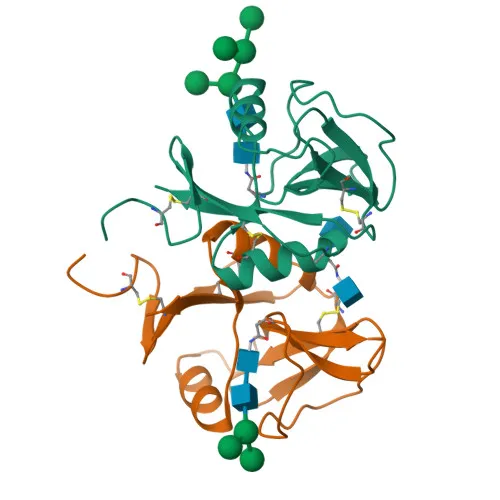
- CD161, also known as Killer cell lectin-like receptor subfamily B member 1 (KLRB1) or NKR-P1A, is a type II transmembrane glycoprotein belonging to the C-type lectin family.
- It functions as an inhibitory receptor on natural killer (NK) cells, suppressing cytotoxicity upon ligand engagement.
- Ligand binding activates acid sphingomyelinase/SMPD1, leading to elevated intracellular ceramide levels and downstream signaling via AKT1/PKB and RPS6KA1/RSK1 kinases.
- CD161 also acts as a lectin, binding to terminal Gal-alpha(1,3)Gal and N-acetyllactosamine epitopes, and recognizes CLEC2D/LLT1 as a functional ligand to inhibit NK cell cytotoxicity and interferon-gamma secretion.
- It is expressed predominantly on a subset of NK cells in the intestinal epithelium and liver, as well as on peripheral blood T-cells with a memory phenotype.
- The receptor is anchored in the membrane via a signal-anchor sequence and contains a transmembrane helix, with its extracellular C-type lectin domain stabilized by disulfide bonds and glycosylation.
- Structurally, the mature protein has a predicted molecular weight of approximately 25 kDa, consistent with its glycosylated form.
Experimental Guidance and Technical Tips
- The immunogen corresponds to the extracellular lectin domain (aa 67-225), suggesting the antibody binds an epitope accessible on live cells; thus, it is suitable for surface staining in flow cytometry without permeabilization.
- Optimal antibody titration and staining conditions should be determined empirically for each experimental system.
- Since CD161 is expressed on NK cells and memory T-cells, appropriate cell models include peripheral blood mononuclear cells (PBMCs), isolated NK cells, or T-cell lines.
- As an inhibitory receptor, CD161 may be modulated upon cellular activation; researchers should consider activation status when designing experiments.
- Avoid prolonged light exposure to maintain fluorophore stability.
- Use appropriate isotype controls for accurate gating in flow cytometry.
CamelBio: Your One-Stop Sourcing Bridge
CamelBio offers a comprehensive portfolio of IVD raw materials for immune cell research, including this anti-CD161 antibody. As a one-stop sourcing partner, we supply optimized antibody pairs, monoclonal antibodies, and ancillary reagents to support the development of diagnostic assays targeting NK cell and T-cell biology. Contact us for bulk orders, customized formulations, or assistance with rare target reagent sourcing.
Product Datasheet
Rabbit anti-Human CD161 Monoclonal Antibody for Flow Cytometry - Q12918
REQUEST A QUOTE
Our professional team will reply to you within one business day. Please feel free to contact us!