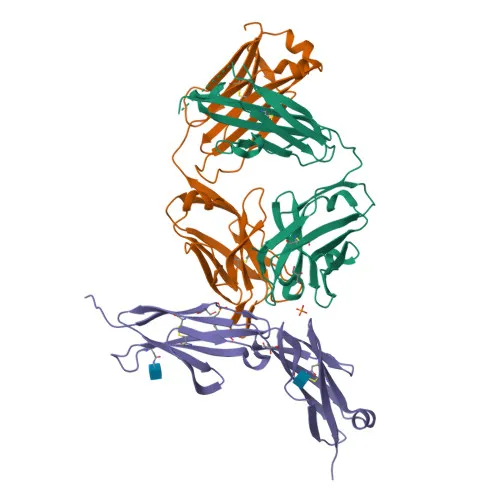
Monoclonal Antibodies
Rabbit anti-Human CD146 Monoclonal Antibody for Flow Cytometry - P43121
Item Number : CM0012682
Price varies based on specs and customizations
- Application
- FC
- Cross Reactivity
- Human
- Protein Weight
- 57kDa/72kDa

Shipping:
Contact us to get shipping details Enjoy On-time Dispatch Guarantee.
Why Choose Us
Easy ordering process, quality products, and dedicated support for your business success.
Core Product Specifications and Parameters
| Parameter | Value |
|---|---|
| Product Name | Rabbit anti-Human CD146 mAb |
| Remarks/Alias | CD146; MUC18; HEMCAM; METCAM; MelCAM |
| Species | Human |
| Gene ID (Human) | 4162 |
| Immunogen | Recombinant fusion protein containing a sequence corresponding to amino acids 24-559 of human CD146 (NP_006491.2) |
| Source | Rabbit |
| Category | Monoclonal Antibodies |
| Application | FC |
| Cross Reactivity | Human |
| SWISS | P43121 |
| Protein Weight | 57kDa/72kDa |
| Shipping | Ice bag |
Biological Background: CD146/MUC18 Function and Localization
- CD146 (also known as MUC18, MCAM, MelCAM) is a cell surface glycoprotein belonging to the immunoglobulin superfamily, encoded by the MCAM gene (Gene ID: 4162).
- It functions as a Ca²⁺-independent cell adhesion molecule, contributing to endothelial monolayer cohesion at intercellular junctions and potentially facilitating melanoma cell interaction with the vascular system during metastasis.
- CD146 triggers intracellular signaling by acting as a surface receptor that induces tyrosine phosphorylation of FYN and PTK2/FAK1, along with a transient increase in intracellular calcium concentration.
- The protein is localized to the plasma membrane (membrane) and is expressed on endothelial cells throughout the vasculature, vascular smooth muscle, and transiently on neural crest cells during embryonic migration.
- In cancer, CD146 expression is strongly associated with tumor progression and metastasis, particularly in malignant melanoma, where it is highly expressed on metastatic lesions and advanced primary tumors but rarely in benign nevi.
- The mature protein undergoes post-translational modifications including N-glycosylation, disulfide bond formation, and phosphorylation. Alternative splicing produces multiple isoforms.
- Keywords: Cell adhesion, Immunoglobulin domain, Glycoprotein, Phosphoprotein, Transmembrane helix.
Experimental Guidance and Technical Tips
- This antibody is generated against a recombinant protein spanning the extracellular domain (aa 24–559) of human CD146, ensuring reactivity with the native extracellular epitopes.
- For flow cytometry, consider titrating the antibody to determine the optimal dilution for your specific cell type and experimental setup. Include appropriate isotype control and viability dye.
- Validate staining in relevant human cell lines expressing CD146, such as melanoma (e.g., A375) or endothelial (e.g., HUVEC) cells, and use unlabeled or isotype control antibodies to assess non-specific binding.
- Given the dual band pattern (57kDa/72kDa) possibly reflecting glycosylation variants, confirm the expected molecular weight in your samples by complementary methods if needed.
CamelBio: Your One-Stop Sourcing Bridge
CamelBio empowers diagnostic manufacturers, laboratories, and research institutes with one-stop access to high-quality IVD raw materials and technical services from concept to clinic. This anti-CD146 antibody is suited for researchers investigating cell adhesion, vascular biology, and metastatic melanoma mechanisms, with potential applications in diagnostic assay development. Beyond this product, our portfolio includes validated antibody pairs, optimized monoclonal and polyclonal reagents, bulk ancillary supplies, and sourcing for rare or custom targets to accelerate your project timelines.
REQUEST A QUOTE
Our professional team will reply to you within one business day. Please feel free to contact us!