Monoclonal Antibodies
Rabbit anti-Human CD142 mAb for Flow Cytometry - P13726
Item Number : CM0012492
Price varies based on specs and customizations
- Application
- FC
- Cross Reactivity
- Human
- Protein Weight
- 33kDa

Shipping:
Contact us to get shipping details Enjoy On-time Dispatch Guarantee.
Why Choose Us
Easy ordering process, quality products, and dedicated support for your business success.
Core Product Specifications and Parameters
| Parameter | Value |
|---|---|
| Product Name | Rabbit anti-Human CD142 mAb |
| Remarks/Alias | TF; TFA; CD142 |
| Species | Human |
| Gene ID (Human) | 2152 |
| Gene ID | 2152 |
| Immunogen | Recombinant fusion protein containing a sequence corresponding to amino acids 34-251 of human CD142 (NP_001984.1). |
| Source | Rabbit |
| Category | Monoclonal Antibodies |
| Application | FC |
| Cross Reactivity | Human |
| SWISS | P13726 |
| Protein Weight | 33kDa |
| Shipping | Ice bag |
Biological Background: Tissue Factor Function and Localization
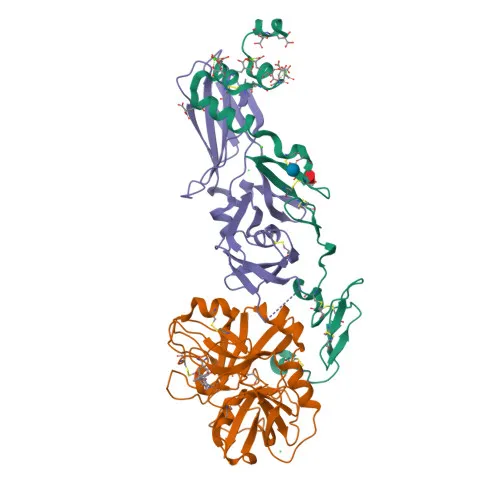
- Tissue factor (TF), also designated CD142, is a transmembrane glycoprotein that serves as the primary cellular initiator of the blood coagulation cascade.
- Upon vascular injury, TF forms a complex with circulating factor VII or its activated form VIIa, which then proteolytically activates factors IX and X, leading to thrombin generation and clot formation.
- TF is a member of the cytokine receptor class II family and is expressed on the surface of various extravascular cells, notably in the lung, placenta, and pancreas.
- The protein is subject to several post-translational modifications, including disulfide bond formation, palmitoylation, and glycosylation, which are important for its optimal activity and membrane anchoring.
- Alternative splicing of the F3 gene yields a secreted isoform that circulates in blood and may contribute to thrombogenesis.
- The 33 kDa mature protein contains an extracellular domain (residues 34-251), a single transmembrane helix, and a short cytoplasmic tail, with the extracellular region mediating factor VII binding.
Experimental Guidance and Technical Tips
- This antibody was generated against a recombinant immunogen corresponding to the extracellular domain (amino acids 34-251) of human CD142, and therefore is expected to recognize the native, surface-exposed protein on live cells.
- The conjugate is directly suited for flow cytometry experiments without the need for secondary detection reagents. Use appropriate isotype controls and optimize the antibody titer for your specific cell type.
- Validate the antibody's reactivity in a relevant cellular context by using known TF-expressing cell lines (e.g., monocytes/macrophages or cancer cell lines) or by co-staining with other lineage markers.
- Consider including a blocking step or using TF-deficient controls to confirm signal specificity in your flow cytometry assay.
CamelBio: Your One-Stop Sourcing Bridge
CamelBio stands as a dedicated one-stop sourcing partner for IVD raw materials, offering a wide portfolio of high-quality monoclonal and polyclonal antibodies, recombinant proteins, and diagnostic-grade reagents. The Rabbit anti-Human CD142 mAb supports researchers and assay developers working on coagulation disorders, thrombosis, and hemostasis, bridging the gap between concept and clinic. Leverage CamelBio’s supply capabilities to access validated antibody pairs, bulk ancillary reagents, and rare-target raw materials for seamless diagnostic development.
REQUEST A QUOTE
Our professional team will reply to you within one business day. Please feel free to contact us!