Monoclonal Antibodies
Rabbit anti-Human CD112/Nectin-2 Monoclonal Antibody for Flow Cytometry - Q92692
Item Number : CM0010579
Price varies based on specs and customizations
- Application
- FC
- Cross Reactivity
- Human
- Protein Weight
- 51kDa/57kDa

Shipping:
Contact us to get shipping details Enjoy On-time Dispatch Guarantee.
Why Choose Us
Easy ordering process, quality products, and dedicated support for your business success.
Core Product Specifications and Parameters
| Parameter | Value |
|---|---|
| Product Name | Rabbit anti-Human CD112/Nectin-2 mAb |
| Remarks/Alias | NECTIN2; CD112; HVEB; PRR2; PVRL2; PVRR2; nectin-2 |
| Species | Human |
| GeneID (Human) | 5819 |
| GeneID | 5819 |
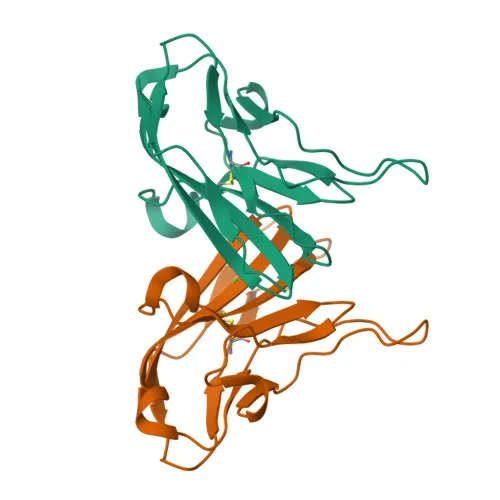
| Immunogen | Recombinant protein corresponding to a sequence within amino acids 32-158 of human CD112/Nectin-2 (NP_001036189.1) |
| Source | Rabbit |
| Category | Monoclonal Antibodies |
| Application | FC |
| Cross Reactivity | Human |
| SWISS | Q92692 |
| Protein Weight | 51kDa/57kDa |
| Shipping | Ice bag |
Biological Background: Nectin-2 Function and Localization
- Nectin-2, also known as poliovirus receptor-related protein 2 (PRR2) and herpes virus entry mediator B (HveB), belongs to the nectin family and undergoes alternative splicing to generate multiple isoforms.
- It functions as a modulator of T-cell signaling, acting as a costimulatory molecule upon binding to CD226 (DNAM-1) to enhance T-cell proliferation and cytokine production (e.g., IL-2, IL-5, IL-10, IL-13, IFN-γ), or as a coinhibitory molecule when interacting with PVRIG. Related references: PMID:26755705
- Nectin-2 mediates cell-cell adhesion through homophilic and heterophilic interactions, contributing to tissue organization. Related references: PMID:9657005
- It serves as a cellular receptor for herpes simplex virus 1 (HSV-1) mutant Rid1, HSV-2, and pseudorabies virus (PRV), facilitating viral entry.
- The protein is localized to the cell membrane and is ubiquitously expressed across tissues.
- Post-translational modifications include N-linked glycosylation, phosphorylation, and disulfide bond formation; it contains Ig-like domains, a signal peptide, and a transmembrane region.
Experimental Guidance and Technical Tips
- The immunogen covers the extracellular domain (aa 32–158), suggesting the antibody binds an exposed epitope on live cells, making it suitable for surface staining in flow cytometry.
- As a direct conjugate, no secondary detection reagent is needed; titrate the antibody to determine the optimal concentration for your sample type to minimize background.
- Use an appropriate isotype control to distinguish specific from non-specific binding, and validate staining in the relevant cell lines or primary cells known to express CD112.
- For cell-based assays (e.g., T-cell activation or viral entry studies), consider co-staining with additional markers to characterize Nectin-2+ cell populations or functional responses.
CamelBio: Your One-Stop Sourcing Bridge
CamelBio provides diagnostic manufacturers and research laboratories with one-stop access to validated IVD raw materials, including optimized monoclonal/polyclonal antibodies, bulk ancillary reagents, and rare-target sourcing. This anti-CD112/Nectin-2 conjugate is ideally suited for flow cytometric analysis of T-cell biology, immuno-oncology, and viral pathogenesis research. For integrated procurement of antibody pairs, custom conjugation, or ancillary reagents, CamelBio streamlines your supply chain from concept to clinic.
Product Datasheet
Rabbit anti-Human CD112/Nectin-2 Monoclonal Antibody for Flow Cytometry - Q92692
REQUEST A QUOTE
Our professional team will reply to you within one business day. Please feel free to contact us!