Monoclonal Antibodies
Rabbit anti-Human CaSR Monoclonal Antibody for Flow Cytometry - P41180
Item Number : CM0005698
Price varies based on specs and customizations
- Application
- FC
- Cross Reactivity
- Human
- Protein Weight
- 121kDa

Shipping:
Contact us to get shipping details Enjoy On-time Dispatch Guarantee.
Why Choose Us
Easy ordering process, quality products, and dedicated support for your business success.
Core Product Specifications and Parameters
| Parameter | Value |
|---|---|
| Product Name | Rabbit anti-Human CaSR mAb |
| Remarks/Alias | CAR; FHH; FIH; HHC; EIG8; HHC1; NSHPT; PCAR1; hCasR; GPRC2A; HYPOC1 |
| Species | Human |
| GeneID (Human) | 846 |
| GeneID | 846 |
| Immunogen | A synthetic peptide corresponding to a sequence within amino acids 211-310 of human CaSR (NP_000379.3). |
| Source | Rabbit |
| Category | Monoclonal Antibodies |
| Application | FC |
| Cross Reactivity | Human |
| SWISS | P41180 |
| Protein Weight | 121kDa |
| Shipping | Ice bag |
Biological Background: CaSR Function and Localization
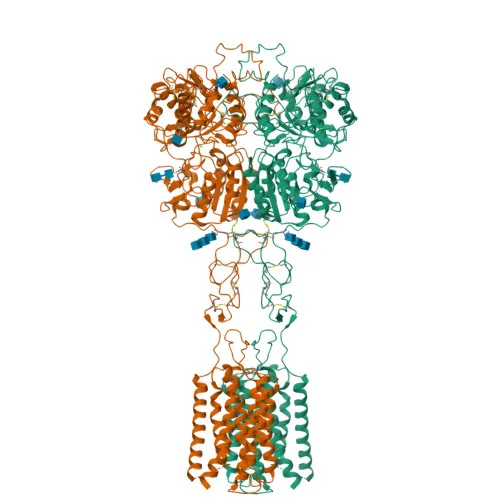
- CasR (extracellular calcium-sensing receptor), also known as parathyroid cell calcium-sensing receptor 1 (PCaR1), is a G protein-coupled receptor encoded by the CASR gene.
- Acts as a key regulator of calcium homeostasis by sensing fluctuations in circulating calcium concentration. Elevated calcium activates the receptor, leading to decreased parathyroid hormone (PTH) secretion in parathyroid glands and modulation of renal tubular calcium resorption. Related references: PMID:17555508 PMID:19789209 PMID:21566075
- CASR couples to different G protein classes depending on cellular context: G(q)/G(11) activates phospholipase C-beta, releasing IP3 and DAG; G(i)/G(o) inhibits adenylate cyclase; G(s) stimulates cAMP production. Related references: PMID:38632411 PMID:7759551
- Full receptor activation requires a co-agonist mechanism where aromatic amino acids (Trp, Phe) act concertedly with divalent cations (calcium, magnesium). Related references: PMID:27386547 PMID:27434672 PMID:32817431
- Functions beyond calcium sensing include activation of the NLRP3 inflammasome via G(i)/G(o)-mediated down-regulation of cAMP, and reciprocal regulation of the proton-sensing receptor GPR68. Related references: PMID:32843625
- Located on the cell membrane as a multi-pass transmembrane protein.
- Expressed in brain regions (temporal, frontal, parietal lobes, hippocampus, cerebellum), kidney, lung, liver, heart, skeletal muscle, and placenta.
- Subject to alternative splicing and post-translational modifications (glycosylation, phosphorylation). Contains disulfide bonds and is linked to disease variants including hypercalcemic disorders and epilepsy.
Experimental Guidance and Technical Tips
- The antibody is conjugated to , making it ready-to-use for flow cytometry without a secondary detection reagent.
- The immunogen (amino acids 211–310) targets an extracellular domain; optimal membrane receptor staining may require live, unfixed cells.
- Validate the antibody in your specific human sample system; consider performing a titration to determine the optimal working concentration.
- Protect the antibody from prolonged light exposure to preserve fluorophore stability.
CamelBio: Your One-Stop Sourcing Bridge
CamelBio provides diagnostic manufacturers and research labs with one-stop access to validated IVD raw materials, including optimized monoclonal antibodies and bulk ancillary reagents for calcium-sensing receptor studies. We support rare target sourcing and offer tailored technical consulting to accelerate your G protein-coupled receptor research programs from concept to clinic.
Product Datasheet
Rabbit anti-Human CaSR Monoclonal Antibody for Flow Cytometry - P41180
REQUEST A QUOTE
Our professional team will reply to you within one business day. Please feel free to contact us!