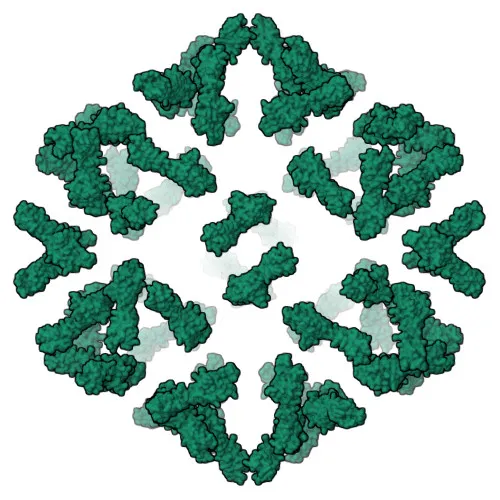
Monoclonal Antibodies
Rabbit anti-Human CAR/CXADR mAb for FC - P78310
Item Number : CM0011508
Price varies based on specs and customizations
- Application
- FC
- Cross Reactivity
- Human
- Protein Weight
- 40kDa

Shipping:
Contact us to get shipping details Enjoy On-time Dispatch Guarantee.
Why Choose Us
Easy ordering process, quality products, and dedicated support for your business success.
Core Product Specifications and Parameters
| Product Name | Rabbit anti-Human CAR/CXADR mAb |
| Remarks/Alias | CAR; HCAR; CAR4/6 |
| Species | Human |
| Gene ID (Human) | 1525 |
| Gene ID | 1525 |
| Immunogen | Recombinant fusion protein containing a sequence corresponding to amino acids 20-237 of human CAR/CXADR(NP_001329.1) |
| Source | Rabbit |
| Category | Monoclonal Antibodies |
| Application | FC |
| Cross Reactivity | Human |
| SWISS | P78310 |
| Protein Weight | 40kDa |
| Shipping | Ice bag |
Biological Background: CAR/CXADR Function and Localization
- CAR/CXADR (Coxsackievirus and adenovirus receptor) is a transmembrane protein belonging to the immunoglobulin superfamily, encoded by the CXADR gene. Multiple isoforms exist due to alternative splicing, with isoform 1 (canonical) being the most characterized.
- It functions as a homophilic cell adhesion molecule and is a critical component of the epithelial apical junction complex, essential for tight junction integrity.
- CXADR mediates transepithelial migration of leukocytes through interaction with JAML on leukocytes, and this interaction activates gamma-delta T-cells, leading to proliferation and cytokine production that promotes epithelial tissue repair.
- It acts as a receptor for adenovirus type C and for coxsackievirus B1 to B6, facilitating viral entry into host cells.
- The protein localizes to the basolateral cell membrane, and is found at tight junctions and adherens junctions; it can also be secreted.
- Tissue expression includes pancreas, brain, heart, small intestine, testis, and prostate; isoform-specific localization is observed in skeletal muscle, cardiac muscle, and blood vessels, with elevated expression in hearts with dilated cardiomyopathy.
- Post-translational modifications include glycosylation, palmitoylation, and phosphorylation; the protein contains a signal peptide, immunoglobulin-like domains, and a transmembrane helix.
Experimental Guidance and Technical Tips
- The immunogen corresponds to the extracellular domain (aa 20–237), making this conjugate suitable for live-cell surface staining in flow cytometry.
- Titrate carefully to minimize background and optimize the signal-to-noise ratio; consider using a viability dye to exclude dead cells.
- Validate staining in a known CAR/CXADR-expressing human cell line (e.g., epithelial cells) as a positive control, and include an isotype control.
- For consistent results, avoid fixation or permeabilization that could mask or alter the extracellular epitope recognized by this antibody.
CamelBio: Your One-Stop Sourcing Bridge
CamelBio is a trusted one-stop sourcing partner for IVD raw materials, supporting diagnostic manufacturers, laboratories, and research institutes from concept to clinic. This anti-CAR/CXADR monoclonal antibody exemplifies our ability to supply high-quality reagents for viral receptor and cell adhesion research. Explore our portfolio for validated antibody pairs, bulk ancillary reagents, and expert assistance in sourcing rare-target raw materials to accelerate your diagnostic development.
REQUEST A QUOTE
Our professional team will reply to you within one business day. Please feel free to contact us!