Polyclonal Antibodies
Rabbit Anti-C3AR1 Polyclonal Antibody for WB, ELISA - Q16581
Item Number : CM0023058
Price varies based on specs and customizations
- Application
- WB, ELISA
- Cross Reactivity
- Mouse
- Protein Weight
- 54kDa

Shipping:
Contact us to get shipping details Enjoy On-time Dispatch Guarantee.
Why Choose Us
Easy ordering process, quality products, and dedicated support for your business success.
Core Product Specifications and Parameters
| Parameter | Value |
|---|---|
| Product Name | C3AR1 Rabbit pAb |
| Remarks/Alias | AZ3B; C3AR; HNFAG09; C3AR1 |
| Species | Human |
| Gene ID (Human) | 719 |
| Gene ID | 719 |
| Immunogen | Synthetic peptide; A synthetic peptide corresponding to a sequence within amino acids 1-100 of human C3AR1 (NP_004045.1) |
| Source | Rabbit |
| Category | Polyclonal Antibodies |
| Application | WB, ELISA |
| Cross Reactivity | Mouse |
| SWISS | Q16581 |
| Protein Weight | 54kDa |
| Shipping | Ice bag |
Biological Background: C3AR1 (C3a anaphylatoxin chemotactic receptor) Function and Localization
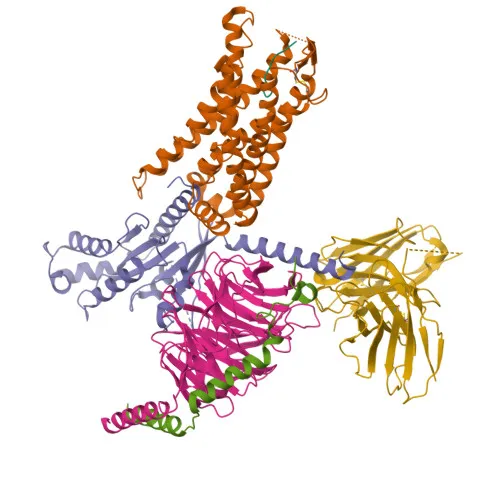
- C3AR1 (also known as AZ3B, C3AR, HNFAG09) is a seven-transmembrane G protein-coupled receptor that functions as the primary receptor for complement anaphylatoxin C3a, mediating inflammatory and chemotactic responses. Related references: PMID:12871936, PMID:37852260, PMID:8702752
- Upon agonist binding, C3AR1 couples to pertussis toxin-sensitive G(i)/G(o) G proteins, leading to inhibition of adenylate cyclase and activation of signaling cascades that promote chemotaxis, release of granular enzymes, and production of reactive oxygen species. Related references: PMID:37852260
- C3AR1 is localized predominantly at the cell membrane, consistent with its role as a cell surface receptor for extracellular C3a.
- C3AR1 is widely expressed across various tissues, with prominent expression in lymphoid organs, lung, spleen, ovary, placenta, small intestine, brain, heart, and endothelial cells. Related references: PMID:8605247, PMID:8765043
- As a typical GPCR, C3AR1 is subject to post-translational modifications including N-linked glycosylation, disulfide bond formation, phosphorylation, and tyrosine sulfation, which may regulate receptor trafficking, ligand binding, and signaling.
- Belongs to the G protein-coupled receptor 1 family and is classified under the chemotaxis, transducer, and transmembrane helix keyword categories.
Experimental Guidance and Technical Tips
- The immunogen corresponds to the N-terminal region (amino acids 1-100) of human C3AR1; consider that the antibody may recognize linear epitopes in this domain.
- For Western blot, the predicted molecular weight is ~54 kDa; however, glycosylation and other modifications can cause band shifts—validate with appropriate controls.
- Cross-reactivity with mouse C3AR1 is reported; optimize species-specific detection conditions for dual-species studies.
- When using in ELISA, evaluate direct and capture formats, and include proper blocking steps to reduce background from polyclonal serum.
CamelBio: Your One-Stop Sourcing Bridge
CamelBio supports diagnostic manufacturers and research laboratories as a comprehensive IVD raw-material supplier, offering validated antibody pairs, bulk ancillary reagents, and rare-target sourcing for the complement cascade and GPCR signaling fields. For studies on C3AR1 and related anaphylatoxin receptors, CamelBio provides matched reagents and technical consultation to accelerate assay development from concept to clinic.
REQUEST A QUOTE
Our professional team will reply to you within one business day. Please feel free to contact us!