Polyclonal Antibodies
Proteasome 20S LMP7 Rabbit pAb - P28062
Item Number : CM0021742
Price varies based on specs and customizations
- Application
- WB, ELISA
- Cross Reactivity
- Human, Mouse, Rat
- Protein Weight
- 30kDa

Shipping:
Contact us to get shipping details Enjoy On-time Dispatch Guarantee.
Why Choose Us
Easy ordering process, quality products, and dedicated support for your business success.
Core Product Specifications and Parameters
| Parameter | Value |
|---|---|
| Product Name | Proteasome 20S LMP7 Rabbit pAb |
| Remarks/Alias | JMP; ALDD; LMP7; NKJO; D6S216; PRAAS1; PSMB5i; RING10; D6S216E; Proteasome 20S LMP7 |
| Species | Human |
| GeneID (human) | 5696 |
| GeneID | 5696 |
| Immunogen | Recombinant protein: Recombinant fusion protein containing a sequence corresponding to amino acids 167-276 of human Proteasome 20S LMP7. (NP_683720.2). |
| Source | Rabbit |
| Category | Polyclonal Antibodies |
| Application | WB, ELISA |
| Cross Reactivity | Human, Mouse, Rat |
| SWISS | P28062 |
| Protein Weight | 30kDa |
| Shipping | Ice bag |
Biological Background: Proteasome 20S LMP7 Function and Localization
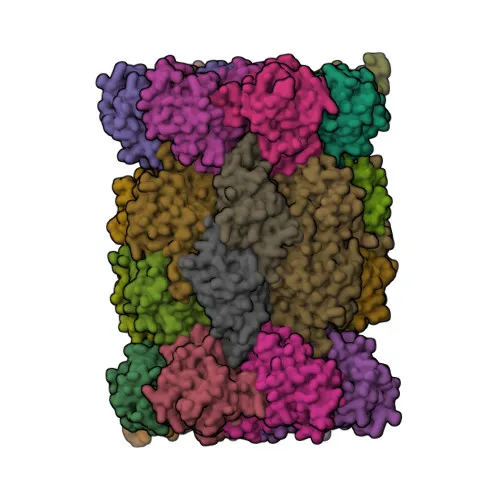
- The Proteasome 20S LMP7 Rabbit pAb targets proteasome subunit beta type-8, also known as LMP7, PSMB5i, and RING10, encoded by the PSMB8 gene. It is a component of the immunoproteasome, which plays a critical role in antigen processing and MHC class I peptide generation.
- Substitution of the constitutive catalytic subunit PSMB5 with PSMB8 enhances the proteasome's capacity to cleave after hydrophobic and basic residues, yielding immunodominant epitopes. This subunit is also involved in generating spliced peptides through ligation of non-contiguous cleavage products (PubMed:27049119). Related references: PMID:27049119
- PSMB8 is a key mediator of interferon gamma-induced sensitivity and participates in apoptosis by degrading the anti-apoptotic protein MCL1, linking immunoproteasome activity to cell survival pathways.
- It may also contribute to inflammatory responses and is required for preadipocyte differentiation into adipocytes, indicating roles beyond immune function.
- In cancer cells, the relative expression of PSMB8 isoforms (isoform 1/E2 vs. isoform 2/E1) can determine immunoproteasome deficiency, suggesting a regulatory mechanism with therapeutic implications.
- The protein localizes to both the cytoplasm and nucleus, consistent with its roles in protein degradation and gene regulation.
- Keywords: hydrolase, protease, threonine protease, zymogen, phosphoprotein, alternative splicing, disease variant, host-virus interaction.
Experimental Guidance and Technical Tips
- The immunogen used for this antibody covers amino acids 167-276 of human PSMB8; consider using a recombinant protein spanning this region as a positive control in WB experiments.
- For detection of endogenous PSMB8, validate in interferon-gamma-treated samples (e.g., human HeLa or Jurkat cells) as the immunoproteasome is inducible, whereas constitutive expression may be low.
- Mouse and rat cross-reactivity is reported; however, always verify signal specificity in the relevant species' tissue or cell lysates due to potential epitope divergence.
- This antibody is recommended for WB and ELISA; for other applications, additional optimization may be required.
CamelBio: Your One-Stop Sourcing Bridge
CamelBio provides diagnostic manufacturers, labs, and research institutes with one-stop access to IVD raw materials, technical services, and consulting—covering every stage from concept to clinic. For proteasome and immunoproteasome research, we offer validated antibody pairs, optimized monoclonal/polyclonal antibodies, and bulk ancillary reagents. Our supply network also specializes in rare target raw-material sourcing, ensuring you can advance your projects with reliable, high-quality reagents.
REQUEST A QUOTE
Our professional team will reply to you within one business day. Please feel free to contact us!