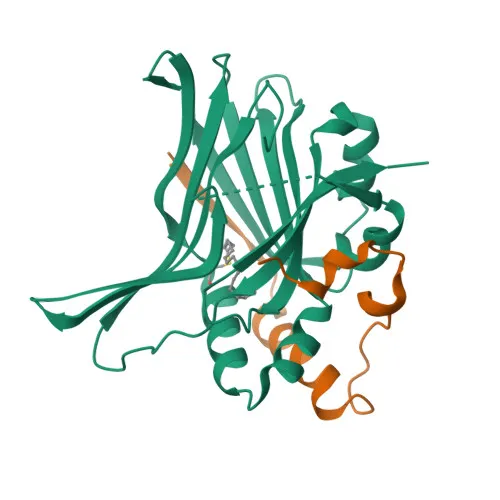
Phosphorylated Antibodies
phospho-YAP1-S127 Rabbit mAb - P46937
Item Number : CM0001223
Price varies based on specs and customizations
- Application
- WB, IHC-P, ELISA
- Cross Reactivity
- Human, Mouse, Rat
- Protein Weight
- 54kDa

Shipping:
Contact us to get shipping details Enjoy On-time Dispatch Guarantee.
Why Choose Us
Easy ordering process, quality products, and dedicated support for your business success.
Core Product Specifications and Parameters
| Parameter | Value |
|---|---|
| Product Name | phospho-YAP1-S127 Rabbit mAb |
| Remarks/Alias | YAP; YKI; COB1; YAP2; YAP-1; YAP65; phospho-YAP1-S127 |
| Species | Human |
| GeneID (human) | 10413 |
| GeneID | 10413 |
| Immunogen | Synthetic peptide: A synthesized peptide derived from human YAP1 |
| Source | Rabbit |
| Category | Phosphorylated Antibodies |
| Application | WB, IHC-P, ELISA |
| Cross Reactivity | Human, Mouse, Rat |
| SWISS | P46937 |
| Protein Weight | 54kDa |
| Shipping | Ice bag |
Biological Background: YAP1 Function and Localization
- Transcriptional regulator with dual coactivator and corepressor roles, critical downstream target of the Hippo signaling pathway for organ size control and tumor suppression. Related references: PMID:17974916 PMID:18280240 PMID:18579750
- The Hippo core kinase cascade (STK3/MST2, STK4/MST1, SAV1, LATS1/2, MOB1) phosphorylates YAP1, promoting its cytoplasmic retention and preventing nuclear translocation to regulate gene expression. Related references: PMID:18158288 PMID:26598551 PMID:34404733
- YAP1 requires TEAD transcription factors for transcriptional regulation, modulating cell growth, anchorage-independent growth, and induction of epithelial-mesenchymal transition (EMT). Related references: PMID:18579750
- Plays a key role in tissue tension and 3D tissue shape by regulating the cortical actomyosin network via ARHGAP18, a Rho GTPase activating protein. Related references: PMID:25778702
- Suppresses ciliogenesis by acting as a transcriptional corepressor of TEAD4 target genes AURKA and PLK1. Related references: PMID:25849865
- Synergizes with WBP2 to enhance PGR activity; also activates the C-terminal fragment (CTF) of ERBB4. Related references: PMID:16772533
- Subcellular localization includes cytoplasm, nucleus, cell junctions (tight junctions), and cell membrane.
- Increased expression seen in some liver and prostate cancers; isoforms lacking the transactivation domain found in striatal neurons of Huntington disease patients.
Experimental Guidance and Technical Tips
- The immunogen is a synthetic peptide derived from human YAP1; phosphorylation at Ser127 is a key regulatory modification controlling YAP1 subcellular localization. When designing additional detection reagents, consider epitope accessibility near this phospho-site.
- For Western blot (WB), endogenous YAP1 may appear as a band around 54 kDa; the phospho-specific signal may vary with cell treatment and Hippo pathway activation status. Validate with appropriate phosphatase inhibitors and positive controls (e.g., cells treated with Hippo pathway modulators).
- For IHC-P, optimize antigen retrieval and antibody dilution to detect phospho-YAP1 in tissue sections, especially in cancer tissues where YAP1 expression is often increased.
- For ELISA, consider using the antibody as capture or detection reagent in pairs with other non-competing anti-YAP1 antibodies to quantify phospho-YAP1 levels in cell lysates.
CamelBio: Your One-Stop Sourcing Bridge
CamelBio is a dedicated IVD raw-material sourcing partner providing diagnostic manufacturers, laboratories, and research institutes with one-stop access to high-quality antibodies and ancillary reagents. Our phospho-YAP1-S127 rabbit monoclonal antibody supports Hippo pathway research and oncology assay development, and we can complement it with validated antibody pairs, recombinant proteins, and customizable raw-material solutions. From concept to clinic, CamelBio bridges your sourcing needs efficiently.
REQUEST A QUOTE
Our professional team will reply to you within one business day. Please feel free to contact us!