Phosphorylated Antibodies
Phospho-SMO-S616 Rabbit pAb - Q99835
Item Number : CM0000448
Price varies based on specs and customizations
- Application
- WB, DB, ELISA
- Cross Reactivity
- Human
- Protein Weight
- 86kDa

Shipping:
Contact us to get shipping details Enjoy On-time Dispatch Guarantee.
Why Choose Us
Easy ordering process, quality products, and dedicated support for your business success.
Core Product Specifications and Parameters
| Parameter | Value |
|---|---|
| Product Name | Phospho-SMO-S616 Rabbit pAb |
| Remarks/Alias | Gx; CRJS; PHLS; SMOH; FZD11; Phospho-SMO-S616 |
| Species | Human |
| GeneID (Human) | 6608 |
| GeneID | 6608 |
| Immunogen | Synthetic peptide |
| Source | Rabbit |
| Category | Phosphorylated Antibodies |
| Application | WB, DB, ELISA |
| Cross Reactivity | Human |
| SWISS | Q99835 |
| Protein Weight | 86kDa |
| Shipping | Ice bag |
Biological Background: Protein smoothened Function and Localization
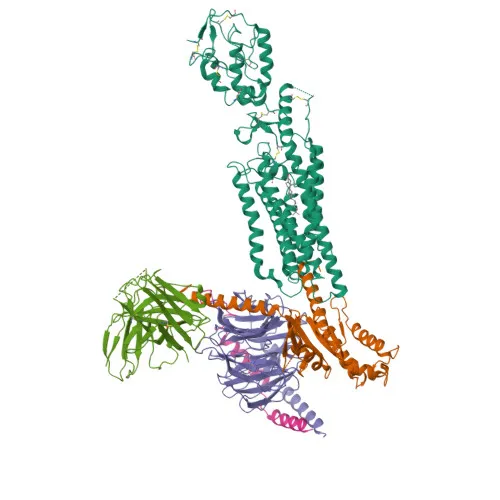
- Protein smoothened (SMO), also known as Protein Gx, is a G protein-coupled receptor (GPCR) that acts as the central transducer of the hedgehog signaling pathway, essential for embryonic development and implicated in cancer. Related references: PMID:19592253, PMID:27437577, PMID:28344083
- SMO is activated by cholesterol binding upon hedgehog ligand stimulation, leading to G protein G(i)-mediated inhibition of adenylate cyclase and reduced cAMP levels, which in turn release GLI transcription factors to regulate target gene expression. Related references: PMID:28344083, PMID:31168089
- In addition to canonical cAMP modulation, active SMO directly sequesters and inhibits protein kinase A (PKA) catalytic subunit PRKACA at the cell membrane, preventing phosphorylation and processing of GLI transcription factors. Related references: PMID:36202993, PMID:39138140
- SMO also facilitates the removal of GPR161, a key negative regulator, from the primary cilium, ensuring robust pathway activation (By similarity). SMO localizes to the cell membrane and is enriched in the primary cilium membrane, a subcellular niche critical for signal transduction.
- The protein is post-translationally modified by phosphorylation (including at Ser616), glycosylation, lipidation (cholesterol binding), and disulfide bond formation, as indicated by keywords from UniProt, and is classified as a transmembrane receptor involved in developmental signaling.
- SMO dysfunction is associated with developmental disorders and cancer; its activity is tightly regulated by the upstream inhibitor patched (PTCH1/2) and by cholesterol access.
Experimental Guidance and Technical Tips
- The immunogen is a synthetic phosphorylated peptide around Ser616 of human SMO, ensuring specificity for the phosphorylated form; non-phospho cross-reactivity should be assessed in negative controls.
- For Western blot (WB), a band around 86 kDa is expected; optimize blocking and antibody dilution to reduce background from endogenous SMO expression.
- In ELISA and dot blot (DB), use phosphorylated peptide as positive control and non-phosphorylated peptide to confirm phosphorylation specificity; consider peptide competition assays for validation.
- Given SMO localizes to cilia, immunodetection in whole-cell lysates may be challenging; consider enrichment strategies or immunofluorescence for ciliary localization studies.
- The antibody is cross-reactive with human SMO; for other species, verify sequence homology at the phosphorylation site before use.
CamelBio: Your One-Stop Sourcing Bridge
CamelBio is a specialized one-stop sourcing partner for IVD raw materials, offering validated antibody pairs, optimized monoclonal and polyclonal antibodies, bulk ancillary reagents, and custom rare-target raw-material procurement. For researchers investigating the hedgehog pathway and smoothened signaling, CamelBio provides seamless access to high-quality phosphorylated SMO antibodies and related technical consulting, supporting your journey from concept to clinic.
REQUEST A QUOTE
Our professional team will reply to you within one business day. Please feel free to contact us!