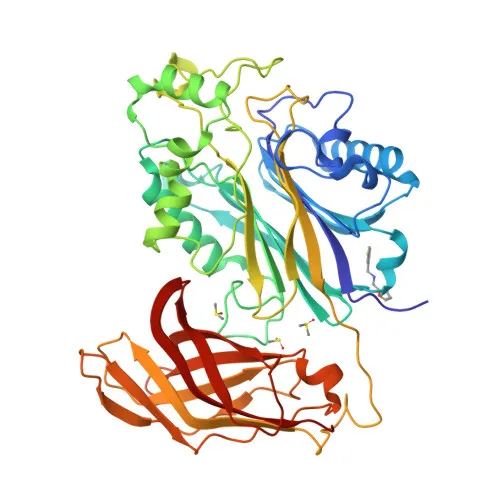
Phosphorylated Antibodies
Phospho-SHIP1-Y1020 Rabbit pAb for WB, ELISA - Q92835
Item Number : CM0001928
Price varies based on specs and customizations
- Application
- WB, ELISA
- Cross Reactivity
- Human
- Protein Weight
- 133kDa

Shipping:
Contact us to get shipping details Enjoy On-time Dispatch Guarantee.
Why Choose Us
Easy ordering process, quality products, and dedicated support for your business success.
Core Product Specifications and Parameters
| Parameter | Value |
|---|---|
| Product Name | Phospho-SHIP1-Y1020 Rabbit pAb |
| Remarks/Alias | SHIP; SHIP1; SHIP-1; hp51CN; SIP-145; p150Ship; Phospho-SHIP1-Y1020 |
| Species | Human |
| Gene ID (Human) | 3635 |
| Gene ID | 3635 |
| Immunogen | Synthetic peptide: A synthetic phosphorylated peptide around Y1020 of human SHIP1 (NP_001017915.1). |
| Source | Rabbit |
| Category | Phosphorylated Antibodies |
| Application | WB, ELISA |
| Cross Reactivity | Human |
| SWISS | Q92835 |
| Protein Weight | 133kDa |
| Shipping | Ice bag |
Biological Background: SHIP1 Function and Localization
- Encoded by the INPP5D gene, SHIP1 (SH2 domain-containing inositol 5'-phosphatase 1) is a 133 kDa protein also known as SIP-145, hp51CN, or p150Ship, and belongs to the inositol polyphosphate-5-phosphatase family.
- Functions as a key negative regulator of the PI3K signaling pathway by hydrolyzing the 5-phosphate of phosphatidylinositol-3,4,5-trisphosphate (PtdIns(3,4,5)P3) to generate PtdIns(3,4)P2. Related references: PMID:10764818 PMID:8723348 PMID:8769125
- Additionally hydrolyzes other phosphoinositide substrates, including PtdIns(4,5)P2, Ins(1,4,5)P3, and Ins(1,3,4,5)P4, thereby broadly modulating phosphoinositide-mediated signals. Related references: PMID:40969890
- Acts as a critical negative regulator in immune and hematopoietic cells by terminating signal transduction from activating receptors, including the B-cell antigen receptor, FCGR2B, and CD32a, and controlling processes such as myeloid cell proliferation, mast cell degranulation, NK cell cytotoxicity, and JNK signaling in B-cells. Related references: PMID:16682172
- Subcellularly localizes to the cytoplasm, cell membrane, membrane rafts, and cytoskeleton, consistent with its dynamic signaling roles.
- Expression is highly specific to immune and hematopoietic cells, including bone marrow, blood, CD34+ progenitor cells, and T-cells, with lower levels in mature CD33+ cells and B-cells.
- Contains functional domains such as an SH2 domain and an SH3-binding region, and its activity is regulated by tyrosine phosphorylation, including at residue Y1020, linking it to phosphotyrosine-mediated signaling networks.
Experimental Guidance and Technical Tips
- For Western blot, use a phospho‑specific detection protocol; the antibody targets phosphorylated Y1020, so include phosphatase inhibitors in lysis buffers to preserve the epitope. A band near 133 kDa is expected.
- For ELISA, consider using phosphorylated and non‑phosphorylated peptides as specificity controls to confirm phospho‑dependent binding.
- Since the immunogen is a synthetic phosphorylated peptide, pre‑adsorption with the non‑phosphorylated peptide may help confirm phospho‑specificity, though this is not routinely required.
- This antibody is reactive with human samples; validate performance in the relevant cell type (e.g., immune or hematopoietic lines) as expression is tissue‑restricted.
- Optimal dilutions and conditions should be determined empirically for each assay system.
CamelBio: Your One-Stop Sourcing Bridge
CamelBio supports diagnostic manufacturers and research laboratories by providing integrated access to IVD raw materials and technical services from concept to clinic. For SHIP1 and immune‑cell signaling research, we offer validated antibody pairs, optimized monoclonal and polyclonal antibodies, bulk ancillary reagents, and rare‑target raw‑material sourcing to streamline your assay development and procurement.
REQUEST A QUOTE
Our professional team will reply to you within one business day. Please feel free to contact us!